After a lively discussion on Facebook about freezing fresh vegetables at home, I received helpful guidance from reader and chef Jaimee-Louise Warner. Her advice combines professional college-level chef training with the practical preserving methods she learned from her Great Aunty Ida, who grew and preserved vegetables on a rural Western Australian farm.
Photo source: Pinterest
Snap freezing (also called flash freezing) is an excellent way to preserve vegetables. When done correctly, frozen vegetables can keep up to 12 months in a well-maintained freezer. You can cook most vegetables straight from frozen, buy in bulk to save money, always have veg on hand for meals, and retain a high level of nutrients. The method is straightforward and requires minimal equipment, and it lets you know exactly where your food came from.
This approach works well for vegetables such as carrots, peas, corn, broccoli, cauliflower, turnips, parsnips, onions, snow peas, potatoes, pumpkin, capsicum, beans and celery. It is not recommended for lettuce or delicate Asian greens. Spinach can be frozen using this method if it is drained very well and frozen into a compact block.
Snap freezing is intended for vegetables that will be cooked before serving. Because the process includes blanching, it’s not suitable for salads or raw preparations.
How to Snap Freeze
Step one: Wash, peel if needed, and cut vegetables into roughly one-inch pieces or cubes. Smaller pieces freeze more evenly and are easier to portion when cooking.
Step two: Blanch the vegetables by submerging them in unsalted boiling water. Return the water to a boil over high heat and let the vegetables cook for about one minute, then drain thoroughly. Do not add salt to the blanching water for this preservation method.
Step three: Spread the drained pieces in a single layer on a tray lined with greaseproof paper, making sure pieces do not touch. Let the tray sit at room temperature until steaming has completely stopped—this reduces condensation and the risk of freezer burn.
Step four: Place the tray in the freezer until the vegetables are frozen solid.
Photo source: http://www.home-ec101.com
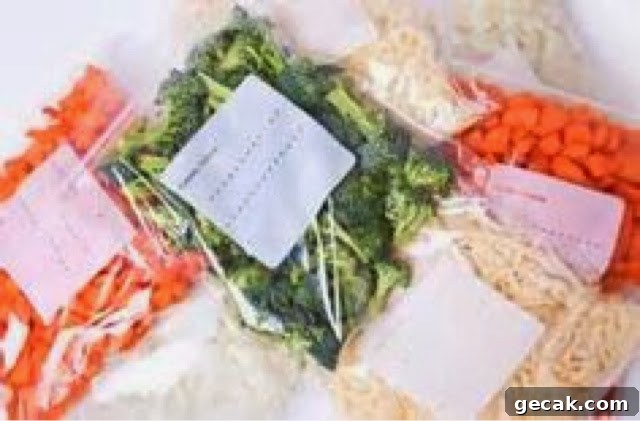
Step five: Once frozen solid, transfer the pieces into zip-lock bags, pressing out as much air as possible before sealing. Label each bag with the contents and date, then return the bags to the freezer.
Photo source: Pinterest
Further explanation
Cutting vegetables into uniform, small pieces helps them freeze evenly and makes portioning easier when you cook later. Blanching—briefly immersing vegetables in boiling water—removes surface impurities and helps preserve texture, color, and flavor during freezing. Using unsalted water for blanching is recommended for this method.
Allowing vegetables to cool and stop steaming before placing them in the freezer prevents excess moisture from forming ice crystals on the surface. Freezer burn damages texture and reduces quality. Spreading pieces out on a tray so they freeze individually is the key to avoiding clumps; this “snap freezing” technique is the same principle used by commercial producers and allows you to remove only the amount you need without defrosting the whole batch.
Why use zip-lock bags?
Zip-lock bags are handy for frozen vegetables because:
1. They can be sealed almost airtight to minimize exposure to freezer air.
2. They are resealable for partial use.
3. They can be labeled easily with a permanent marker.
4. They stack neatly in the freezer to save space.
5. They come in various sizes and are affordable.
Ideas for using snap-frozen vegetables
– Potatoes: keep pre-cut potatoes on hand to make quick mashed potatoes or roast from frozen.
– Pumpkin: freeze roasted or cubed pumpkin for easy reheating and roasting later.
– Beans, peas, broccoli: cook directly from frozen for a simple side dish or to boost soups, stews and casseroles.
– Celery, capsicum: add frozen pieces straight into stir-fries and sautés.
– Onion: use frozen chopped onion as a quick base for sauces, stews and bolognese.
– Parsnips, turnips: add frozen cubes to soups and purees.
– Cauliflower: keep frozen florets for casseroles, gratins or quick steaming and mashing.
With this simple snap-freezing routine you can preserve seasonal vegetables, reduce waste, save on grocery costs, and have ready-to-use ingredients that cook quickly and retain good flavor and nutrition.