With a practical exam this Thursday looming, and my anxiety rising, I’ll keep this update brief.
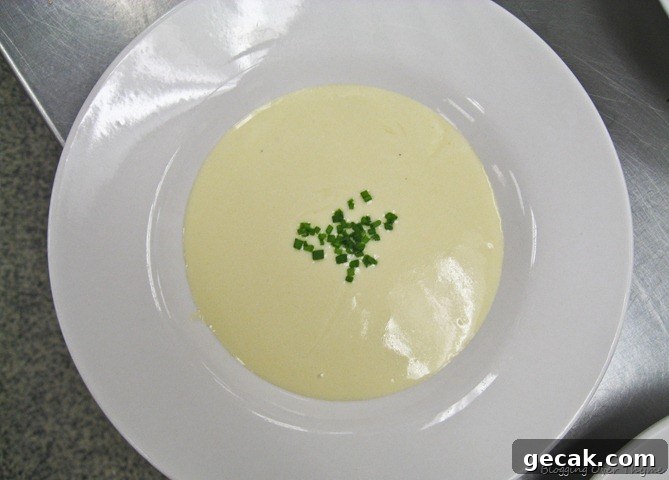
Today we reviewed a few things but mostly worked on new dishes. The first was vichyssoise — a deceptively simple cold potato and leek soup. We’ve prepared hot potato-leek soup before during Week 2 and we’ll be expected to make the hot version on the upcoming exam as well.
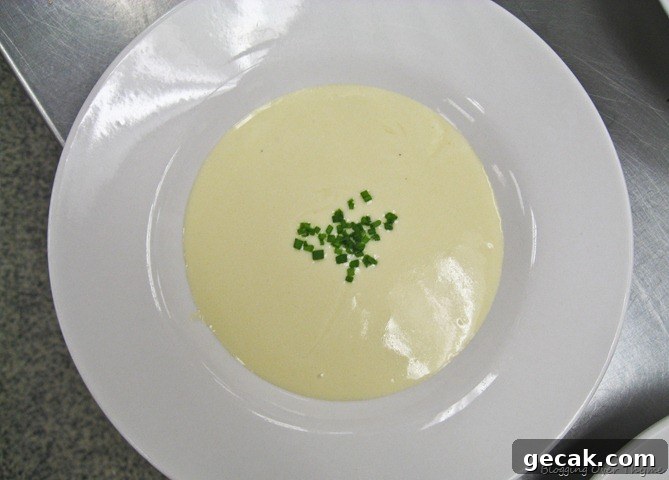
Vichyssoise is straightforward, but the balance between potato and leek matters. Overworking the potatoes releases too much starch and can turn the soup gluey instead of silky. When made correctly, it purees to a smooth, creamy texture with a clean potato-and-leek flavor. After pureeing and straining, cream is stirred in and the soup is chilled. Because cold dulls flavor, you often need to finish with a bit more cream and salt to bring the taste back.
This version was excellent, although quite rich.
Continuing our duck week theme, we prepared braised duck leg with cabbage and served it alongside pommes darphin — potato pancakes made from julienned potatoes, another dish that appears on the exam.
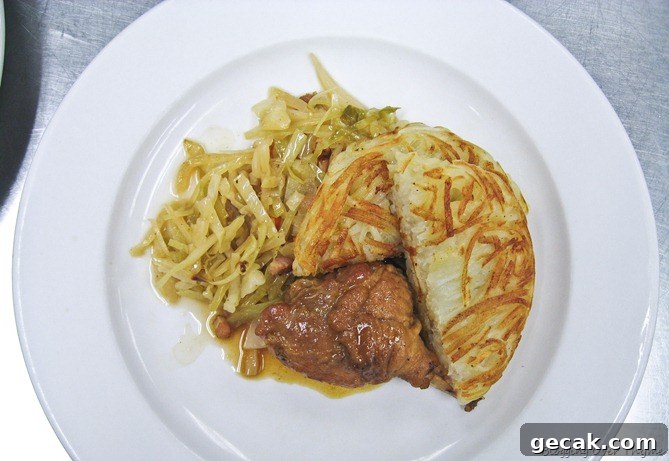
Our duck leg was handled much like other Phase I stews: the meat was seared, the pan deglazed, then mirepoix, white wine and aromatic flavors were added, finishing with veal stock. The duck returned to the sauce and roasted in the oven for roughly two hours until very tender.
The cabbage accompaniment combined bacon, onion, cabbage, carrot and apple, finished with apple cider vinegar. I wasn’t expecting to enjoy it as much as I did — it complemented the duck beautifully.
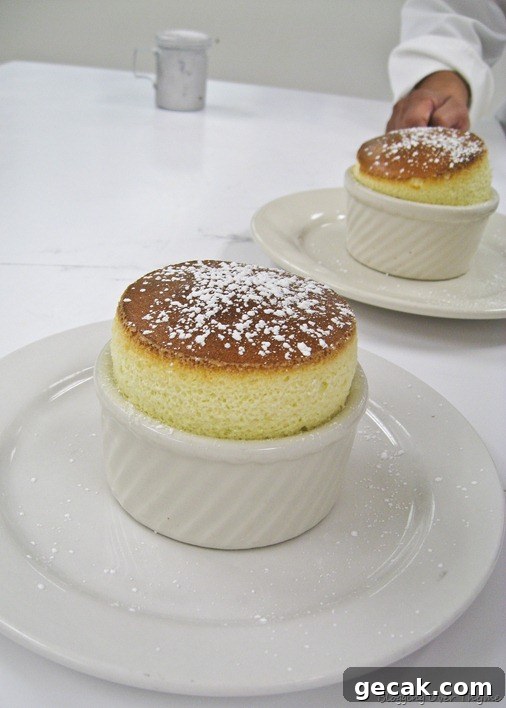
For dessert we made Grand Marnier soufflé. This was our first time tackling soufflés, which require precise technique and must be baked right before serving. The process involves making a base similar to a béchamel, whisking in sugar and egg yolks, and folding in whipped egg whites just before baking.
The beautifully risen soufflé pictured above was made by Chef Somchet and stood out compared with our attempts — but we’ll get plenty of practice with different savory and sweet soufflés (spinach, cheese, chocolate, etc.) as we progress.
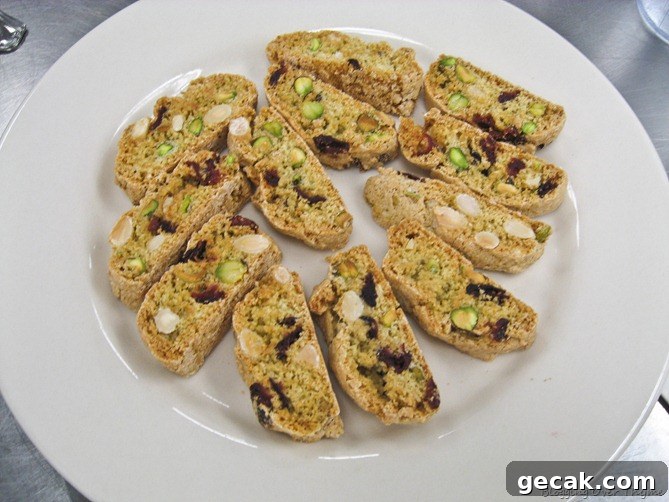
We served the soufflé with almond, pistachio and cranberry biscotti. I’m not typically a fan of extremely crisp cookies, but these were among the best biscotti I’ve tried.
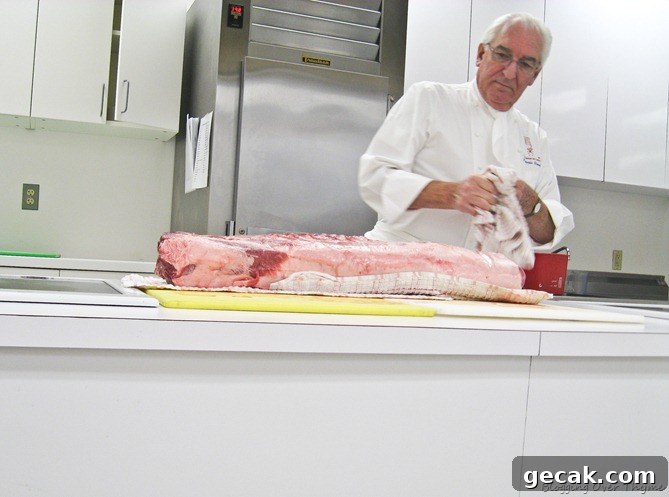
As on most Tuesdays, the day ended with a meat lecture focused on pork. Chef François, the program director, led the session and demonstrated breaking down a whole side of pork. Butchery is a real craft — especially fascinating for someone like me who started the program without a deep background in meat.
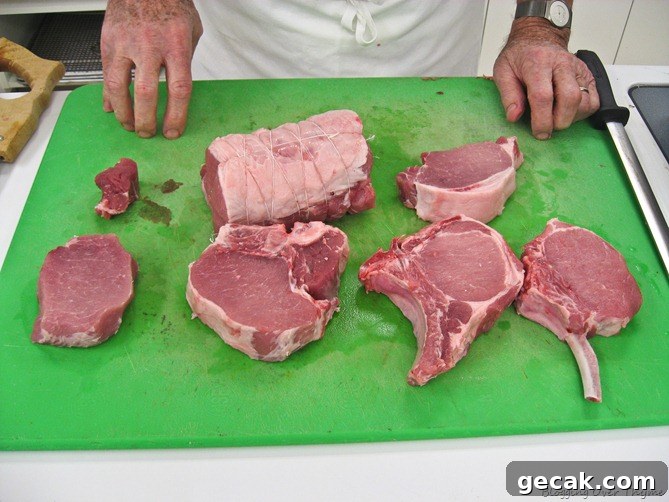
During the demonstration he separated familiar cuts: boneless pork loin, pork chops (including Frenched and non-Frenched styles), pork roast, tenderloin and others. There were a few cuts I struggled to recall by name in the moment, but the overall breakdown clarified how each portion is derived from the whole side.
All in all, it was a productive day with only a few small hiccups. I also got some unexpected exercise by cleaning out the stock pot again — a familiar, oddly satisfying task.
Now it’s back to studying for me before I call it a night.
Back in a few days with updates on tomorrow’s class, my second practical exam, and more.