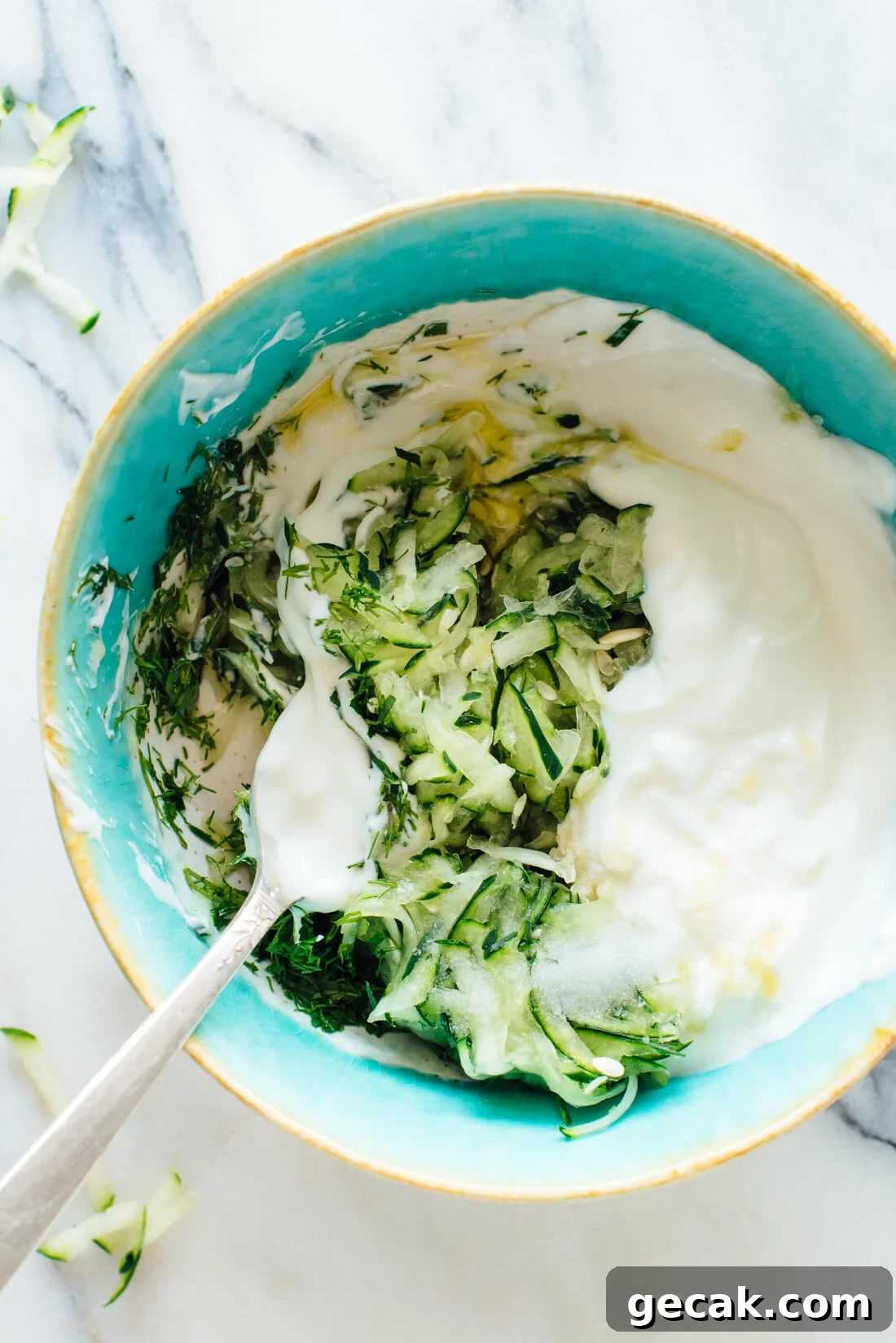
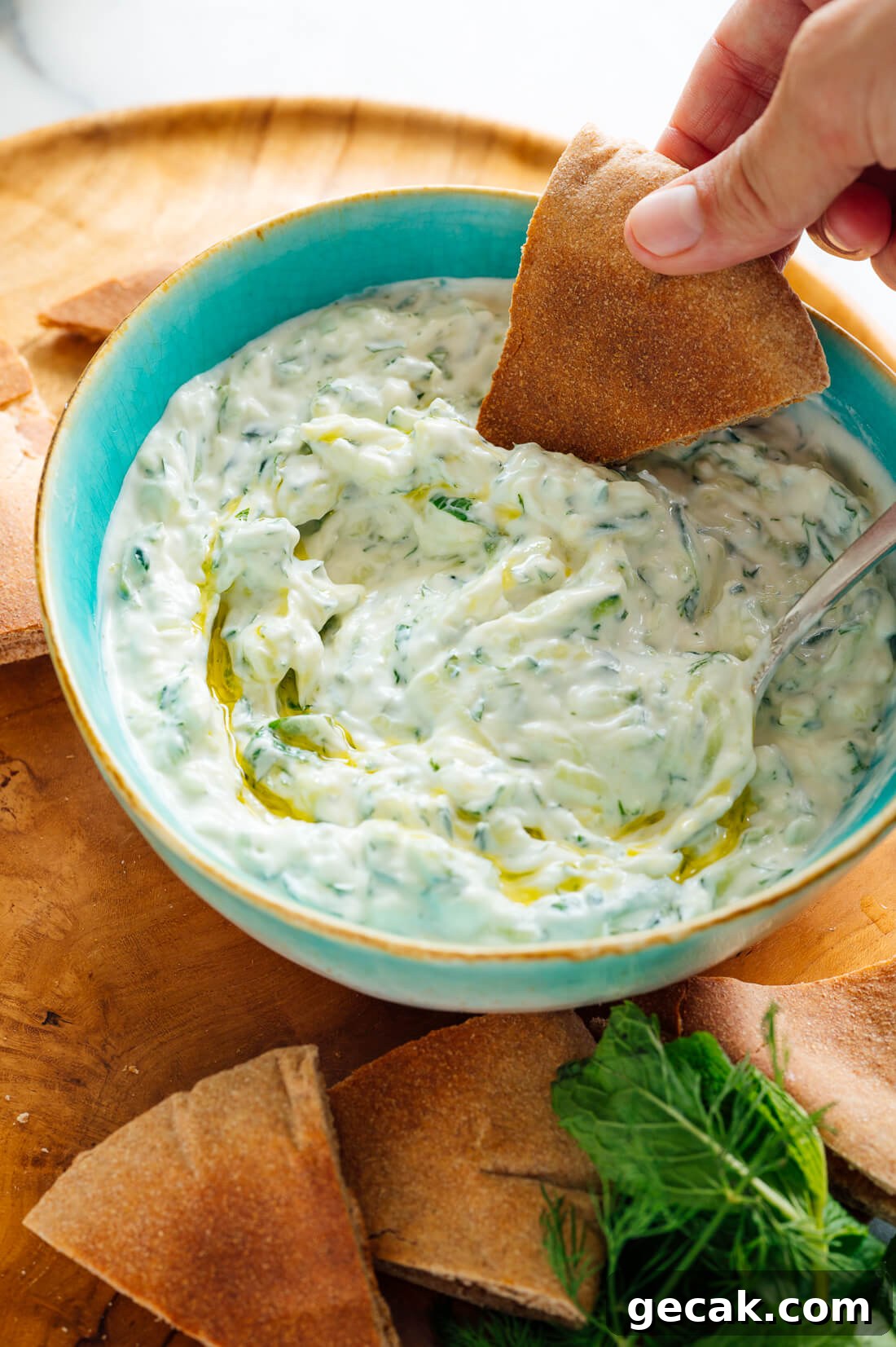
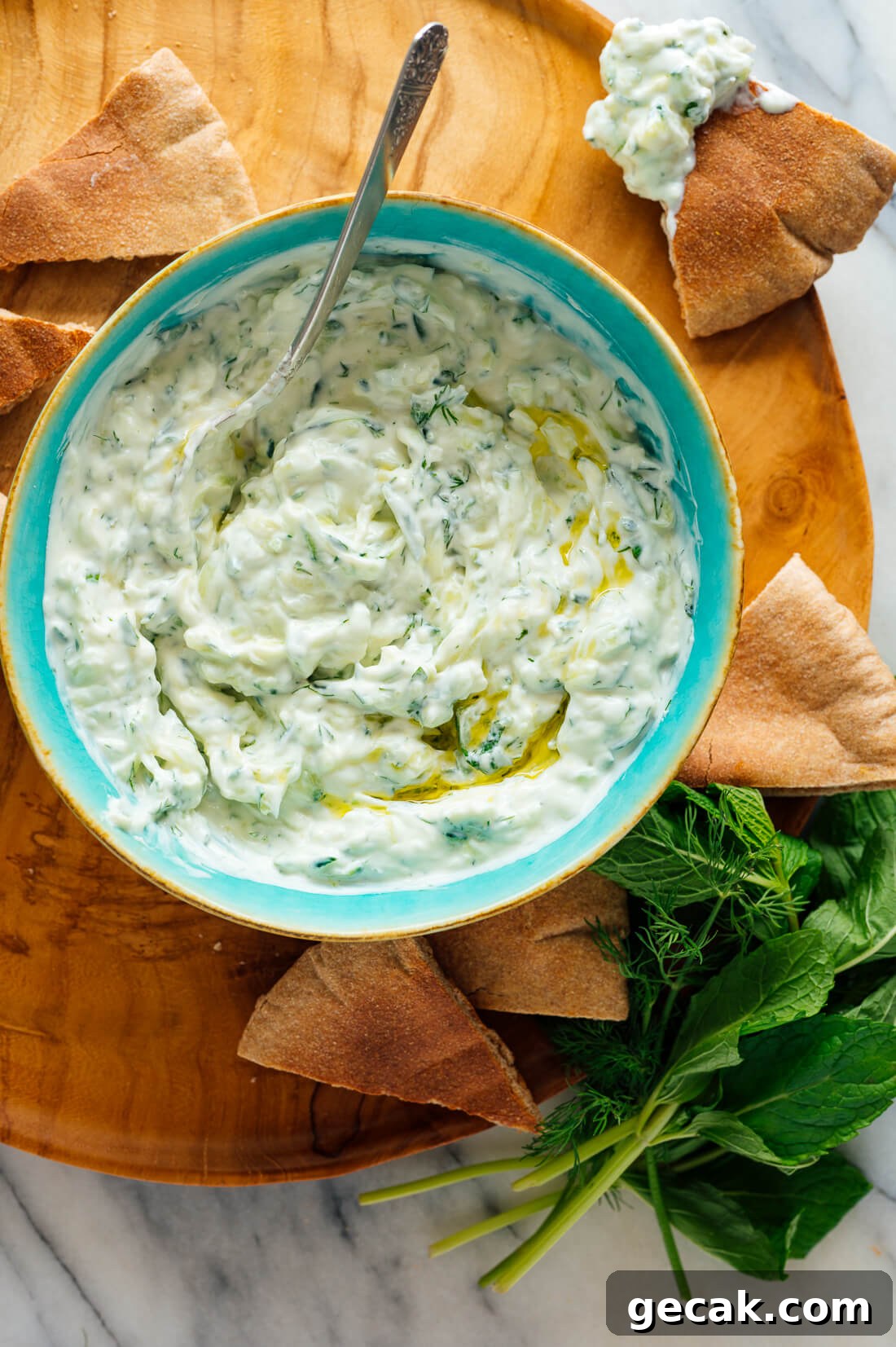
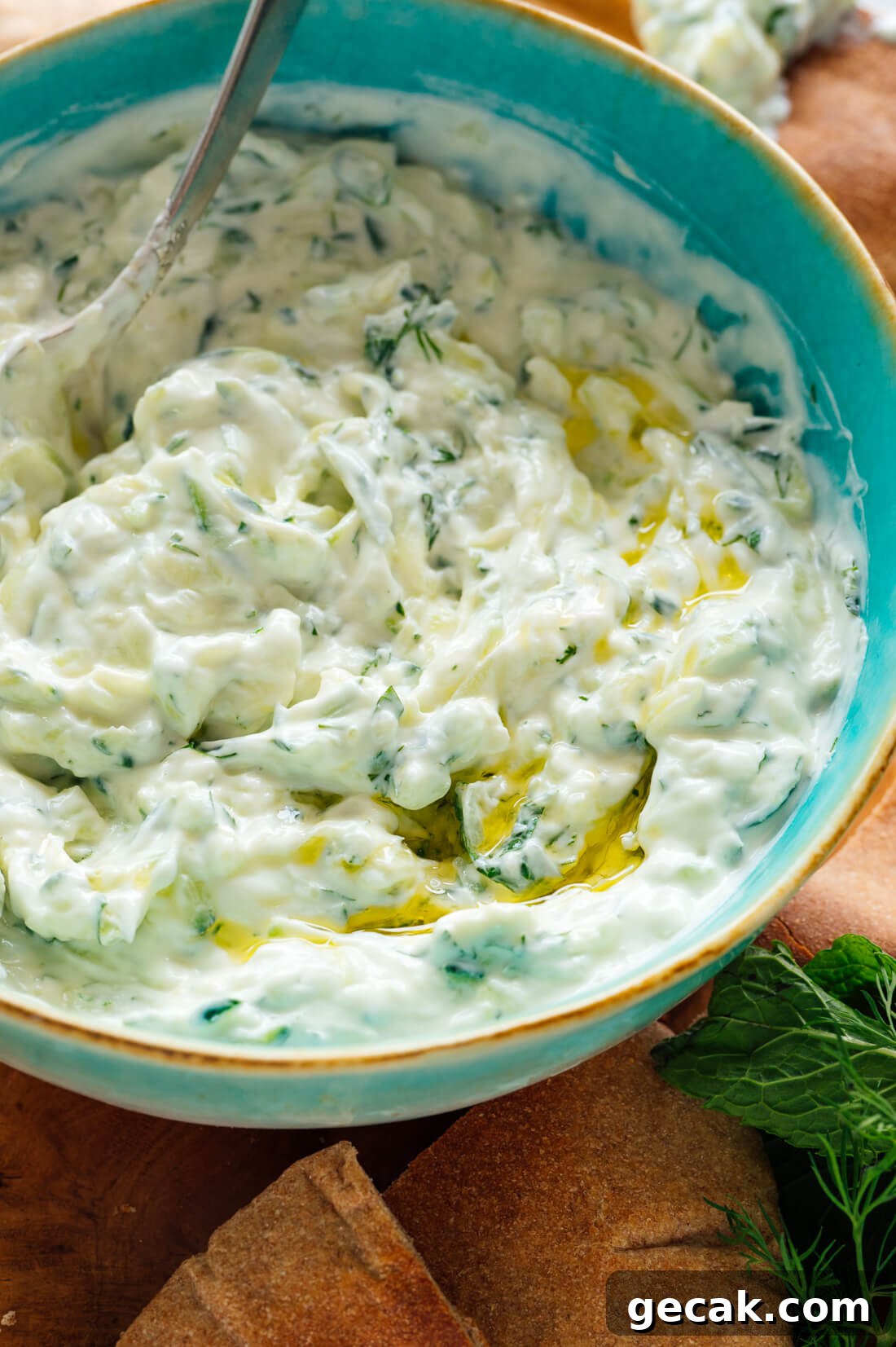
Tzatziki — tsaht-ZEE-kee! That cool yogurt-and-cucumber sauce you enjoy at Greek restaurants. Tzatziki combines yogurt, drained cucumber, olive oil, fresh herbs (usually mint or dill), garlic, lemon juice and salt into a bright, chilled sauce, dip or spread.
I visited Greece last fall and sampled tzatziki at every restaurant I could. This recipe captures that authentic flavor and is simple to prepare at home.
Although commonly associated with Greek cuisine, versions of tzatziki appear across the Mediterranean and Middle East under different names or with small variations. It pairs perfectly with grilled meats and gyros, and complements grilled or roasted vegetables, sandwiches and mezze spreads.
Ready to make some tzatziki? It’s quick and rewarding—let’s go.
Uses for Tzatziki
Grilled Vegetables
- Bell peppers
- Mushrooms
- Carrots
- Asparagus
- Green beans
- Corn on the cob
Appetizer Spreads
- Toasted pita wedges
- Crisp raw vegetables
- Olives
- Cheese and crackers
- Hummus
- Midddle-Eastern hot sauces such as zhoug or shatta
Falafel, Sandwiches and Salads
- Falafel
- Pita sandwiches (use tzatziki instead of avocado for a fresher tang)
- Tabbouleh
- Lentil salad
- Chickpea salad
My Tzatziki Technique
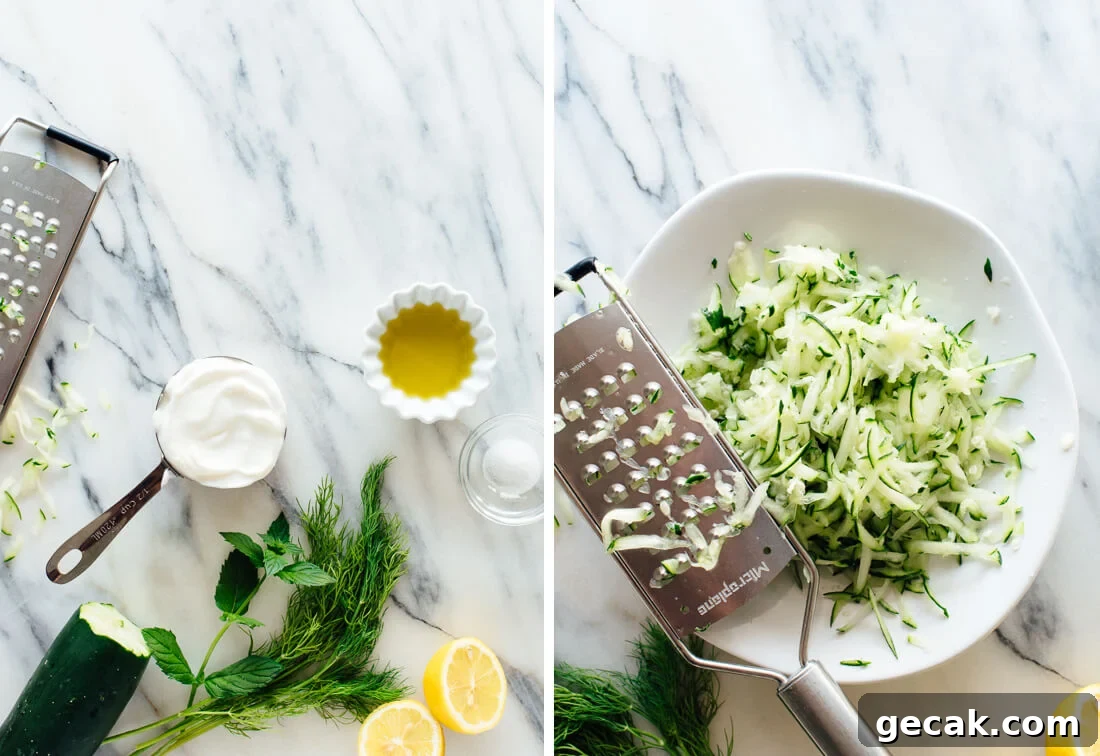
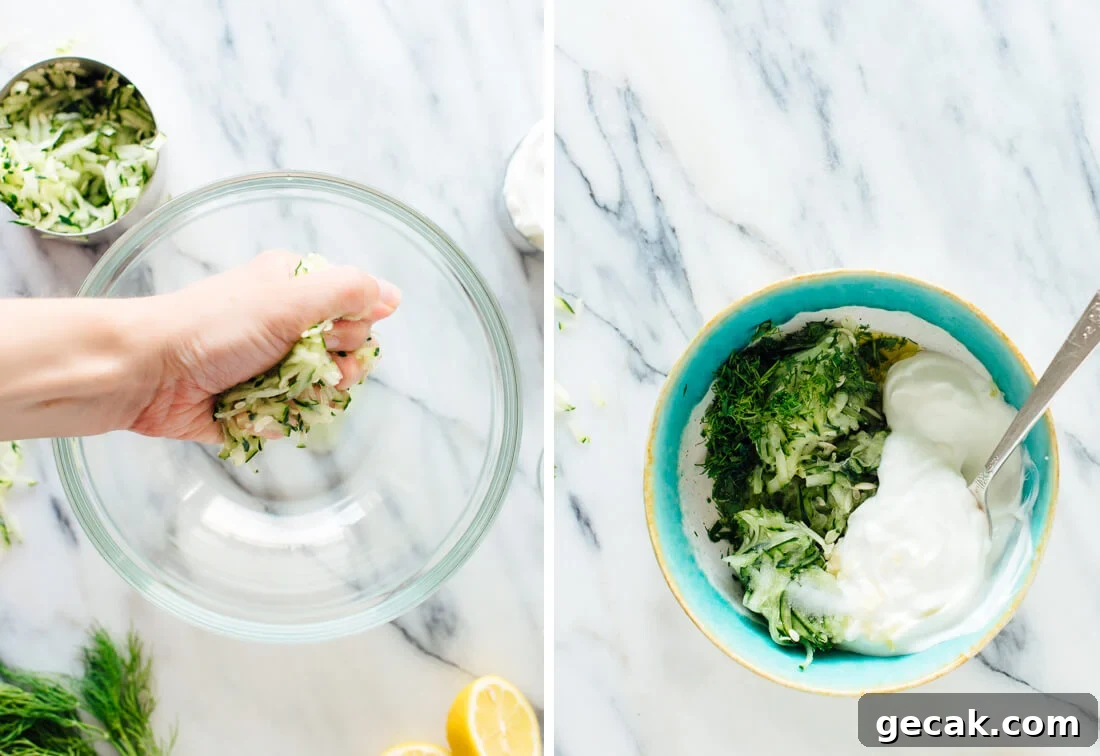
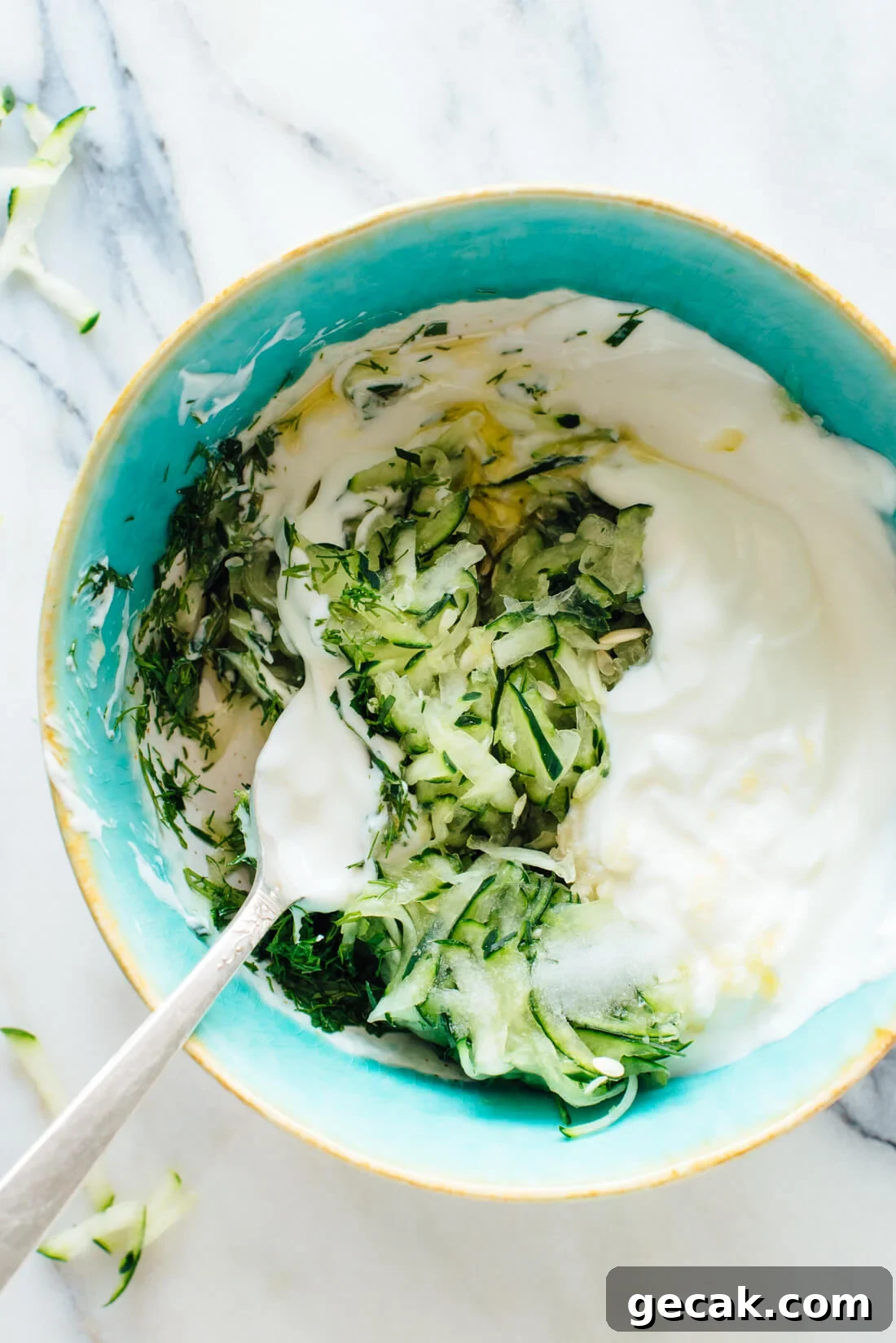
Tzatziki is straightforward to make. The key is removing excess moisture from the cucumber so the sauce stays thick and flavorful. Grating the cucumber and lightly salting it can help, but the quickest method is to squeeze the grated cucumber by hand over the sink until most liquid is expelled.
After combining the drained cucumber with the yogurt, olive oil, herbs, lemon, garlic and salt, let the mixture rest for about five minutes so the flavors meld. Serve immediately or chill for later.
Tzatziki Nutrition & Yogurt Notes
Tzatziki is a creamy yet light sauce. Because it’s based on yogurt and cucumbers, it’s lower in calories than heavier dressings like mayonnaise or ranch, so you can enjoy it generously.
You can use whole-milk, low-fat or nonfat Greek yogurt without a major difference in texture; Greek yogurt sold in many countries is strained and works well. Traditional Greek tzatziki may use strained goat or sheep yogurt, but plain strained cow’s-milk Greek yogurt is a fine and accessible substitute.
Please share how this recipe turns out for you! I love hearing how people serve tzatziki and the dishes it accompanies.
Watch How to Make Tzatziki Sauce
Print
Best Tzatziki
- Author: Kathryne Taylor
- Prep Time: 15 minutes
- Cook Time: 0 minutes
- Total Time: 15 minutes
- Yield: 2 1/2 cups
4.8 from 408 reviews
Learn how to make tzatziki, a traditional Greek yogurt and cucumber sauce with fresh herbs. This basic recipe yields about 2 ½ cups; multiply as needed.
Ingredients
- 2 cups grated cucumber (about 1 medium 10-ounce cucumber; no need to peel or seed, grate on the large holes of a box grater)
- 1 ½ cups plain Greek yogurt
- 2 tablespoons extra-virgin olive oil
- 2 tablespoons chopped fresh mint and/or dill
- 1 tablespoon lemon juice
- 1 medium clove garlic, pressed or minced
- ½ teaspoon fine sea salt
Instructions
- Working with one large handful at a time, lightly squeeze the grated cucumber between your palms over the sink to remove excess moisture. Transfer the squeezed cucumber to a serving bowl and repeat with the remaining cucumber.
- Add the yogurt, olive oil, herbs, lemon juice, garlic and salt to the bowl and stir to combine. Let the mixture rest for 5 minutes to allow the flavors to meld. Taste and adjust with more herbs, lemon juice or salt if needed.
- Serve tzatziki immediately or chill for later. Leftovers keep well, refrigerated, for about 4 days.
Notes
Recipe adapted from the cookbook Love Real Food.
To make dairy-free/vegan: Substitute an equal amount of cashew sour cream or another thick plant-based substitute for the yogurt, and thin with a splash of water if needed.
Nutrition
The nutrition information available in some versions of this recipe is an estimate and not a substitute for professional advice.
- Category: Sauce
- Method: By hand
- Cuisine: Greek