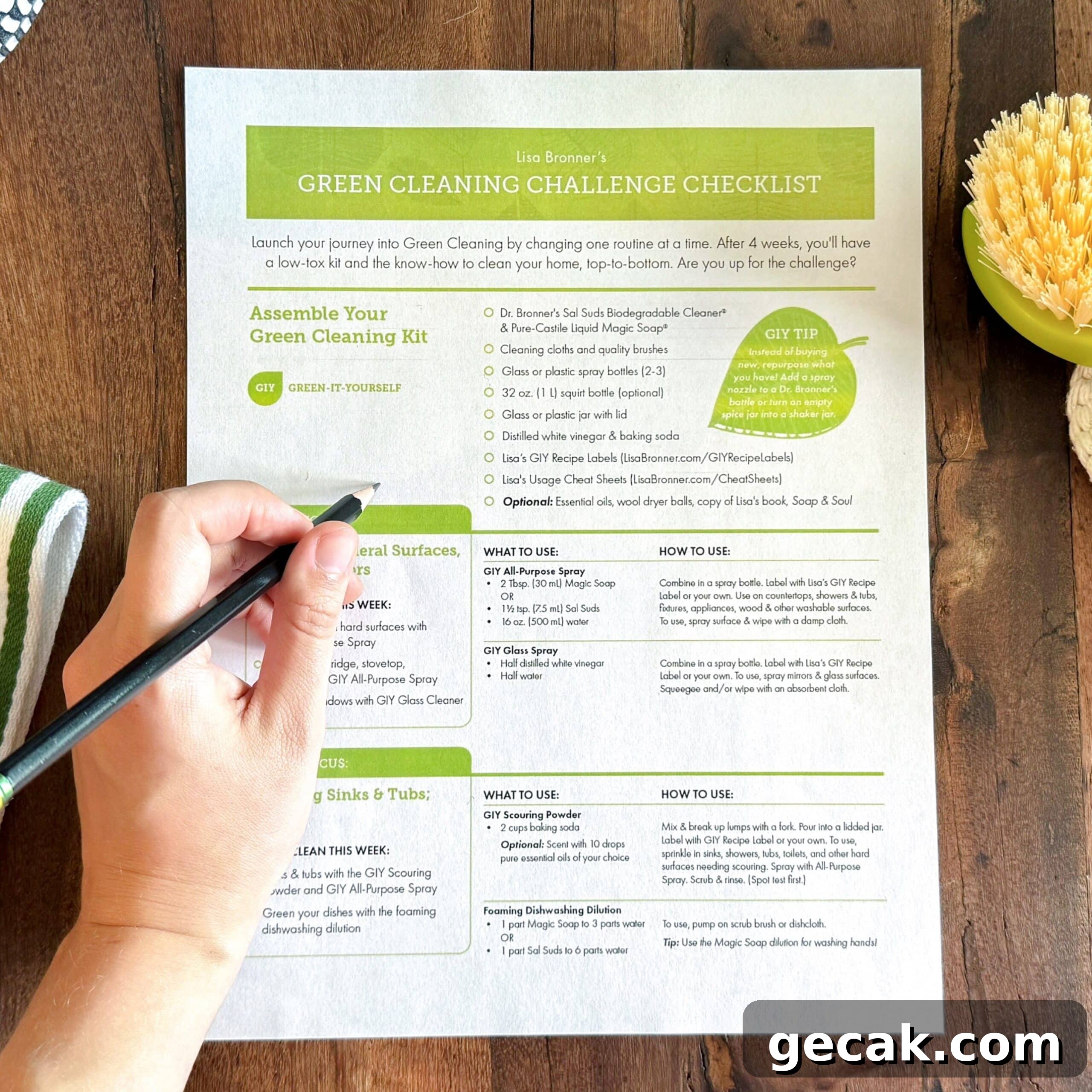
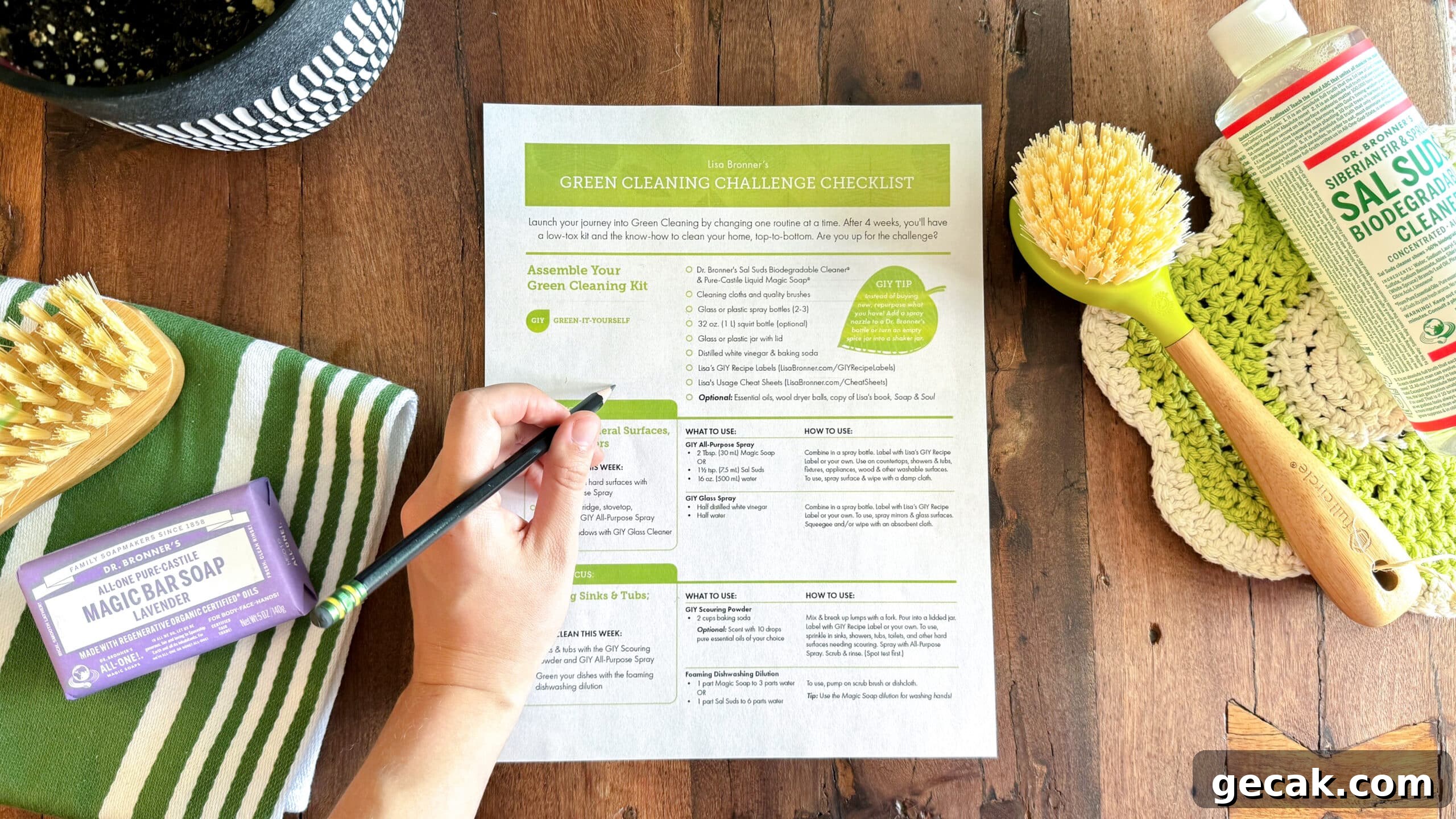
You’ve been meaning to switch to greener cleaning, but life gets busy, or you’re unsure where to start. This Green Cleaning Challenge Checklist is designed for people like you—busy, well-intentioned, and ready for a simple, practical plan. Over four weeks you’ll build a low-tox cleaning kit and learn straightforward routines to clean your home effectively using gentle, environmentally responsible ingredients.
This challenge guides you from conventional products to reliable, natural alternatives. By changing one routine at a time, you’ll create a robust DIY non-toxic cleaning arsenal and gain the confidence to keep your home clean without harsh chemicals.
Table of contents:
- What is green cleaning?
- What are the benefits of green cleaning?
- Why make your own cleaners?
- How is GIY different from DIY?
- Your Green Cleaning Starter Kit
- How to take that first step into green cleaning
- How to use the Challenge Checklist
- The Green Cleaning Challenge Checklist
- How to dispose of conventional cleaners safely
- What is the shelf life of homemade cleaners?
What is green cleaning?
My working definition of “green” is simple: leave the place better than I found it. Green cleaning is about stewardship—caring for homes, bodies, pets, workplaces, gardens, and the outdoors in ways that protect health, reduce waste and damage for future generations, rely on sustainable and renewable approaches, and remain realistic for time and budget.
In the home, green cleaning means prioritizing the least intensive methods that avoid residues on surfaces, reduce airborne pollutants, and eliminate harmful side effects. The word “green” is often used loosely, so keep this practical, health-focused definition in mind as you explore eco-friendly cleaning methods.
What are the benefits of green cleaning?
We clean for hygiene, appearance, and longevity—removing germs and dust, creating pleasant spaces, and preserving our home surfaces. Conventional cleaners can undermine those goals by introducing allergens hidden in vague “fragrance” labels, hormone-disrupting preservatives, and sensitizing chemicals that create new health problems. Production and disposal of petrochemical-derived cleaners can also harm soil, water, and air.
My working definition of “green” is: leave the place better than I found it. Fundamentally, it is about stewardship.
Misuse or accidental exposure to harsh cleaners can cause severe injuries and require emergency treatment. Green cleaners, when properly formulated and used, clean effectively without posing the same health risks. Research has also linked long-term use of intensive cleaning products to increased respiratory disease risk, which underscores the value of switching to gentler options.
Why make your own cleaners?
Making your own cleaning solutions gives you control over ingredients, reduces packaging waste, lowers cost, and allows customization. Store-bought products labeled “green” often offer no guarantee of safety, and buying pre-made products sacrifices many of the savings and environmental benefits of DIY solutions.
To capture this idea I use the term GIY—Green-It-Yourself—instead of DIY. GIY emphasizes non-toxic ingredients and mindful formulation.
How is GIY different from DIY?
GIY stands for Green-It-Yourself. It’s the DIY mindset applied specifically to creating non-toxic, environmentally friendly home cleaners. The focus is on safe, simple formulations that perform well without harmful preservatives or petrochemical ingredients.
Your Green Cleaning Starter Kit
You only need a few versatile items to get started. Homemade cleaners are highly adaptable, so you’ll save space and simplify your routine.
What you’ll need:
- Dr. Bronner’s Sal Suds Biodegradable Cleaner® or Pure-Castile Liquid Magic Soap®
- Cleaning cloths and quality brushes
- 2–3 glass or durable plastic spray bottles (16 oz. recommended)
- Optional 32 oz. squirt bottle
- Glass or plastic shaker jar with holes in the lid
- Distilled white vinegar (4–5% kitchen vinegar)
- Baking soda
- GIY recipe labels and usage cheat sheets
- Optional: essential oils, wool dryer balls, and reference materials
Dr. Bronner’s Sal Suds vs. Castile Soap – which should you use?
Sal Suds and Magic Soap are both excellent, concentrated cleaners made from ethically sourced ingredients and essential oils. They are surfactants—cleaners that remove debris rather than disinfecting by killing microbes. Sal Suds is a mild detergent and performs better in hard water and on shiny surfaces. Castile Magic Soap is a true soap and can be affected by hard water, which may leave slight cloudiness on shiny finishes. In most cases they are interchangeable—use whichever you have on hand.
Green cleaning tools
Invest in durable, high-quality tools so you replace them less often. Good tools save time and money over the long run.
Cleaning cloths: Use washable, lint-free, highly absorbent cloths such as microfiber. Wash new microfiber cloths in a mesh bag for several cycles to reduce initial shedding.
Spray bottles: Choose sturdy bottles in sizes you’ll use up regularly—16 oz. is a good standard to keep solutions fresh.
Cheat sheets and reference materials: Keep dilution guides and recipes handy—inside a cabinet door or on your phone—to avoid guesswork.
Books and guides: Reference materials that explain both recipes and the science behind them build confidence in GIY cleaning practices.
Supporting ingredients
Aside from your main surfactant (Sal Suds or Magic Soap), a few supporting ingredients are helpful:
Vinegar: Useful on glass, ceramic, and porcelain. Vinegar is acidic and can damage metal, natural stone, and some wood finishes—avoid those surfaces. Use standard 4–5% white distilled kitchen vinegar; concentrated “cleaning vinegar” is unnecessary and hazardous.
Baking soda: An effective scouring and deodorizing agent; buy in bulk and store dry.
Other useful items include wool dryer balls for laundry and a few essential oils for scent and mild additional cleaning benefit when used properly and diluted.
What not to mix
Even non-toxic ingredients can react unexpectedly. Avoid these combinations:
- Soap and vinegar (or any acid): they react and neutralize each other, forming a messy residue that won’t clean effectively.
- Sal Suds and vinegar: vinegar can reduce Sal Suds’ cleaning performance, so don’t mix them.
- Baking soda and vinegar: they fizz (which can help dislodge grime temporarily) but the result is mainly water and sodium acetate, not an effective long-term cleaner. Do not premix in a closed container.
- Vinegar and hydrogen peroxide: mixing them produces peracetic acid, which is hazardous to handle.
Never mix bleach with ammonia, acids (like vinegar), rubbing alcohol, or unknown store-bought formulations—these combinations create dangerous gases or caustic compounds.
How to take that first step into green cleaning
Start by changing one product at a time. Swapping everything at once often leads to frustration and repurchasing conventional products in a pinch. Learn one GIY recipe, use it until you’re comfortable, then make the next swap. Small, consistent changes lead to long-term success.
This Green Cleaning Challenge Checklist is designed to be simple and manageable so the new routine fits your household and budget.
How to use the Green Cleaning Challenge Checklist
Print the checklist and post it inside your cleaning cabinet, or bookmark this page on your device. Gather the supplies—many are already in your kitchen—and prepare a few bottles. Upfront costs are minimal and will save money over time. Start with the product you use most and proceed through the checklist one swap at a time.
The Green Cleaning Challenge Checklist
Here is your Green Cleaning Challenge Checklist. Follow the plan week by week and you’ll transition from conventional to green cleaners in a month.
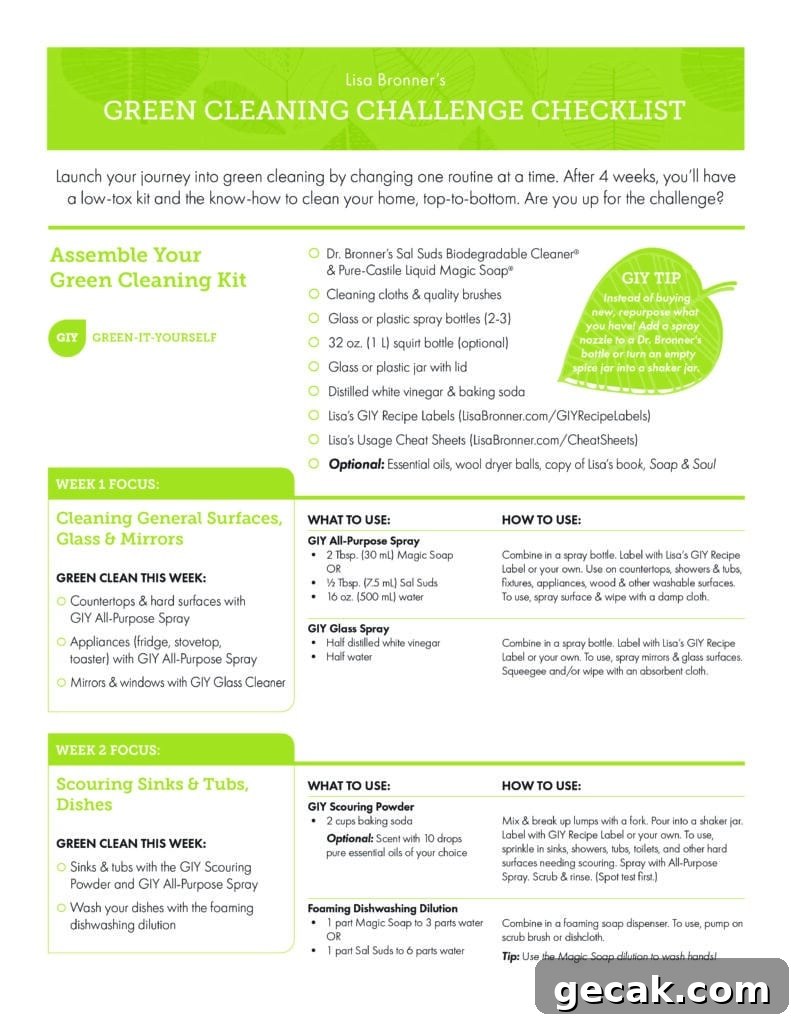
Begin with an all-purpose GIY cleaning spray for counters, sinks, fixtures, tubs, appliances, and walls—one solution for many surfaces reduces clutter. From there, move through tasks like glass and mirror cleaning, dishwashing, tubs and sinks, laundry, furniture, and floors. The checklist focuses on the everyday areas you clean most often.
How to dispose of conventional cleaners safely
When you replace conventional cleaners, choose one of these actions:
- Give them to a friend who is still using conventional cleaners. This keeps packaging and product from going to waste while you continue your transition.
- Dispose of them as hazardous waste at a local drop-off site. Do not pour potent cleaners down drains or into septic systems, as they harm downstream ecosystems and septic function.
What is the shelf life of homemade cleaners?
Homemade cleaners lack synthetic preservatives, so plan to remake solutions every 2–4 weeks. Store them in a cool, dark place and consider using distilled or filtered water to extend freshness. Over time you’ll estimate the right batch size for your household. Recipe labels help you refill accurately and keep track of dates.
Frequently asked questions
How is Dr. Bronner’s Sal Suds different from Castile Magic Soap?
Sal Suds is a mild detergent formulated for household cleaning and performs well in hard water. Castile Magic Soap is a true soap, initially designed for body care but useful around the home. Both are effective and concentrated.
Which conventional cleaner should I replace first?
Replace the product you use most often—typically the all-purpose cleaner.
How do I dispose of conventional cleaners?
Either give them to someone still using them or take them to a hazardous waste disposal site.
What is the shelf life of homemade cleaners?
About 2–4 weeks. Make smaller batches if you don’t use them up in that timeframe.
Are homemade cleaners as effective as store-bought?
Yes—when properly formulated, homemade cleaners perform as well as many store-bought options. Follow tested recipes and dilution guidelines.
Are green cleaners safe for pets and kids?
GIY cleaners are generally safer than conventional alternatives. Essential oils should not be applied full-strength to pets, but in diluted cleaning formulations they do not typically leave harmful residues. Use caution and common sense around sensitive individuals and animals.
Now is the time to begin your green cleaning challenge
Starting something new can feel daunting, but small steps lead to big changes. Over time you’ll spend less, live more healthfully, and simplify your home care. Share your journey and tips to encourage others; hearing real experiences helps the whole community move toward safer, greener cleaning.
Further reading
- 13 Non-Toxic DIY Recipes for Cleaning and Body Care
- Your Guide to Building a Green Cleaning Starter Kit
- How Green Cleaning Can Save You Money
These tips and many more are explored in my book, Soap & Soul: A Practical Guide to Minding Your Home, Your Body, and Your Spirit with Dr. Bronner’s Magic Soaps, which provides recipes, science, and clear guidance for confident, low-tox living.