Pork shoulder steaks are an inexpensive cut that becomes deeply flavorful and tender when grilled, often outperforming traditional pork chops in taste and texture. These steaks are well-marbled—think of them as the pork equivalent of a ribeye—and are surprisingly simple to prepare.
I previously shared a skillet version of pork steaks served with a creamy white wine pan sauce; cooking the same basic ingredients with different techniques highlights how much the cooking method changes the result. The grilled version delivers a smoky char and a satisfying crust. Both approaches are excellent depending on the flavor profile you want.
Pork Shoulder Steaks?
Yes—pork shoulder steaks. Pork shoulder (also called pork butt) isn’t only for low-and-slow cooking. Because it’s well-marbled, it can take high heat and still stay tender. I often buy boneless pork butt in bulk; one roast might get smoked for pulled pork while the other is portioned into steaks for dishes like these.
You can slice pork steaks from a pork butt yourself, look for them labeled as “blade steaks” at the store, or ask your butcher to cut them to order.
Treat Them Like a Beef Steak
I grill these like a ribeye: minimal seasoning—kosher salt and black pepper—lets the pork’s flavor shine. Thickness matters: steaks about 1″ thick produce a good crust without overcooking inside. I aim for medium: pull the steaks at about 140°F to allow for carryover to a safe, juicy 145°F.
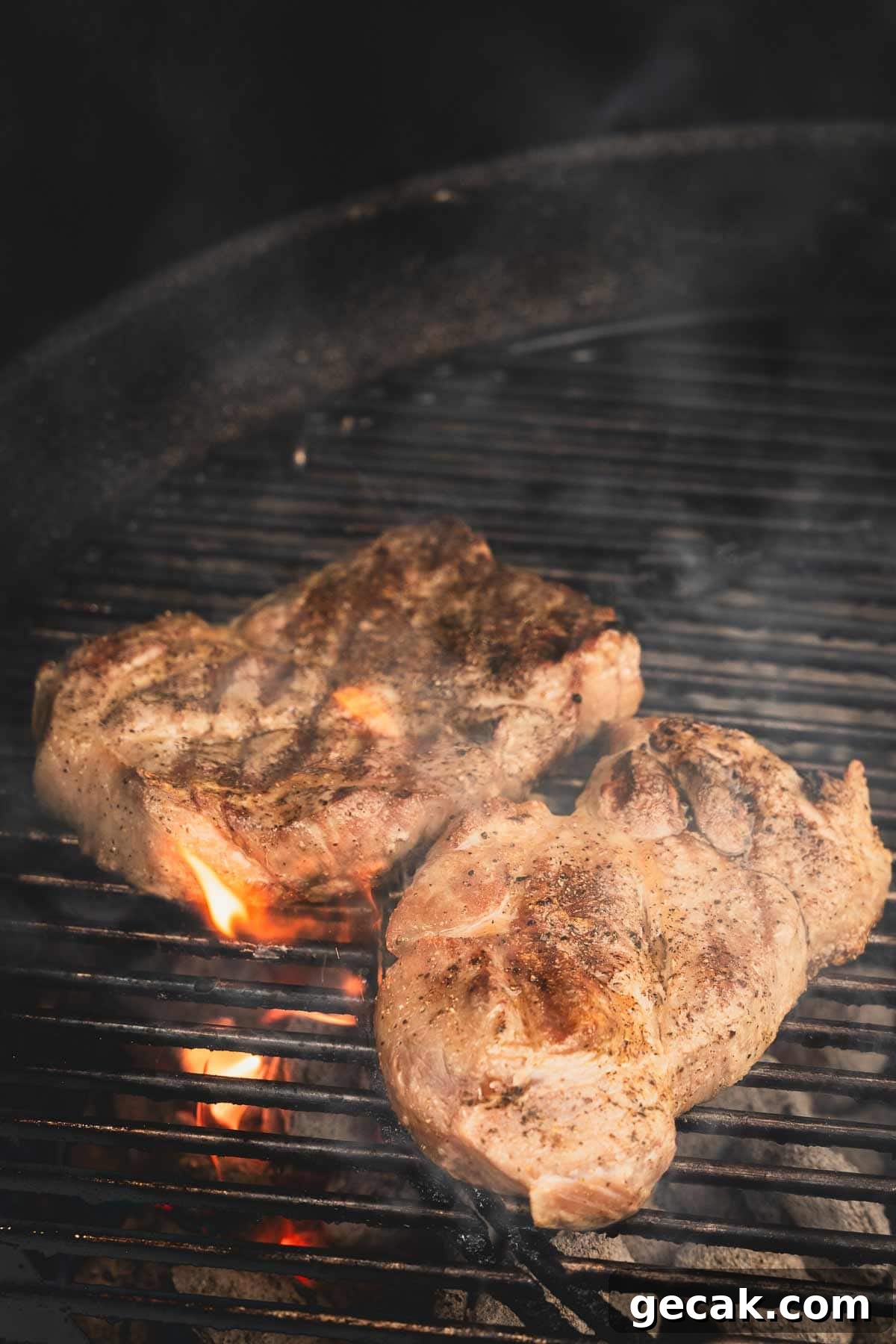
The Grill Setup
For the best flavor, use a charcoal grill and set up two zones: a direct-heat area for searing and an indirect, cooler side for finishing or avoiding flare-ups when fat drips. The cooler zone is especially useful for thicker steaks so the exterior gets a crust without the interior overcooking.
The Fast Flip Grilling Method
The fast-flip method—frequent flipping every couple of minutes—helps the steaks cook evenly while building a great crust. With moderate, steady heat and flips every 2 minutes, a 1″ pork shoulder steak will reach medium in roughly 8–10 minutes. You don’t need an extremely hot fire—consistent, even heat prevents scorching while allowing the fat to render.
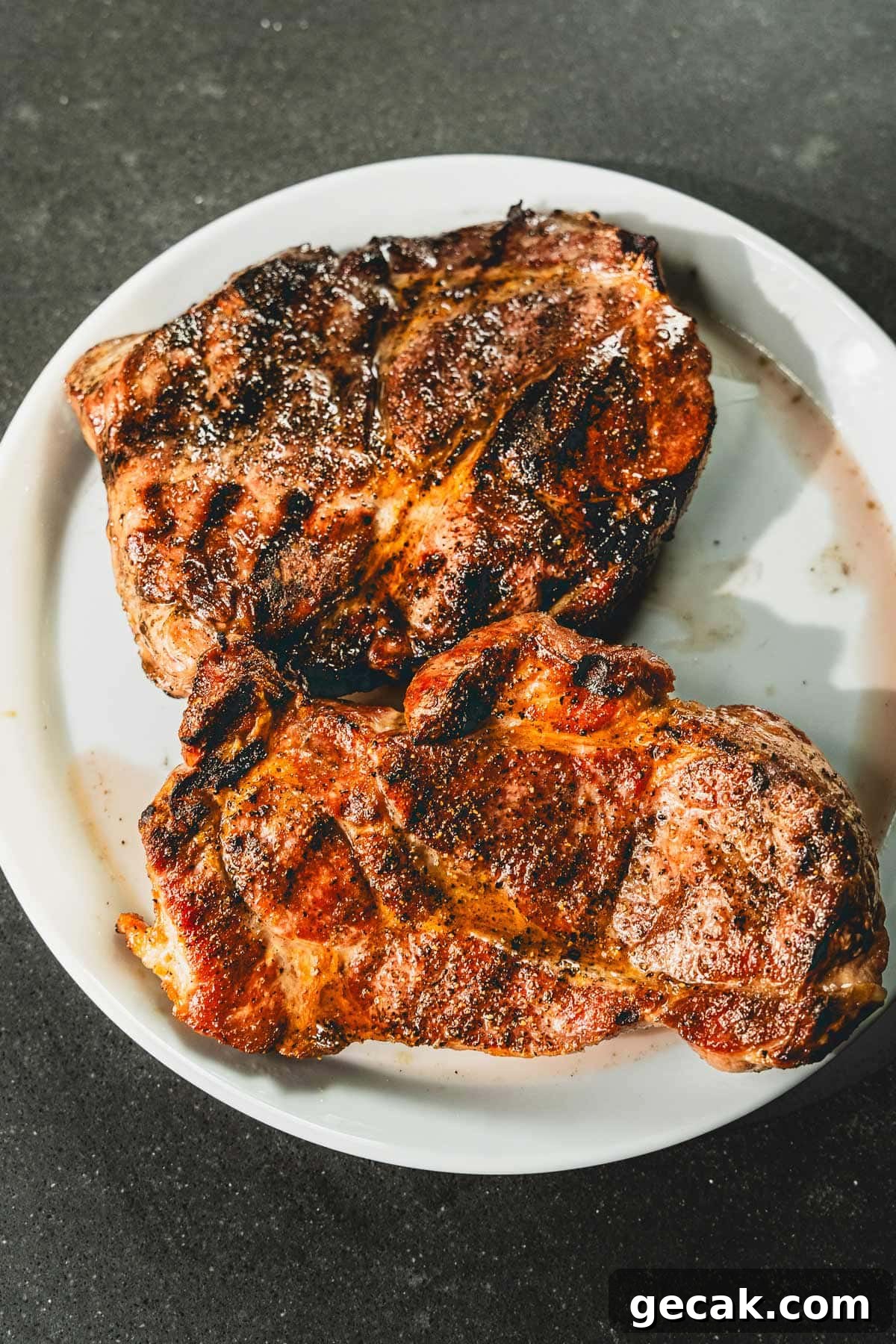
Serving Suggestions
Serve pork shoulder steaks with the same accompaniments you’d pair with beef: a sprinkle of flaky sea salt, grilled or roasted potatoes, or creamy mashed potatoes. Chimichurri, a bright herb sauce, complements the smoky flavor particularly well. Grilled vegetables like broccolini or a classic pairing such as baked beans or macaroni salad work great too.
Leftovers reheat well—slice them for sandwiches or chop and warm for tacos.
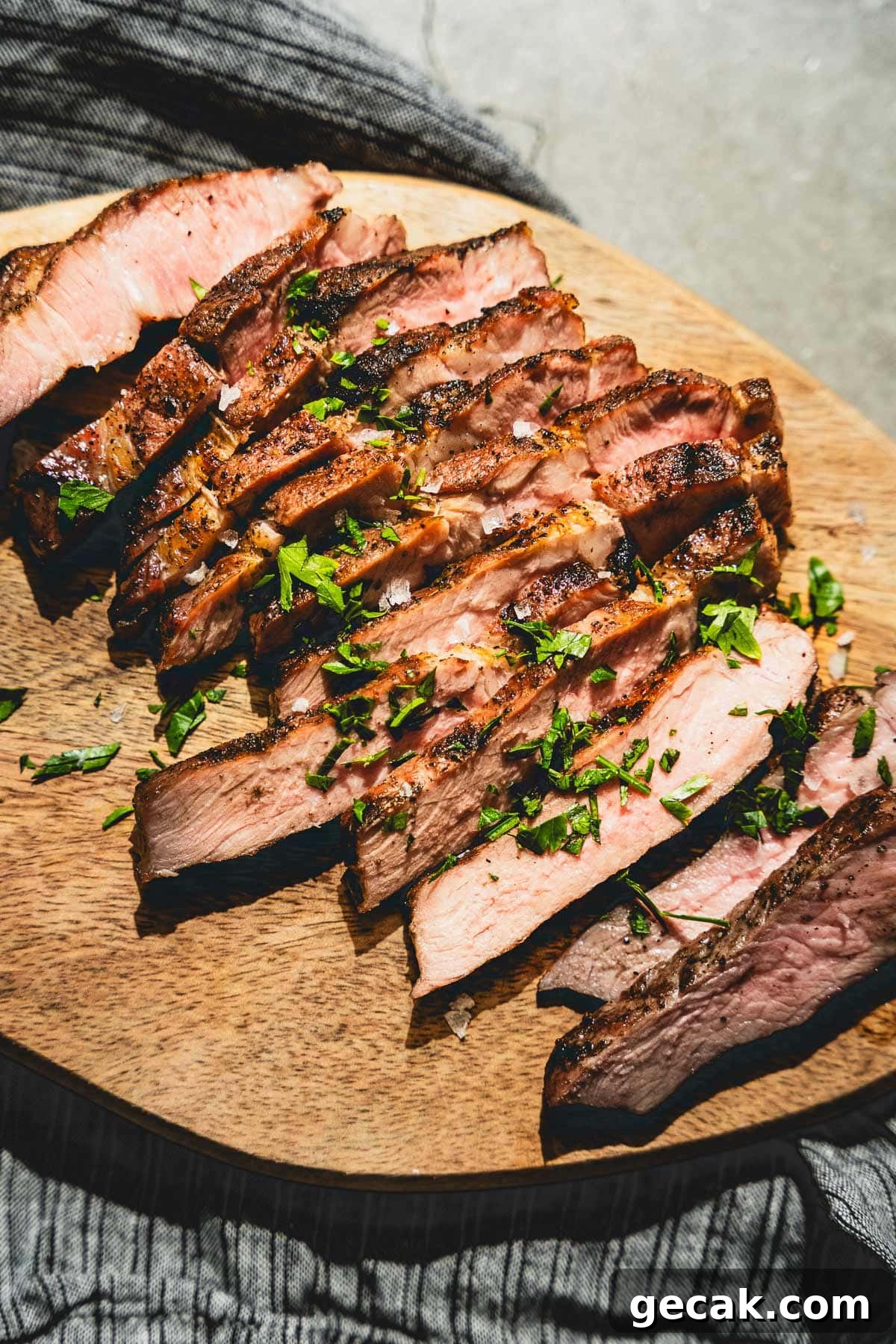
More Delicious Recipes to Try
Skillet Pork Steaks
Grilled Pork Tenderloin
Grilled Flap Steak
Grilled Short Ribs
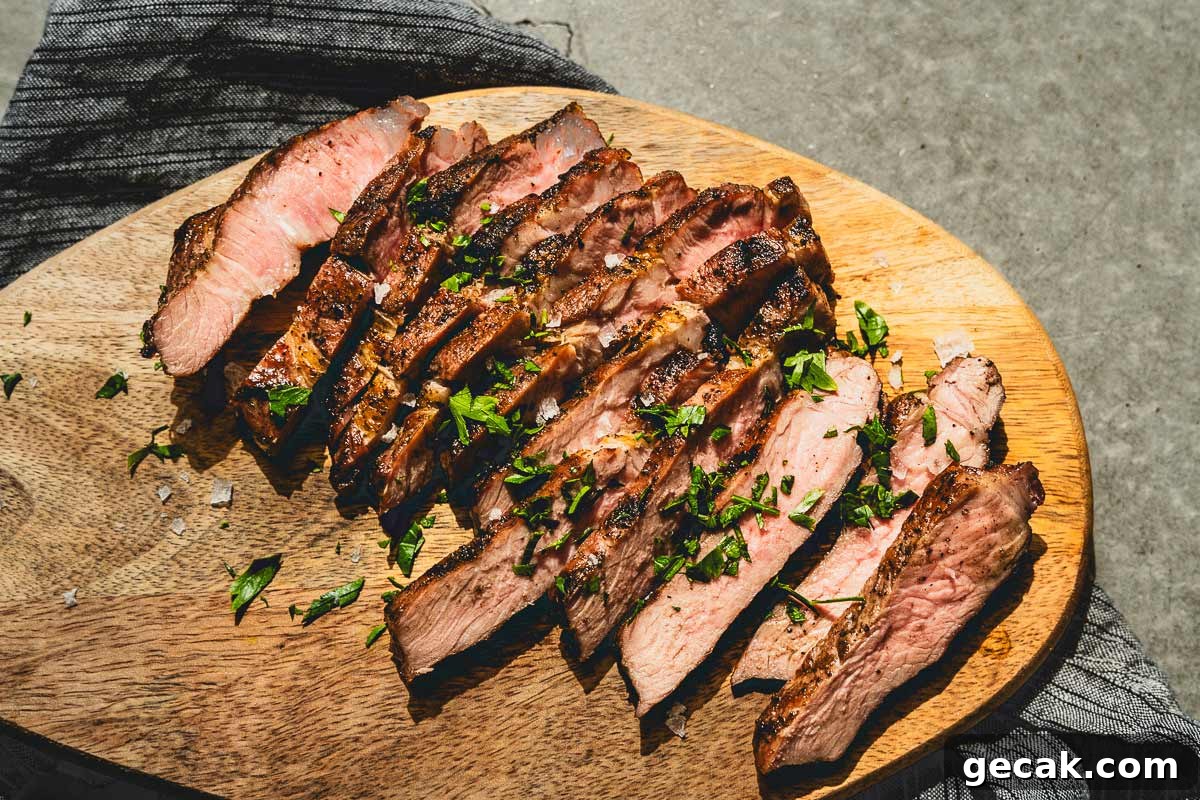
Grilled Pork Shoulder Steaks
Share
Print
Ingredients
-
4 pork steaks 1″ thick (2 pounds total) -
Kosher Salt -
black pepper -
2 tsp vegetable oil (or olive oil) -
BBQ Rub optional
Instructions
-
Season. One hour before grilling, liberally salt all sides of the pork steaks with kosher salt. Dry-brining overnight is an optional step for even better texture—salt the night before and refrigerate uncovered on a wire rack, then bring to room temperature about an hour before cooking.
-
Preheat. Set up your grill and preheat to medium-high heat with a two-zone configuration so you have direct heat for searing and indirect heat to move steaks if flare-ups occur or to finish cooking thicker cuts.
-
Just before grilling, lightly brush the steaks with oil and season with black pepper. If using a dry rub, consider its salt and sugar content—reduce added salt if the rub is salty and beware that sugar can burn over high heat.
-
Sear. Place the steaks over direct heat and close the lid. Flip every 2 minutes using tongs until the internal temperature reaches about 140°F for medium—roughly 8–10 minutes total depending on thickness and grill heat.
-
Rest. Remove steaks from the grill, tent loosely with foil, and rest for 10 minutes. Carryover cooking will raise the temperature to about 145°F for a juicy, safe medium doneness.
-
Enjoy!
Notes
- The steaks are best when dry-brined 24 hours ahead by salting the night before, then refrigerating uncovered on a wire rack. Bring to room temperature an hour before cooking.
- If your dry rub contains salt or sugar, adjust added salt and be cautious with cooking temperature to avoid burning sugar.
- Use a two-zone grill setup so you can move steaks off direct heat in case of flare-ups or to finish thicker cuts after developing a crust.
- For food safety and ideal texture, verify the final internal temperature reaches 145°F using a reliable meat thermometer.
Tried this recipe?
Let us know how it was!