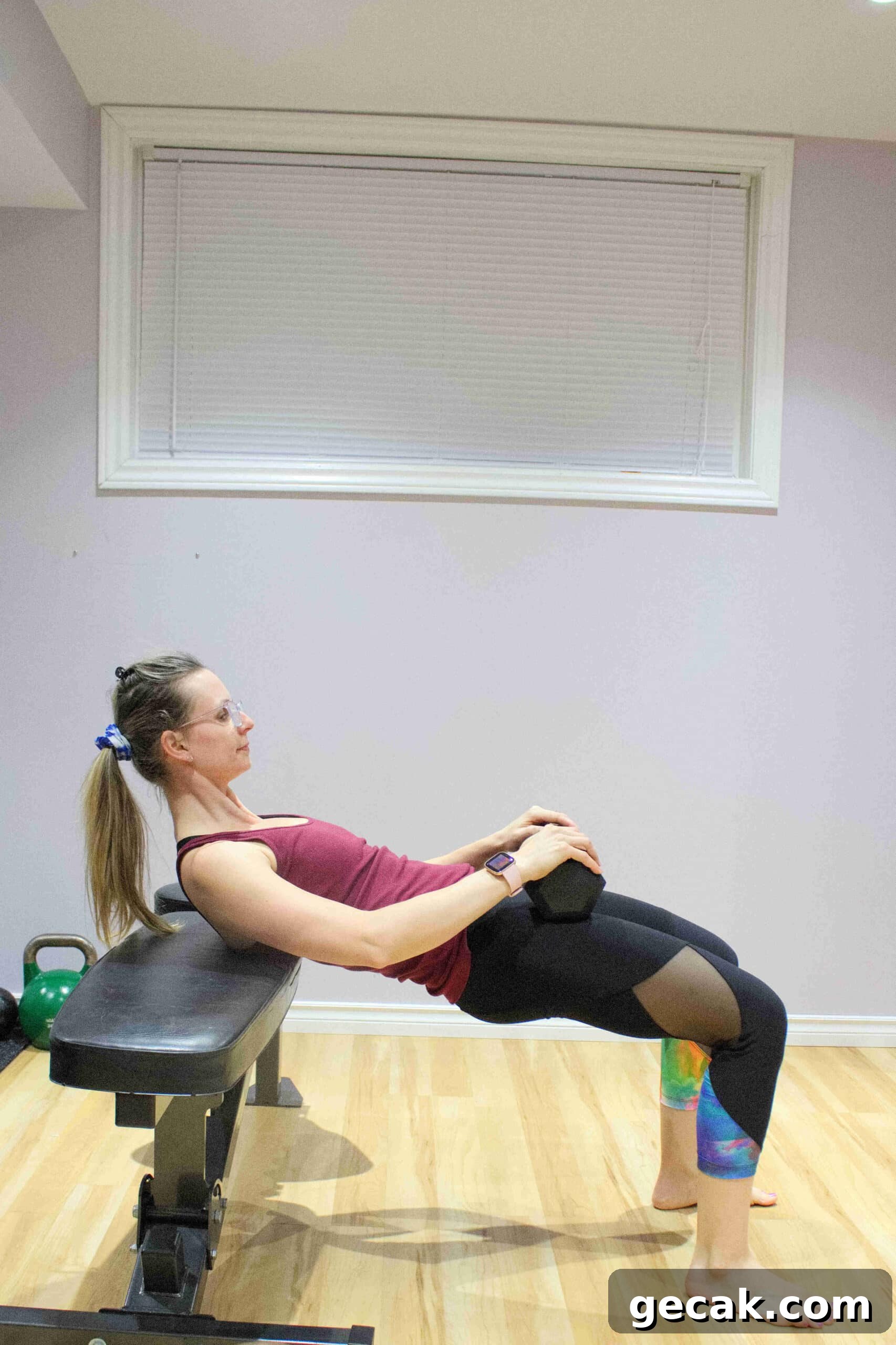
Beginner-friendly and low-impact, these hip-dominant exercises place extra tension on the glutes and hamstrings. Because the glutes are among the body’s largest muscles, getting stronger with these movements can improve posture, boost athletic performance, and help reduce back pain.
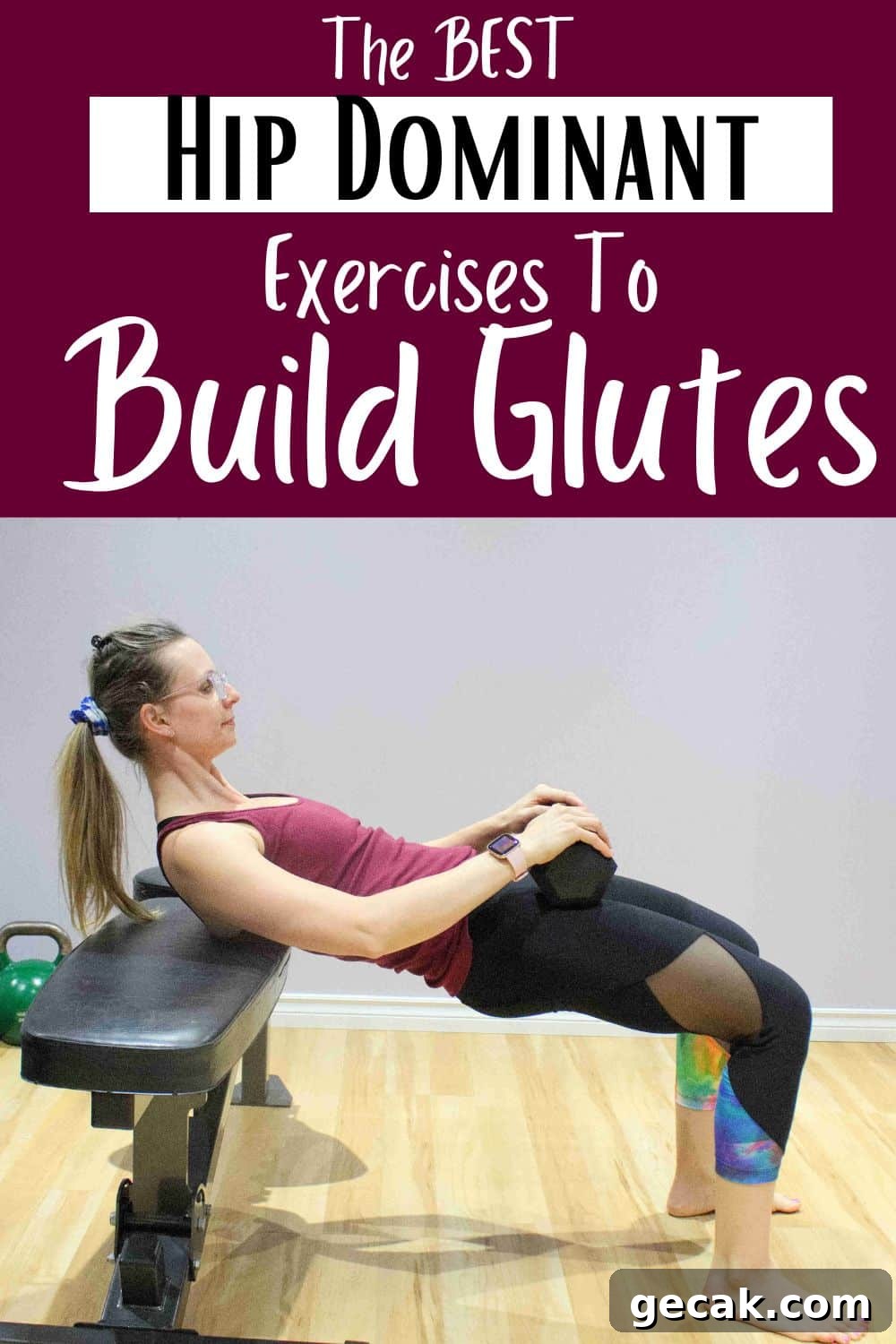
“Love how detailed this is. I am new to exercising without an instructor, so really need things spelled out to me like a baby, and this was perfect!” -Donna
Smash your training with these hip-dominant moves.
Hip-dominant exercises emphasize hinging at the hips (unlike squats, which are more knee-dominant), so the glutes and hamstrings work together to extend the hip. Since glutes respond well to variety, rotating these movements into your routine is beneficial.
These exercises target all three glute muscles—not only the gluteus maximus—which is important when aiming to build balanced strength. Most of them can be performed at home, making them ideal for beginners or busy parents. Pair them with effective glute stretches for best results.
Hip Dominant vs Glute Dominant Exercises
Hip-dominant exercises rely on movement driven from the hips, like the hip hinge, where glutes and hamstrings collaborate to extend the hip.
Glute-dominant exercises place more direct tension on the glute muscles themselves, often reducing involvement from other muscle groups.
Both styles are useful when building strong, balanced glutes.
The Exercises To Implement
- Glute bridges
- Hip thrusts
- Deadlifts
- Pull-throughs
- Kneeling squat
- Quadruped hip extension
- Bulgarian split squat
Scroll down to learn more about these hip-dominant exercises and how to use them to grow your glutes.
Benefits Of Strong Glutes?
Many people under-activate their glutes. Prioritizing hip-dominant exercises can make a noticeable difference in daily movement and comfort.
The benefits of strong glutes include:
- Easier performance of daily tasks like carrying and lifting
- Reduced knee pain
- Less lower back pain
- Improved pelvic stability during and after pregnancy
- Better athletic performance for running, jumping, lifting, and climbing
- Improved posture as part of a stronger posterior chain
- Support for pelvic floor function
Strong glute muscles support function in all these areas. Neglecting hip-dominant work is a common mistake—especially for busy parents. Prioritize variety and consistency to see improvements.
The Best Hip Dominant Exercises
The best hip-dominant exercises can be done with bodyweight—stick with those until you master the movement. As you progress, add resistance with bands or dumbbells to accelerate strength gains.
These exercises are beginner-friendly, low-impact, and designed to help you feel your glutes working. If you don’t feel them within a few reps, adjust your form and focus on muscle engagement rather than simply moving through the motion.
Use these exercises in circuits, as glute finishers, or incorporate them into total-body or targeted lower-body workouts.
Exercise #1: Glute Bridge
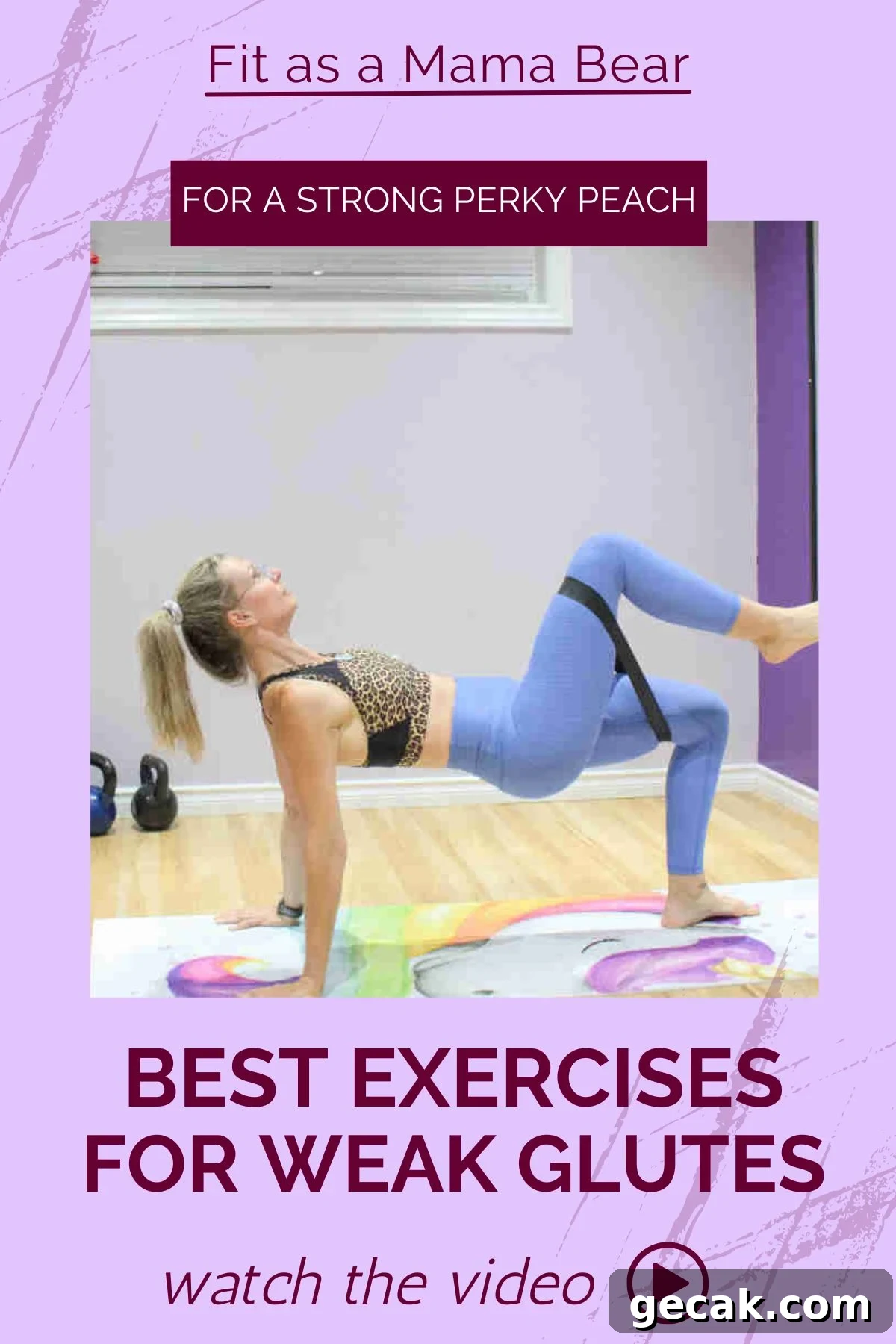
Glute bridges are a foundational hip-extension exercise. Aim for full hip extension and a strong squeeze at the top. Avoid overarching the lower back—keep the weight through the heels and feet slightly wider than hip-width.
To increase activation, place a mini band around your knees and push outward against the band as you lift.
How to perform glute bridges:
- Lie on your back with knees bent and heels close to your glutes, feet roughly shoulder-width apart.
- Push through the heels and lift your hips by squeezing the glutes, avoiding excessive lower-back arching.
- Pause at the top for one second with a maximal glute squeeze, then lower the hips back to the starting position.
Perform 8–25 repetitions depending on intensity and variation.
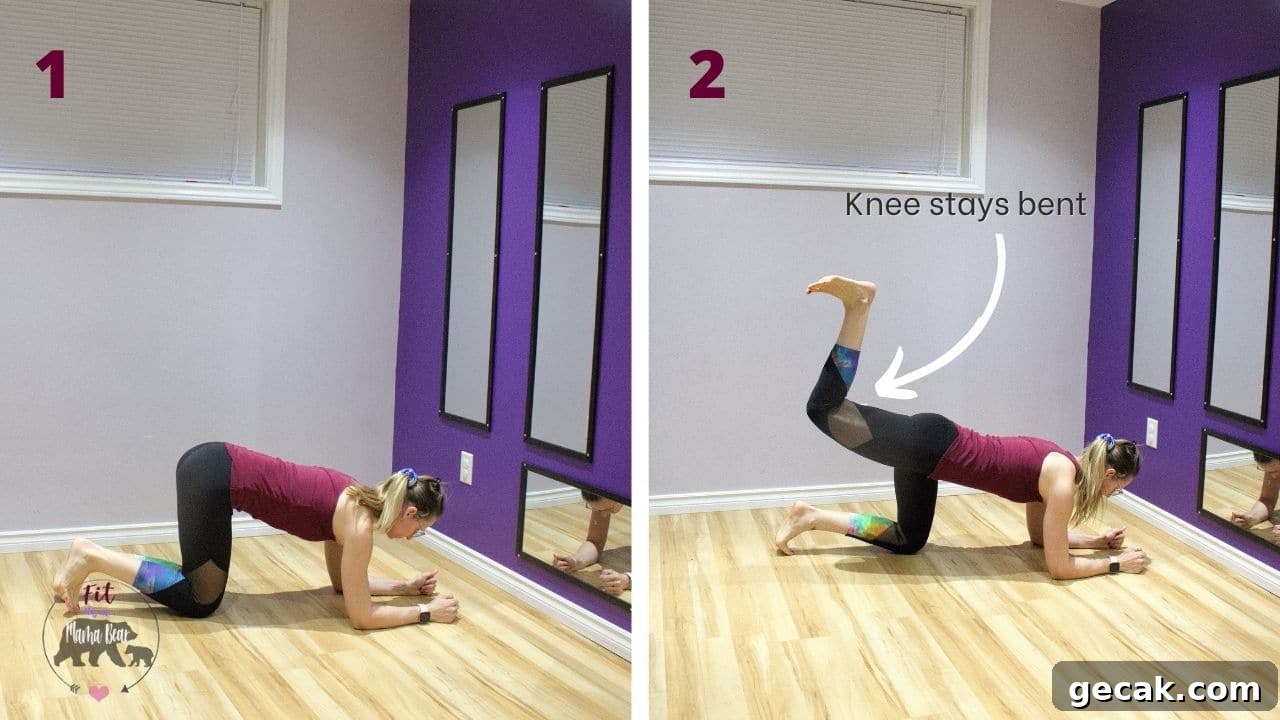
Exercise #2: Quadruped Hip Extensions
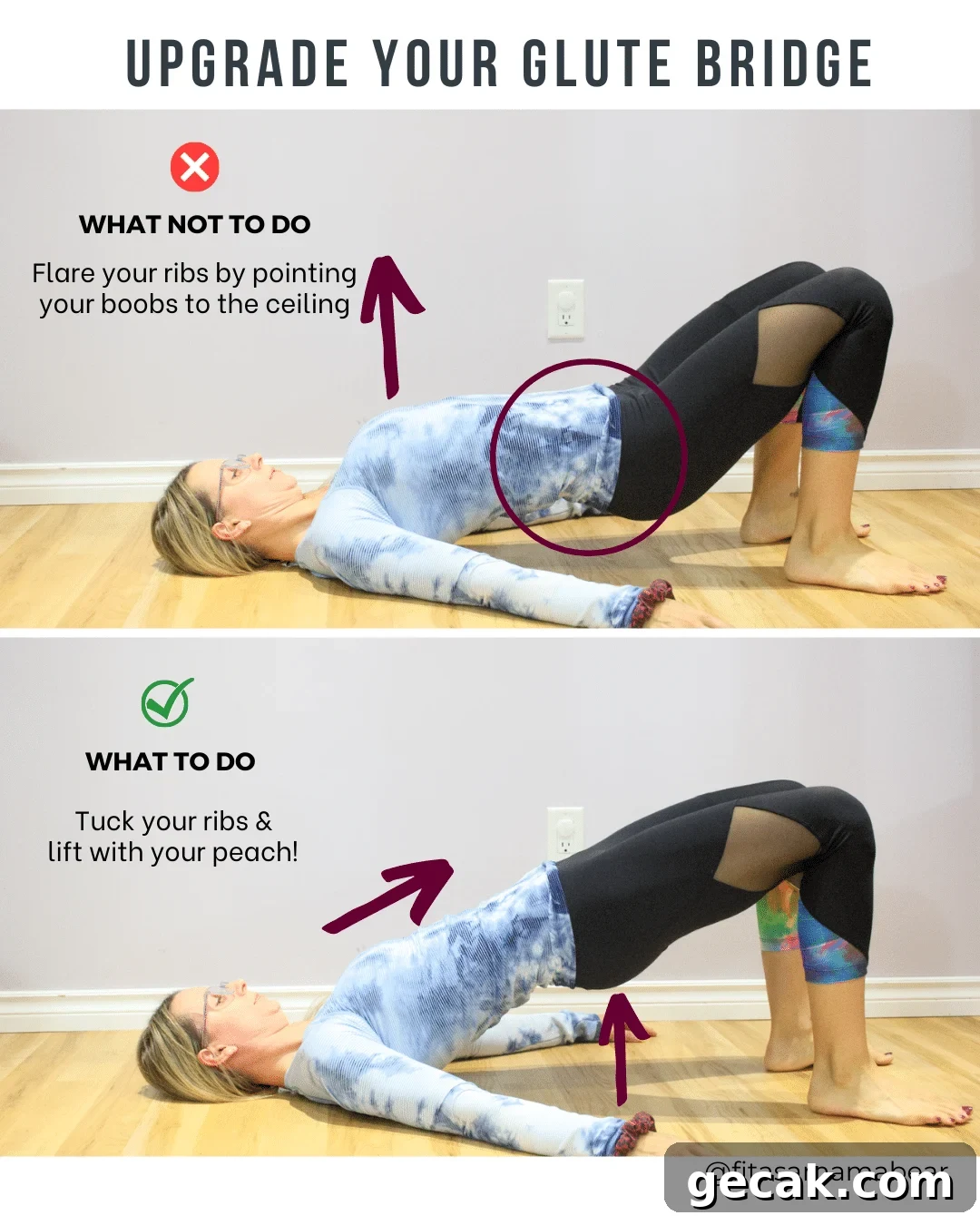
Quadruped hip extensions are an effective at-home move to train hip extension and glute activation. Focus on maintaining a neutral spine and contracting the glute while moving the leg.
Keep the foot flexed and the knee bent at about 90 degrees. If you don’t feel the glute, you may be lifting too high rather than squeezing the muscle.
How to perform quadruped hip extensions:
- Start on all fours in a tabletop position.
- With the working knee bent, engage your core and hinge at the hip to lift the foot toward the ceiling while keeping the spine neutral.
- Avoid letting the lower back drop; control the movement and return the knee toward the floor by releasing the glute tension.
Perform 8–12 repetitions per leg.
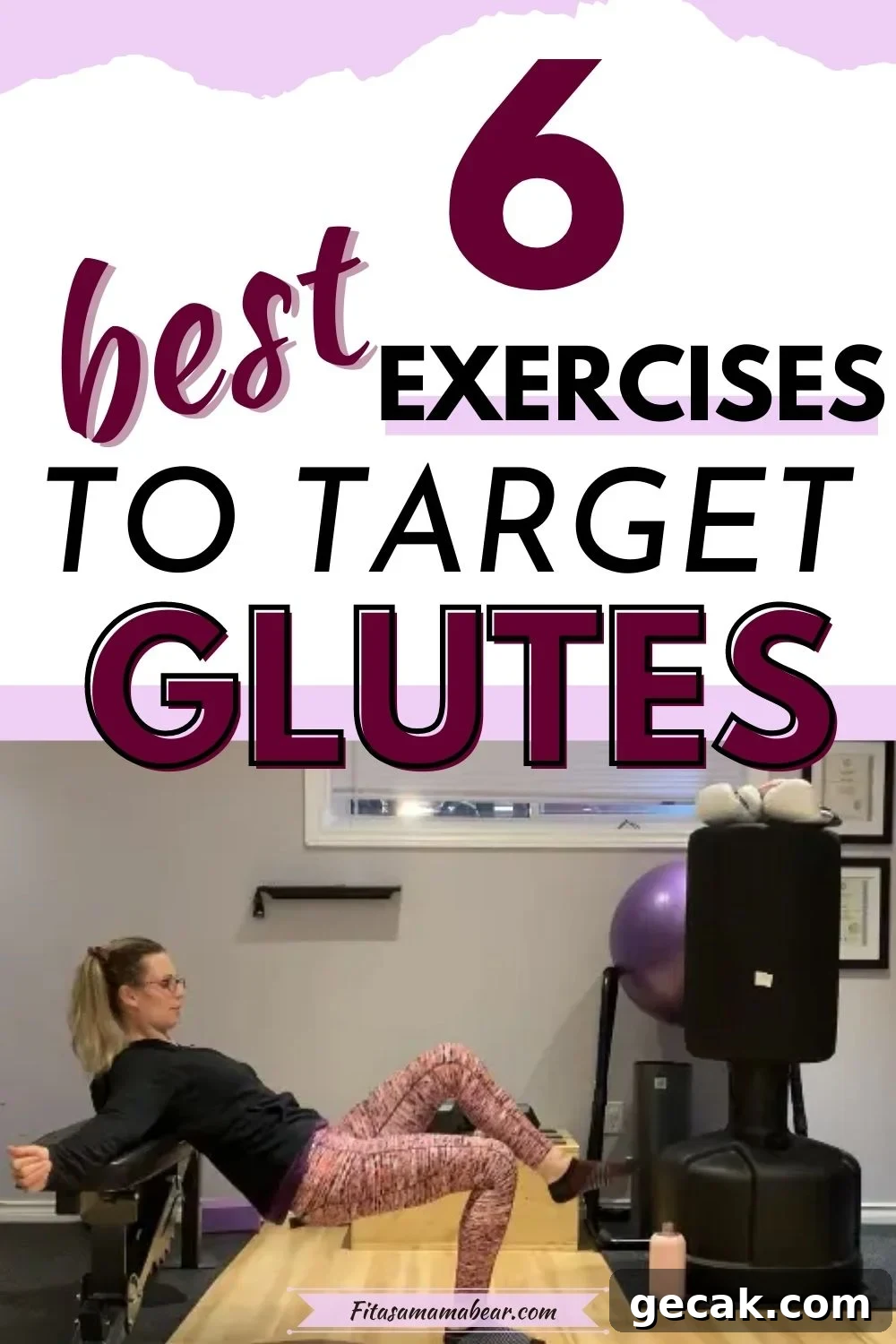
Exercise #3: Hip Thrusts
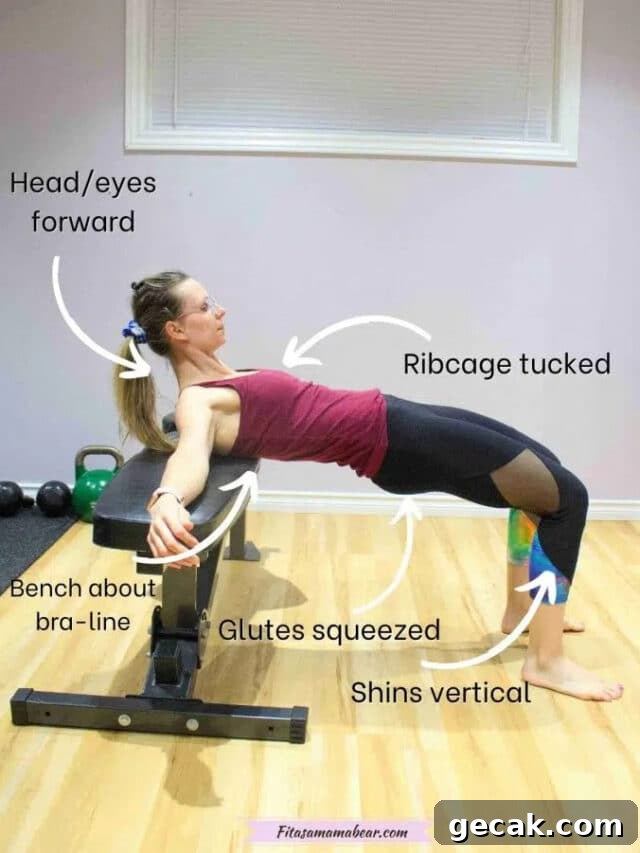
Hip thrusts offer a larger range of motion than glute bridges. Keep your upper back slightly rounded at the top, and focus on squeezing the glutes rather than using momentum. Single-leg variations increase demand on each glute and add a valuable unilateral stimulus.
How to perform a hip thrust:
- Place your mid-to-upper back on a bench (around bra-strap level). Feet should be flat and slightly wider than hip-width, with hips lowered toward the floor at the start.
- Push through the heels, squeeze the glutes, and lift the hips until the shins are near vertical.
- Keep the upper back slightly rounded and eyes forward, not looking straight up. At the top, hold a strong glute squeeze, then reverse the movement by leading with the hips back toward the floor.
Perform 8–20 repetitions, depending on load and variation.
Exercise #4: Kneeling Squat
The kneeling squat removes a long lever and keeps emphasis on the hips and glutes. Once you’ve mastered the movement, add resistance with dumbbells, a weighted vest, or a band around the hips for extra challenge.
How to perform a kneeling squat:
- Kneel with your torso tall.
- Push the hips back slightly, tuck the chin, and lower your hips toward your heels.
- Lead with the hips to return to tall, then tuck the hips under and squeeze the glutes at the top.
Perform 12–20 repetitions.
Exercise #5: Bulgarian Split Squat
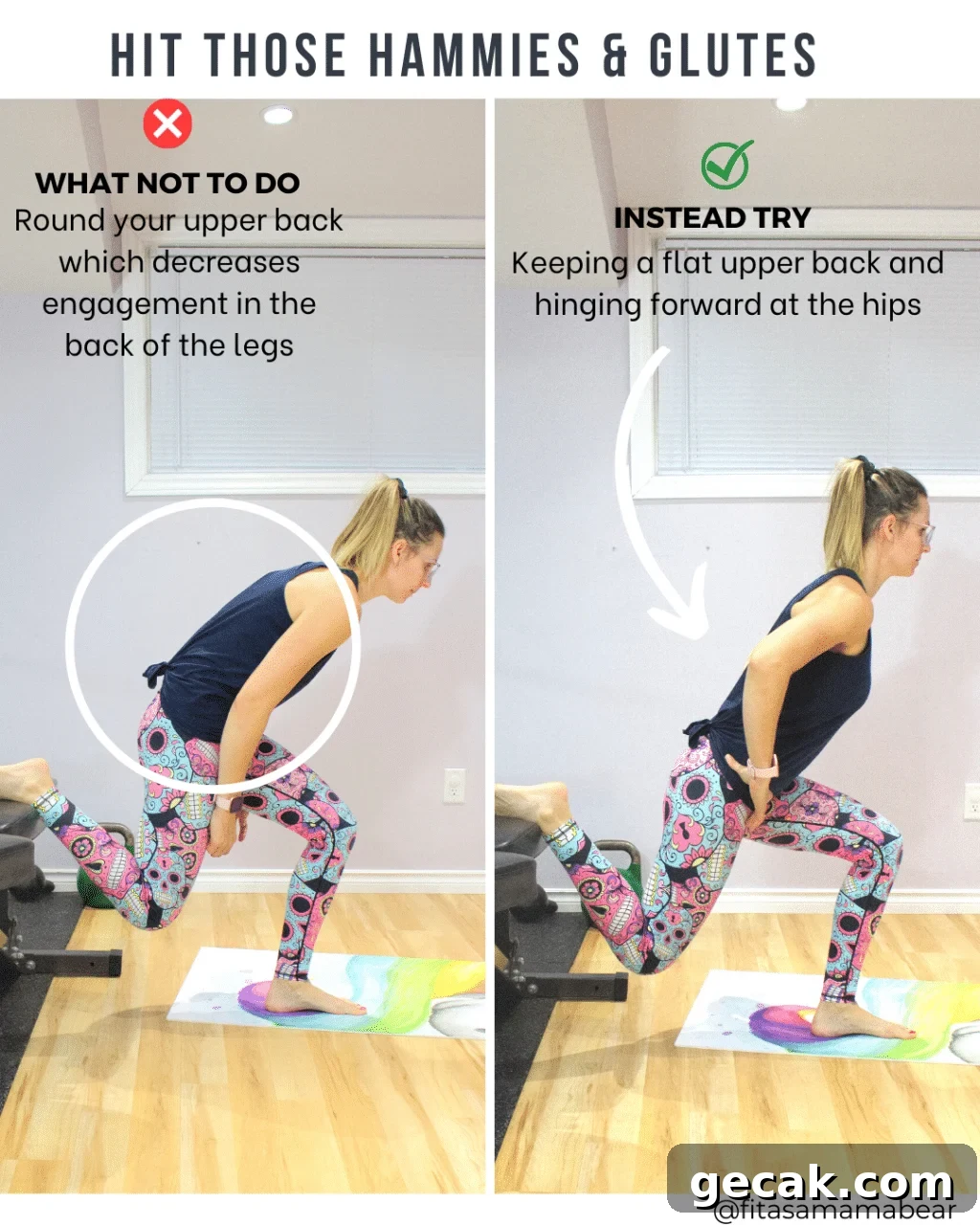
With slight adjustments, Bulgarian split squats can target the glutes and hamstrings more than the knees. The key is to hinge forward slightly to load the posterior chain.
- Set up in a lunge with the rear foot elevated on a bench and the front knee over the heel.
- Hinge forward slightly to increase tension on the glutes as you drop the back knee toward the floor while keeping the front knee tracking forward.
- Squeeze the glute of the front leg and push through the heel to return to the starting position.
- Complete all reps on one side before switching.
Perform 8–12 repetitions per leg.
Exercise #6: Deadlifts
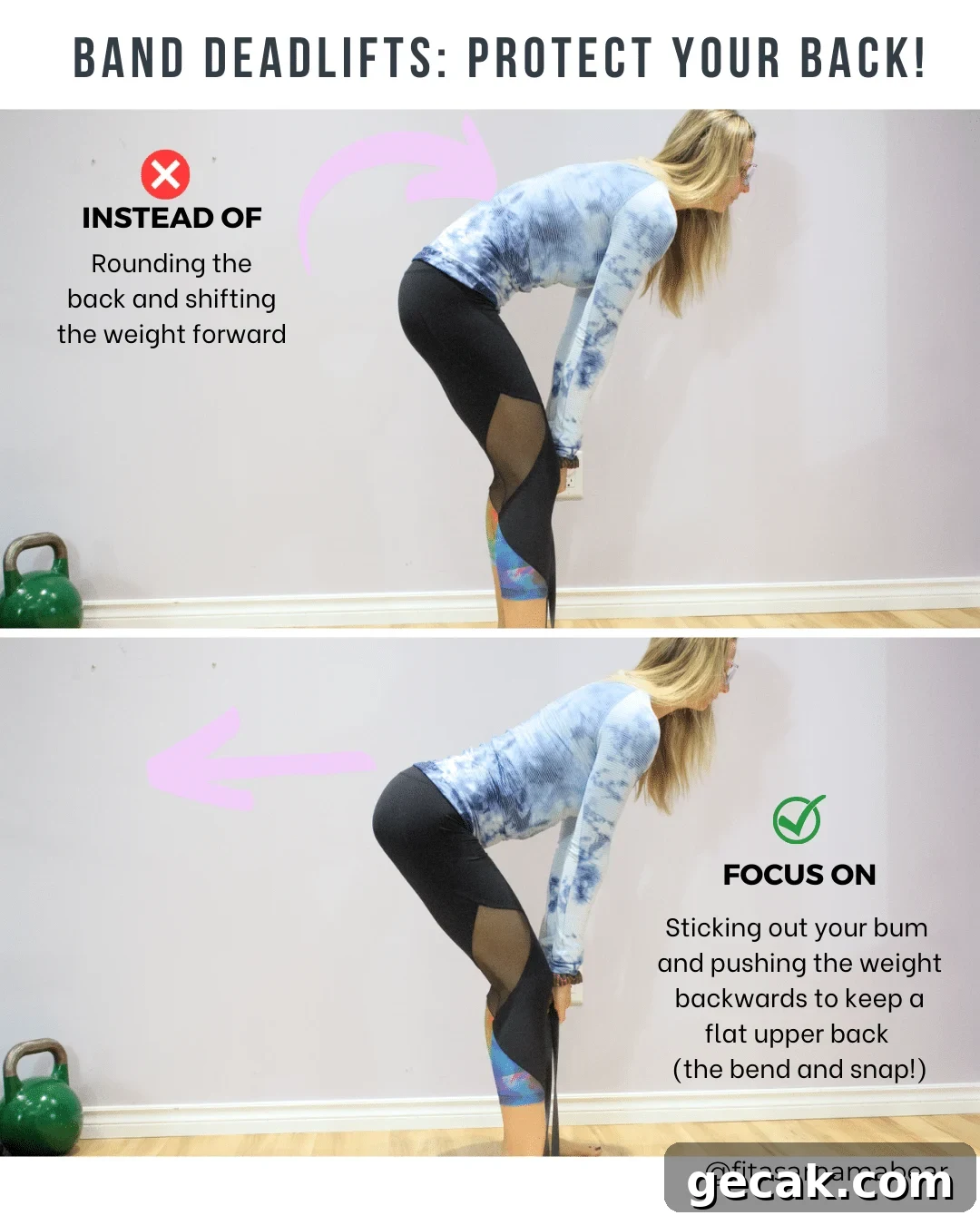
Deadlifts are inherently hip-dominant, and many variations exist to suit different abilities. Romanian deadlifts and traditional deadlifts both effectively target glutes and hamstrings. If you’re training at home, band deadlifts or supported variations are excellent ways to learn the hinge pattern.
To perform a band deadlift:
- Place a resistance band under your feet and hold an end in each hand.
- Hinge at the hips with a slight bend in the knees and a flat upper back.
- Drive through your feet, thrust the hips forward, and stand tall while locking the glutes at the top without leaning back.
- Hinge again to return to the start.
There’s always a deadlift variation that fits your current level—find one and build from there.
How To Activate The Glutes
A common mistake is stopping at hip extension without fully squeezing at the top. That final range, a strong isometric squeeze, is where the glutes contribute most.
Glutes are easy to feel when engaged—place a hand on them if it helps and focus on a purposeful squeeze each repetition.
More Fitness Tips To Help You Smash Your Goals
If you want more visuals, seek out glute-focused workout videos and guided sessions. For a simple, structured plan, follow a program that prioritizes progressive overload and consistent glute-focused practice.
-
How To Make Workouts More Intense At Home [Without Adding Weight]
-
7 Strength Training Tips For Beginners At Home
-
Glute Training At Home [For Beginners]
-
Glute Hypertrophy Workout For Bigger Glutes

Hip Dominant Exercises FAQs
Choose 5–6 exercises that target different parts of the glutes and include both hip extension and hip abduction. Build a short circuit you can perform three to four times per week.
Hip thrusts are among the most effective hip-dominant exercises for the glutes. Master the bodyweight version, progress to unilateral variations, then add resistance as appropriate.
For low-impact bodyweight work, 10–30 reps is a good starting range. For loaded exercises, aim for roughly 8–12 reps depending on the load and your goals.
Learn the hip-hinge pattern: break at the hips, shift weight back, and engage the posterior chain. Practice hinging movements to develop hip-dominant strength.
Both have a place in a balanced program. For targeting the posterior chain and glutes specifically, prioritize hip-dominant exercises.
Hip-dominant exercises strengthen the hips, hamstrings, and glutes, helping stabilize the pelvis, reduce back pain, and improve performance in athletic movements.