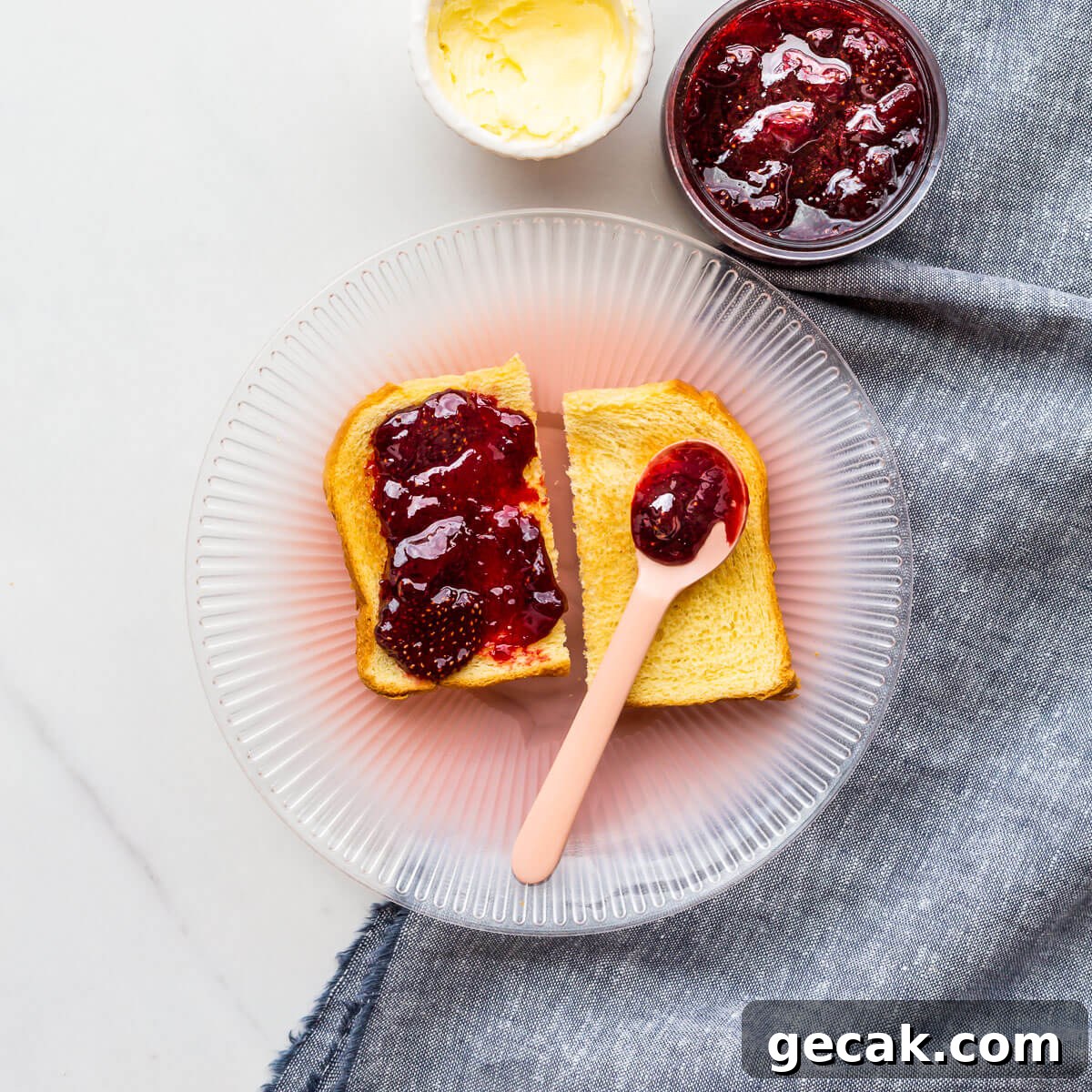
Learn how to make the best strawberry jam with this simple, reliable recipe. Using fresh strawberries and a few pantry staples, you can make a naturally thick jam without added pectin by following the ingredient ratios and the setting tips described below.
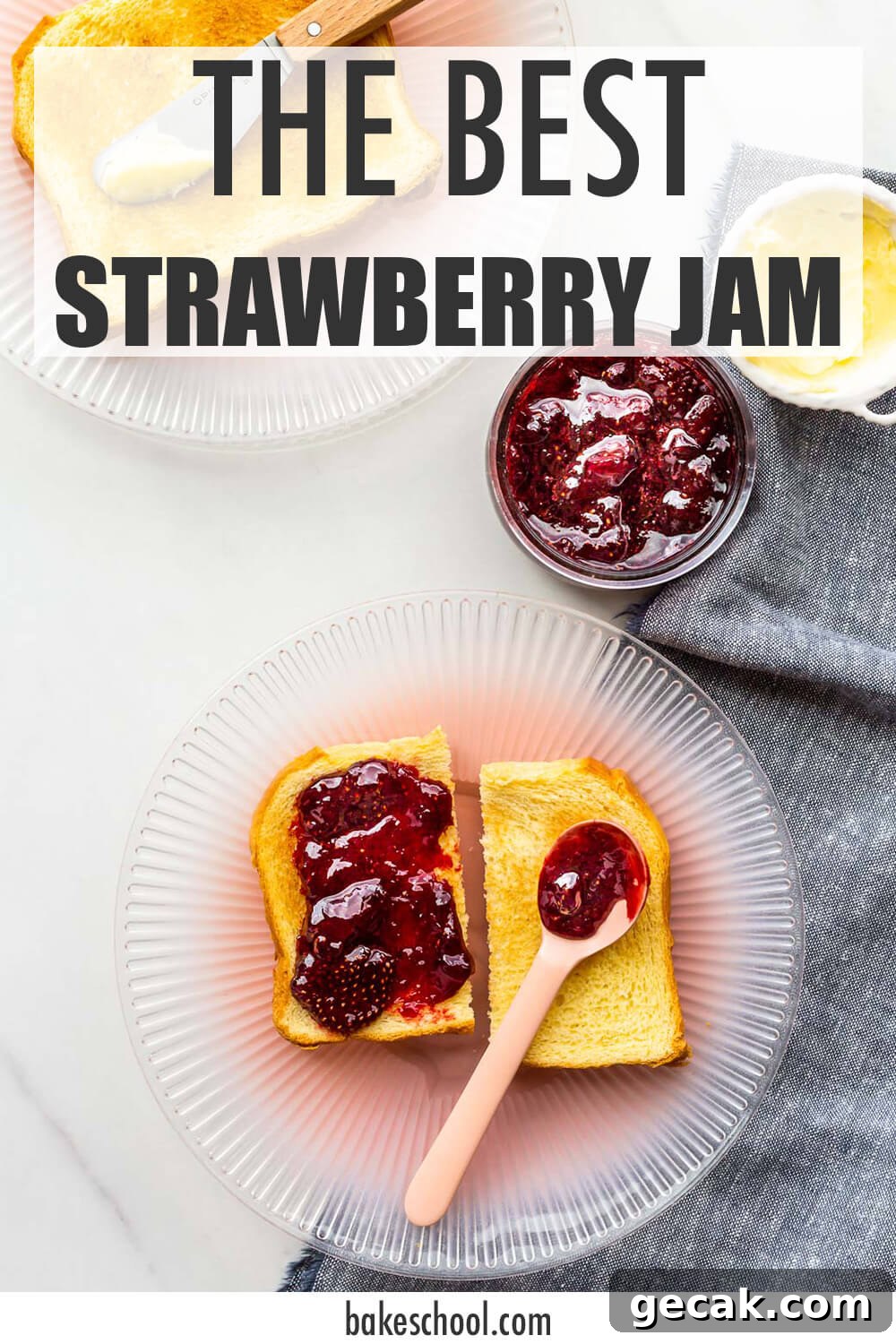
Homemade jam isn’t difficult, but success depends on precise quantities and a few key techniques. Strawberry jam is a great place to start if you want to practice jam-making: the fruit has enough natural pectin when you combine ripe and slightly underripe berries and use a little lemon juice.
Ingredients
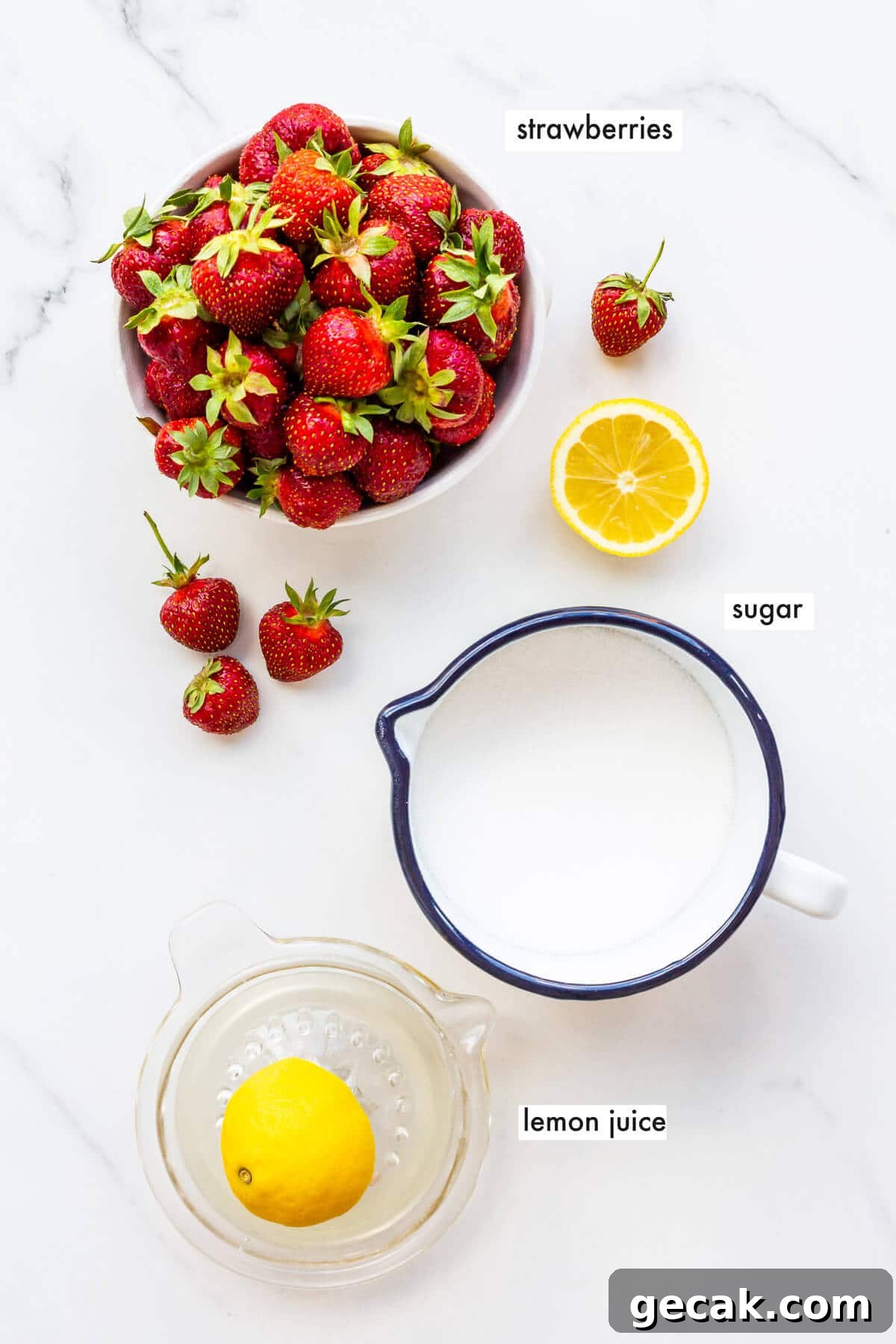
Only a few ingredients are needed, and they are easy to source:
- Fresh strawberries — use a mix of ripe and slightly underripe fruit (for example, about 75% ripe and 25% underripe) to provide enough natural pectin for a good set.
- Sugar — regular granulated sugar is recommended. Evaporated cane sugar can work; avoid coarse sugars or heavily flavored sugars (like muscovado) unless you want that flavor.
- Lemon juice — ensures the jam’s pH is acidic enough for proper gelling and safe storage.
- Vanilla bean (optional) — split and added to the pot to infuse the jam if you like a gentle vanilla note.
See the recipe card below for exact quantities. Weigh the fruit after washing and hulling so you measure the weight of what goes into the pot, not the weight including stems.
Instructions
These steps outline the process from prep to jar. Include photos as you like for each step.
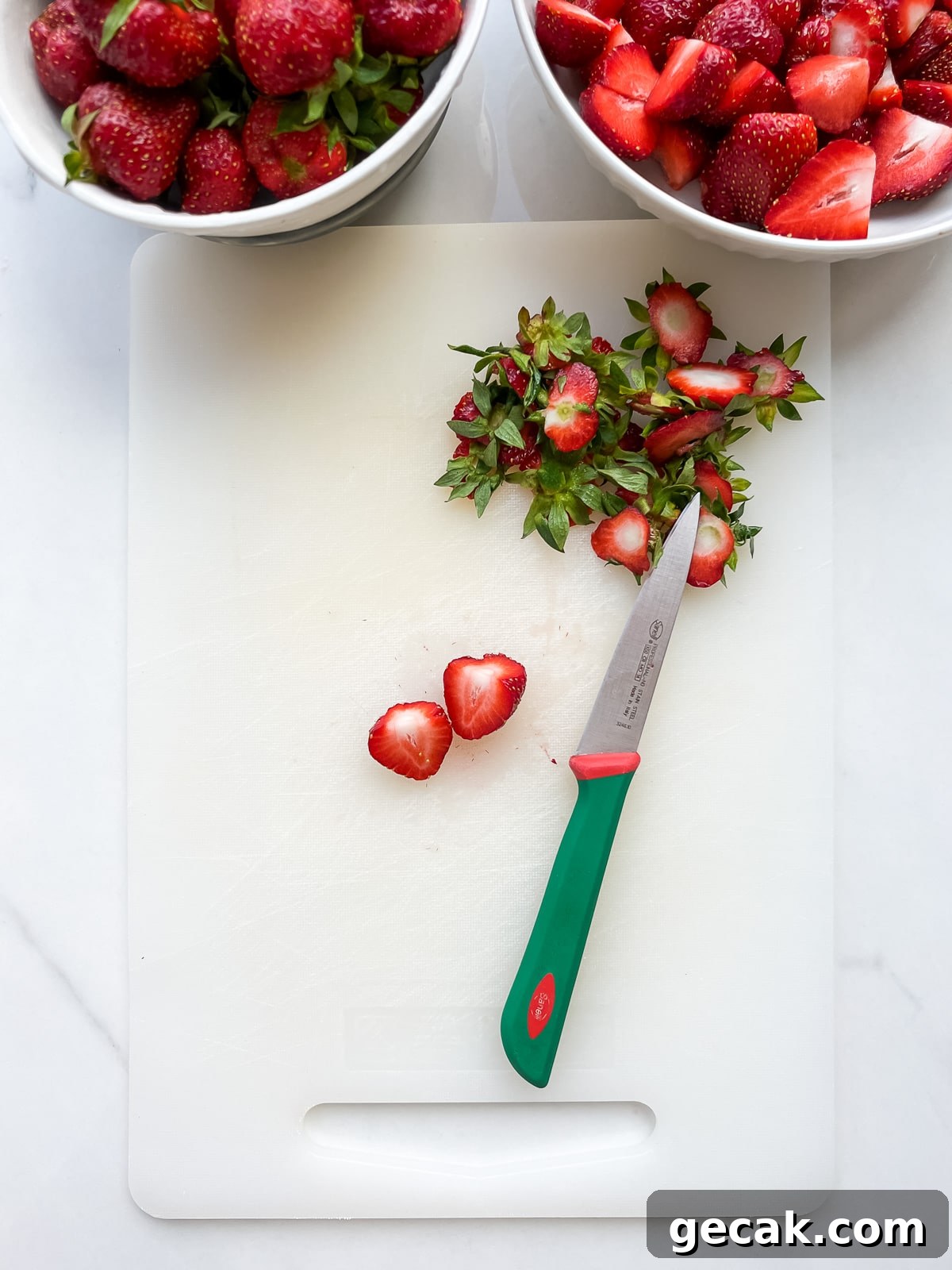
Hull the strawberries, then halve or quarter them depending on size.
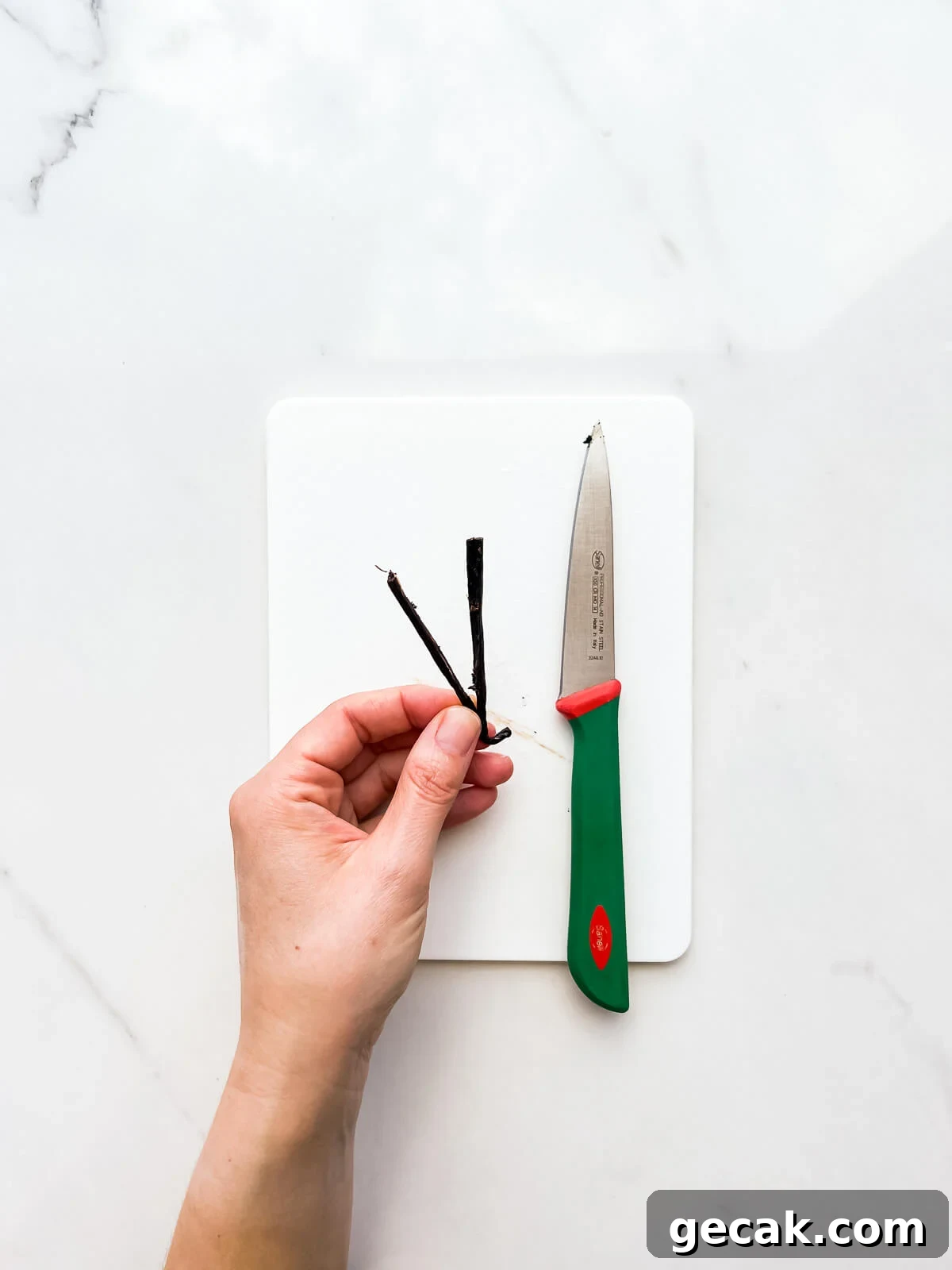
If using vanilla, split a bean lengthwise to release the seeds and add both pod and seeds to the pot.
Tip: Rinse strawberries in cold water, pat them dry, then hull and trim only after they are dry to avoid adding extra moisture to the recipe.
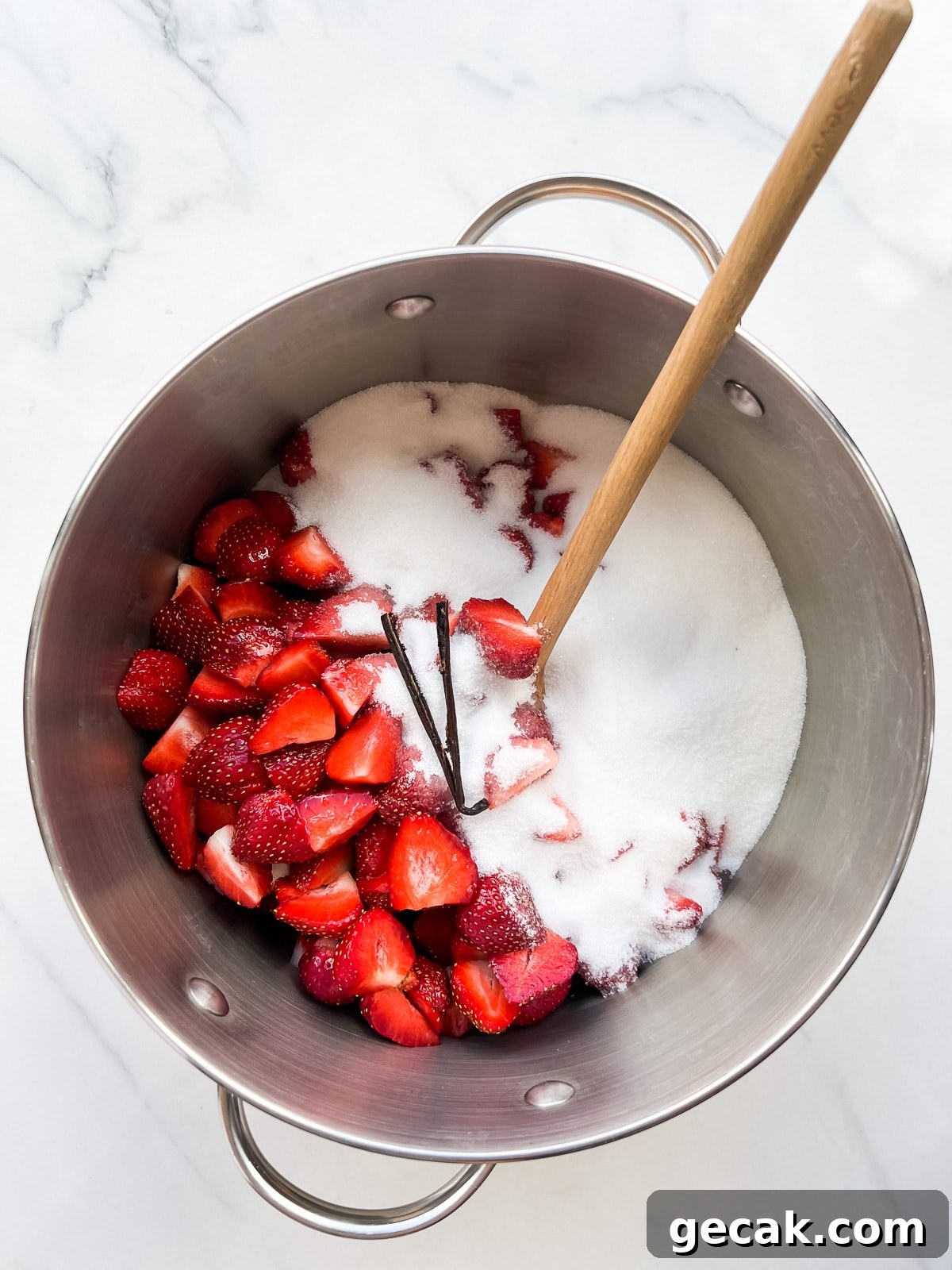
Combine the sliced strawberries with half their weight in granulated sugar and the vanilla (if using).
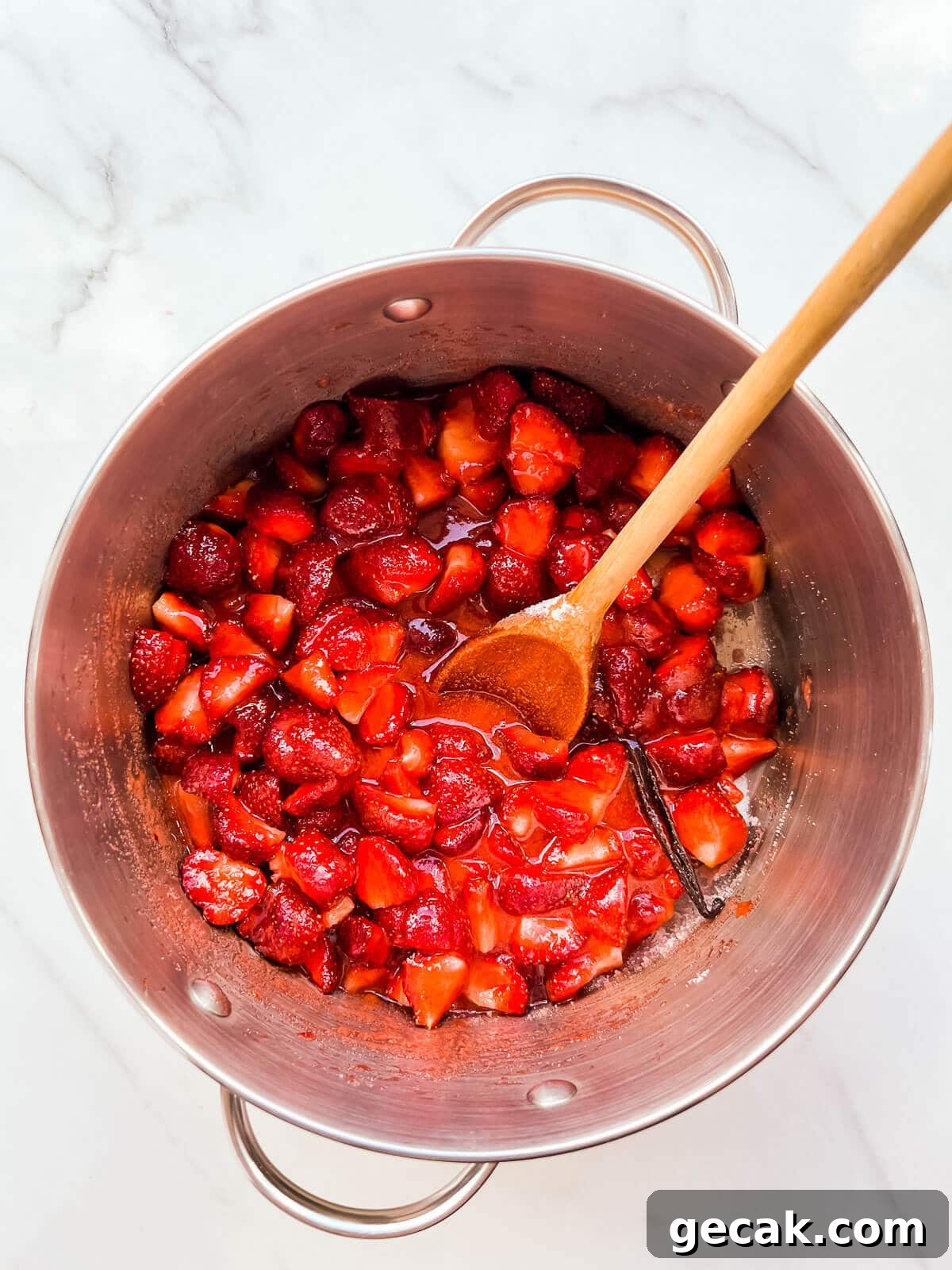
Cover and let the mixture macerate at room temperature for about 30 minutes, stirring occasionally so the sugar dissolves and the fruit releases its juices.
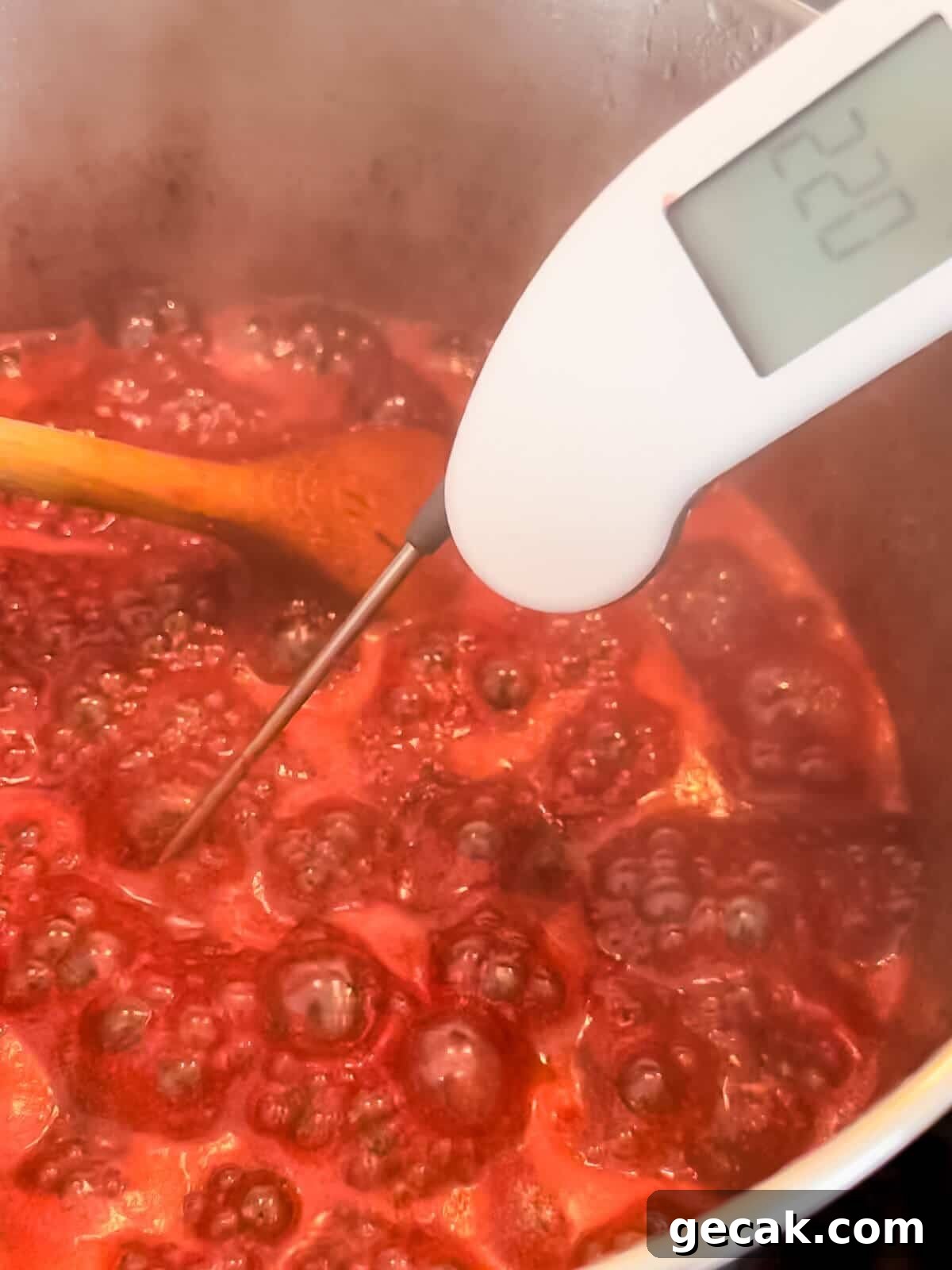
Place the pot on the stove, uncovered, and bring to a steady boil. Stir occasionally and watch for a consistent rolling boil.
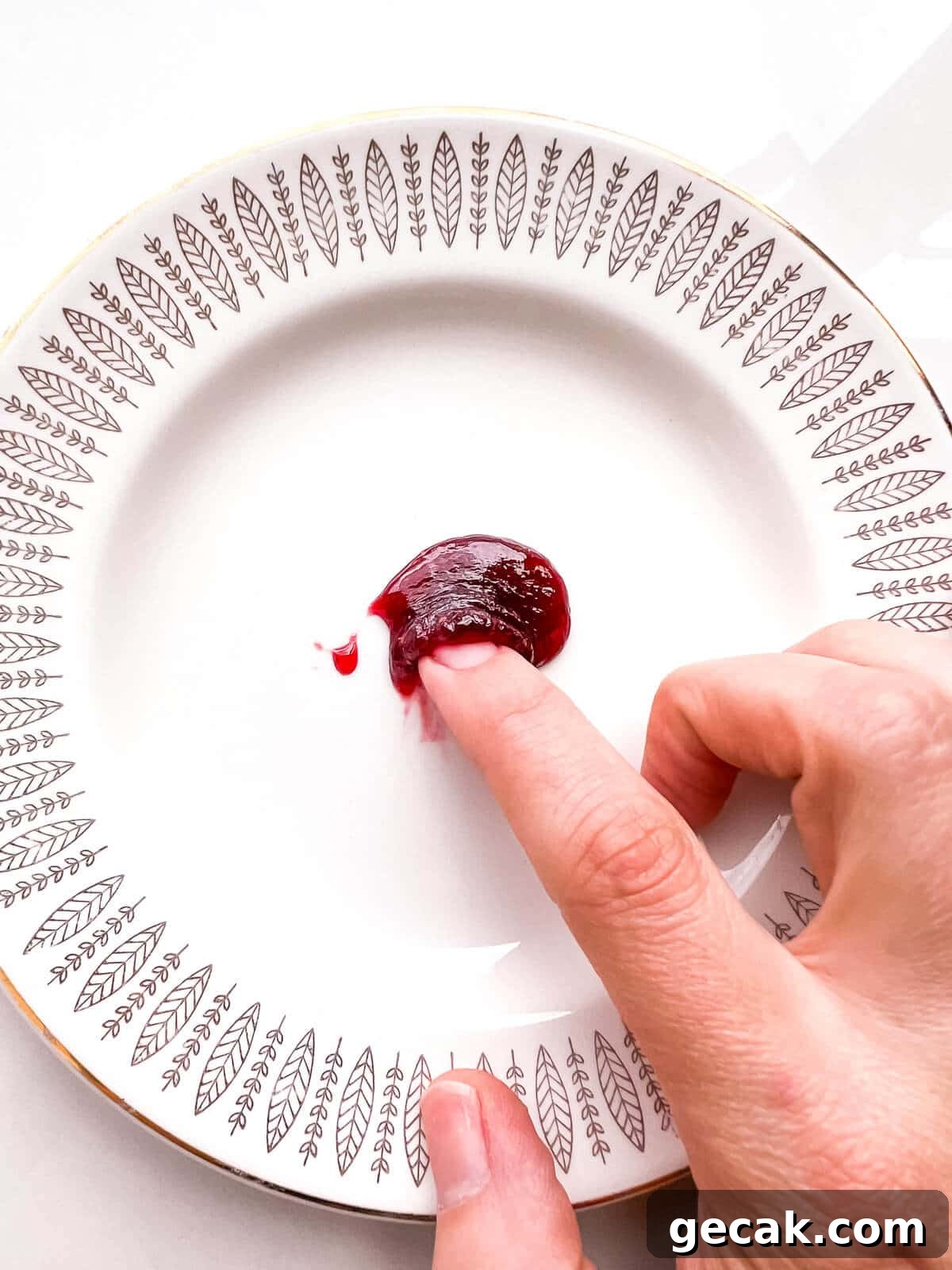
Use the freezer plate test or a thermometer to check the setting point. The jam should reach approximately 104°C (220°F) for a firm set; 103°C (217–218°F) will give a slightly softer set.
Hint: Try two or three techniques to confirm the set (thermometer and freezer plate test are reliable). I prefer a thicker jam and sometimes boil a little longer; adjust slightly for your desired texture.
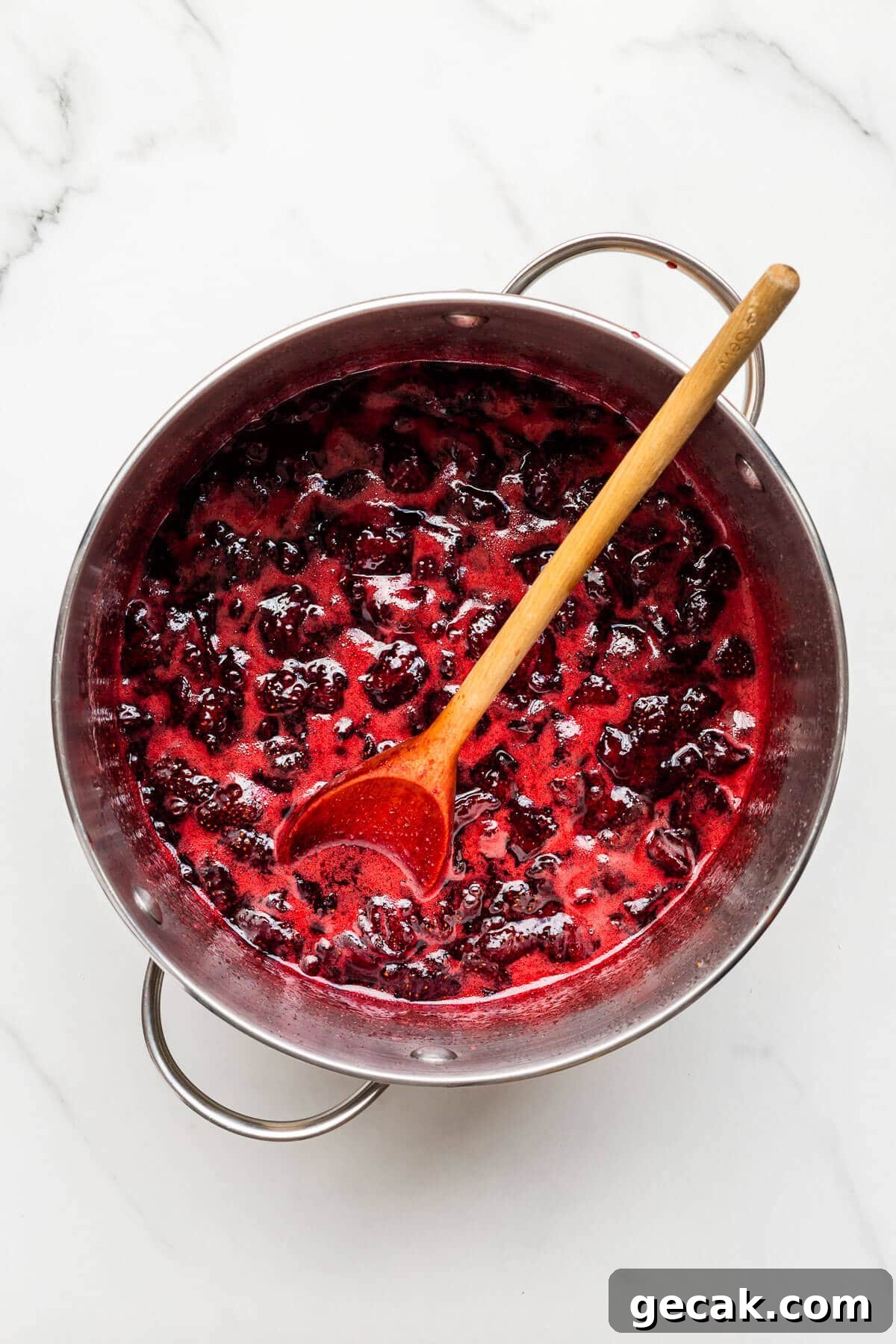
Foam on the surface
Strawberries and some other fruits produce a stable foam while boiling. The foam is harmless but can be skimmed off for a clearer final jam.
To remove foam:
- Push foam to the edges and skim it with a spoon.
- Use a long-handled spoon to lift it off carefully and transfer the foam to a bowl.
- Repeat until the surface is clear.
To reduce foam from the start, stir in about ½ teaspoon of butter or neutral oil (4–5 g). The small amount of fat prevents much foam without noticeably changing flavor.
Substitutions
There are a few simple substitutions you can make:
- Sugar: granulated sugar can be swapped for cane sugar. You can replace part of the sugar with honey, but be aware honey will alter the flavor.
- Strawberries: frozen strawberries can be used in the same weight as fresh; weigh them while still frozen, then thaw with the sugar.
- Lemon juice: fresh or bottled lemon juice works, though fresh tends to taste brighter.
A key rule: do not reduce the sugar-to-fruit ratio significantly if you want a good set without added pectin. Sugar helps preservation and gelling.
Variations
Try these flavor variations while keeping the fruit-to-sugar ratio the same:
- Rhubarb — substitute half the strawberries by weight with chopped rhubarb for strawberry-rhubarb jam.
- Red currant — replace half the strawberries by weight with red currants for a bright, tart jam.
- Peach — replace half the strawberries by weight with sliced peaches for a summery blend.
- Vanilla — add a half or whole vanilla bean to the pot for a warm, aromatic note.
- Juniper or anise/cinnamon — add small amounts (a few teaspoons of crushed juniper or a cinnamon stick/anise seeds) for an herbal or spiced twist.
As long as the fruit-to-sugar ratio is maintained, many flavor pairings will work well.
Equipment
You only need basic kitchen tools:
- Stove and a large pot (non-reactive).
- Wooden spoon or heatproof spatula for stirring.
- Jars with lids (250 mL / 1 cup jars work well) and a funnel for filling.
- A thermometer or timing/methods for testing set (freezer plate test) is helpful.
- If you plan to process jars for long-term storage, a canning kit or water-bath setup is recommended.
To seal jars without a water bath, you can invert hot filled jars briefly (about 2 minutes) before returning them upright; follow manufacturer guidance for lids and jars to ensure a proper seal.
Storage and food safety
Properly sealed jars stored in a cool, dry, dark place will keep for up to a year, though color and flavor may fade over time. If a jar is not sealed or you have any doubt about the seal, store it in the refrigerator.
Always use a clean utensil when taking jam from a jar to avoid contamination. Once opened, refrigerate and use within about one month for best quality.
If mold appears, discard the entire jar and sterilize the jar and lid before reusing — do not try to salvage jam by removing the mold or reboiling it.
Using strawberry tops
Save the hulls and tops to infuse water, syrups, or to add subtle strawberry flavor to beverages and desserts.
What to serve and bake with jam
Homemade jam is versatile. Use it for spreads and baking:
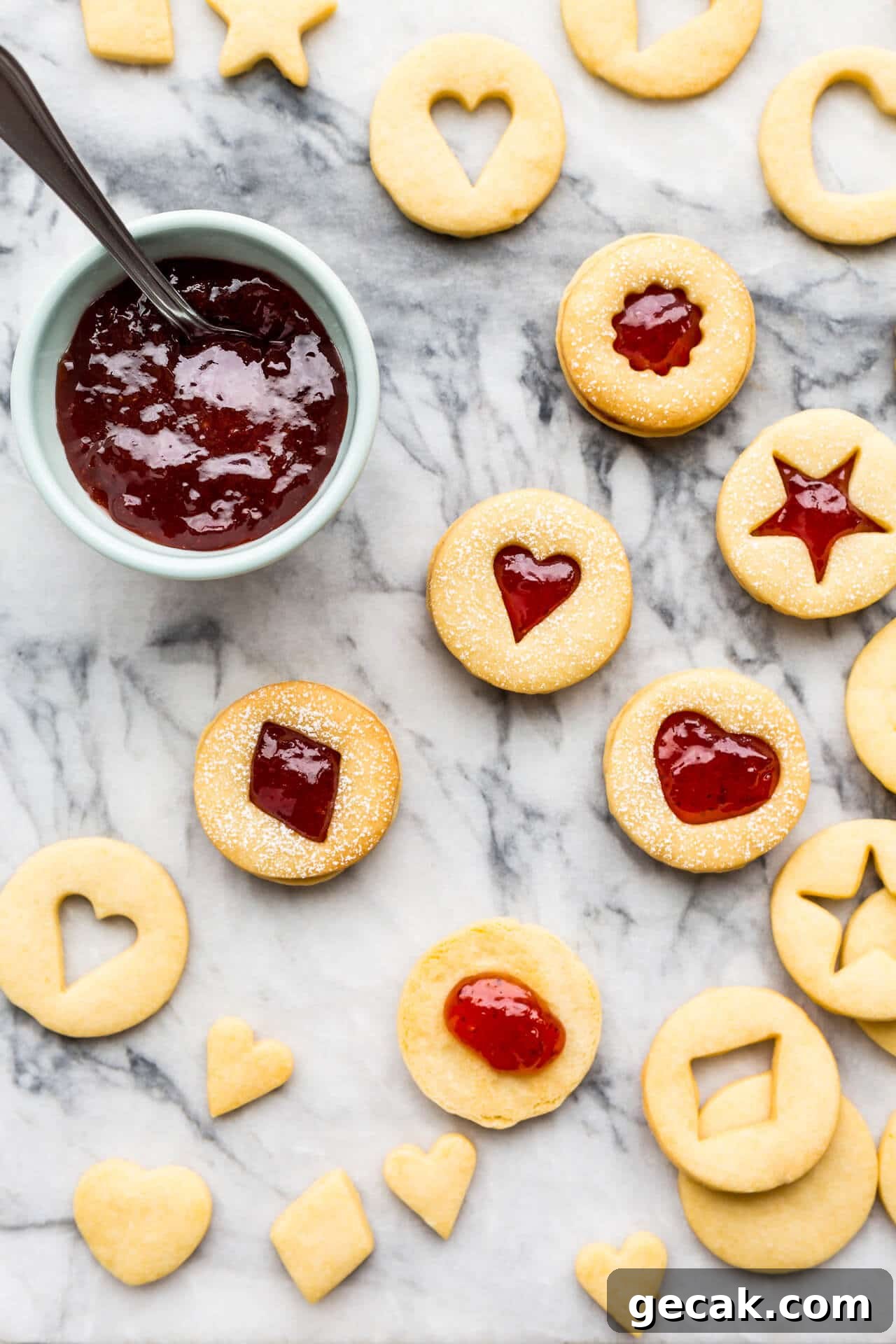
- Jam-filled shortbread or thumbprint cookies.
- Bostock or frangipane pastries.
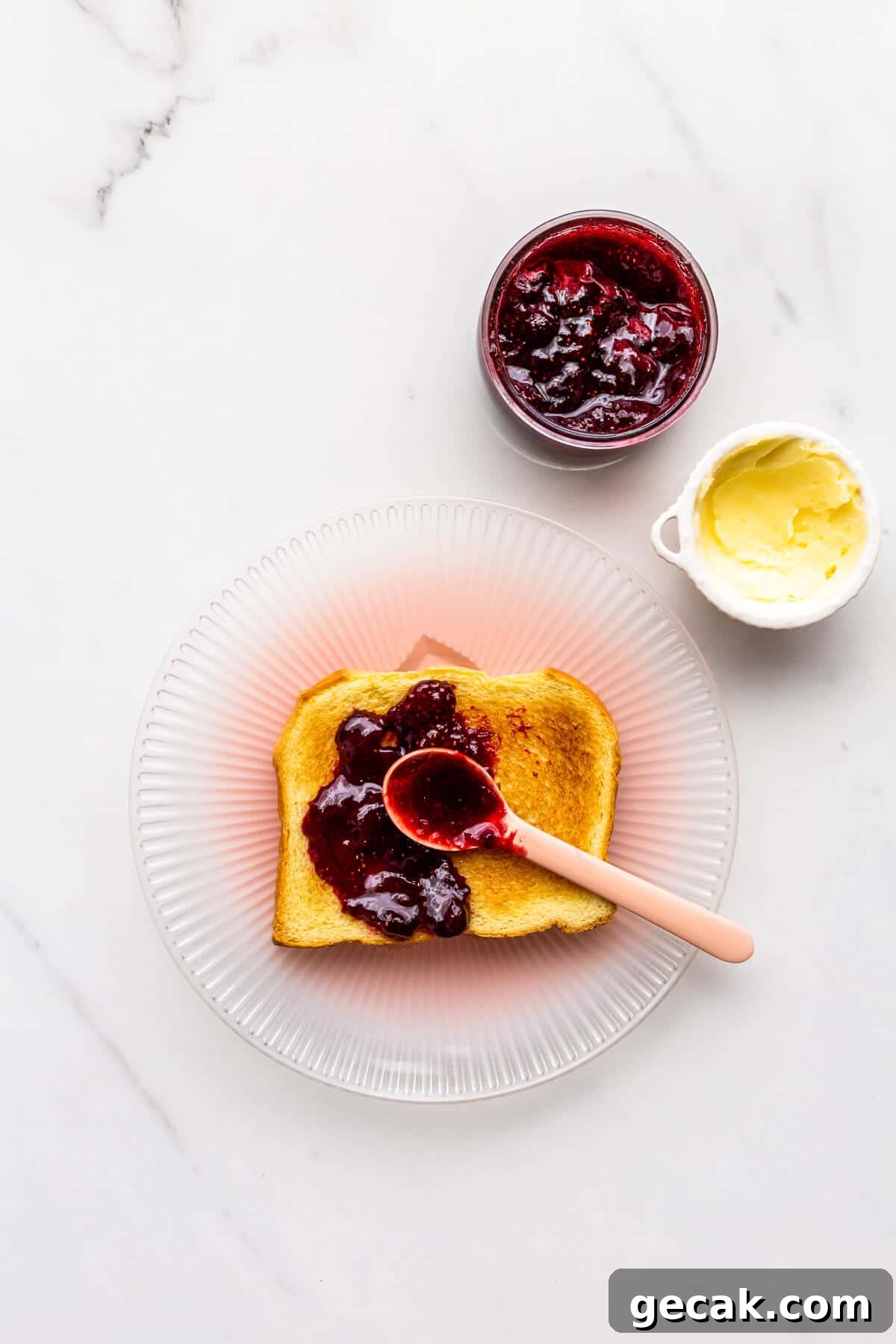
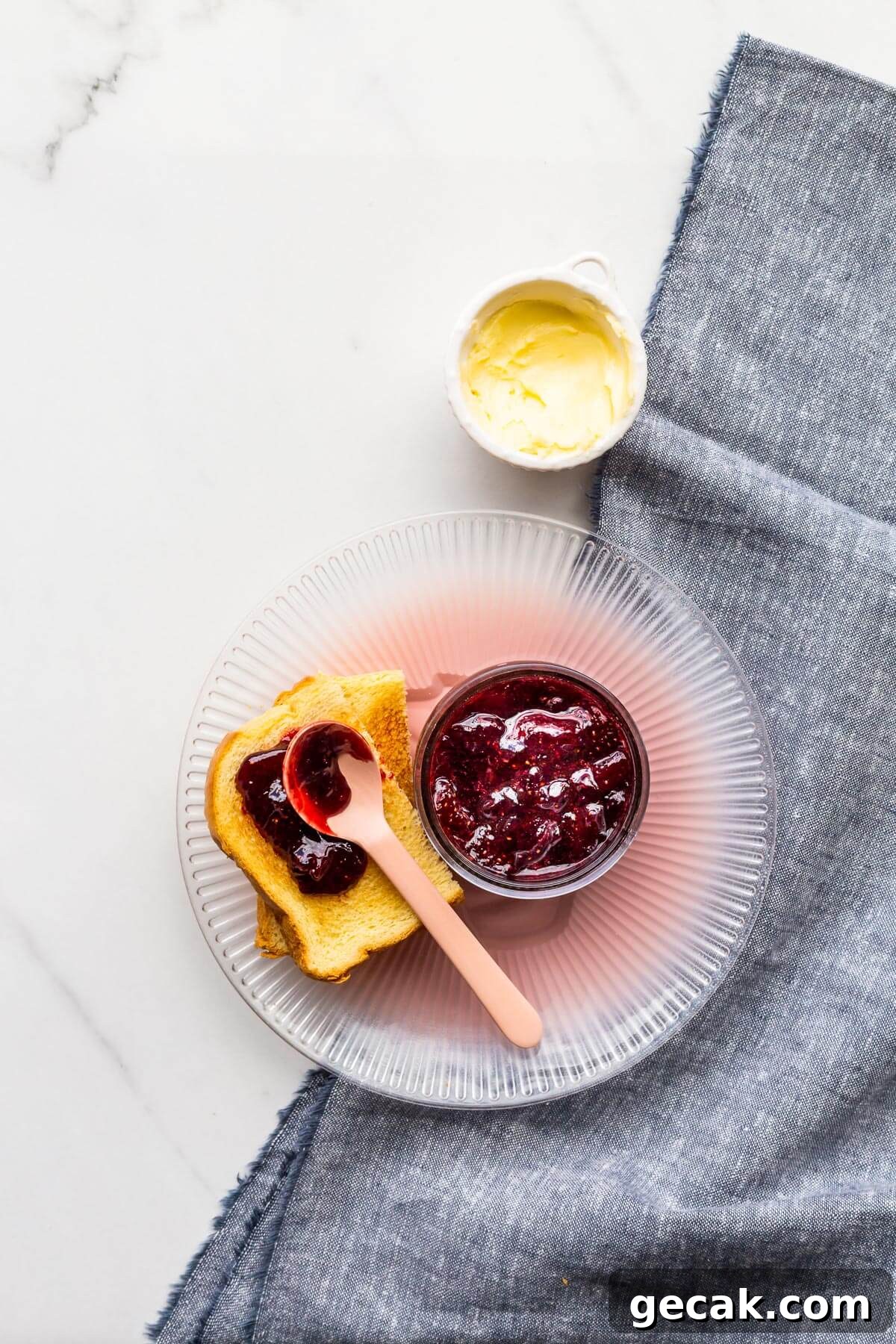
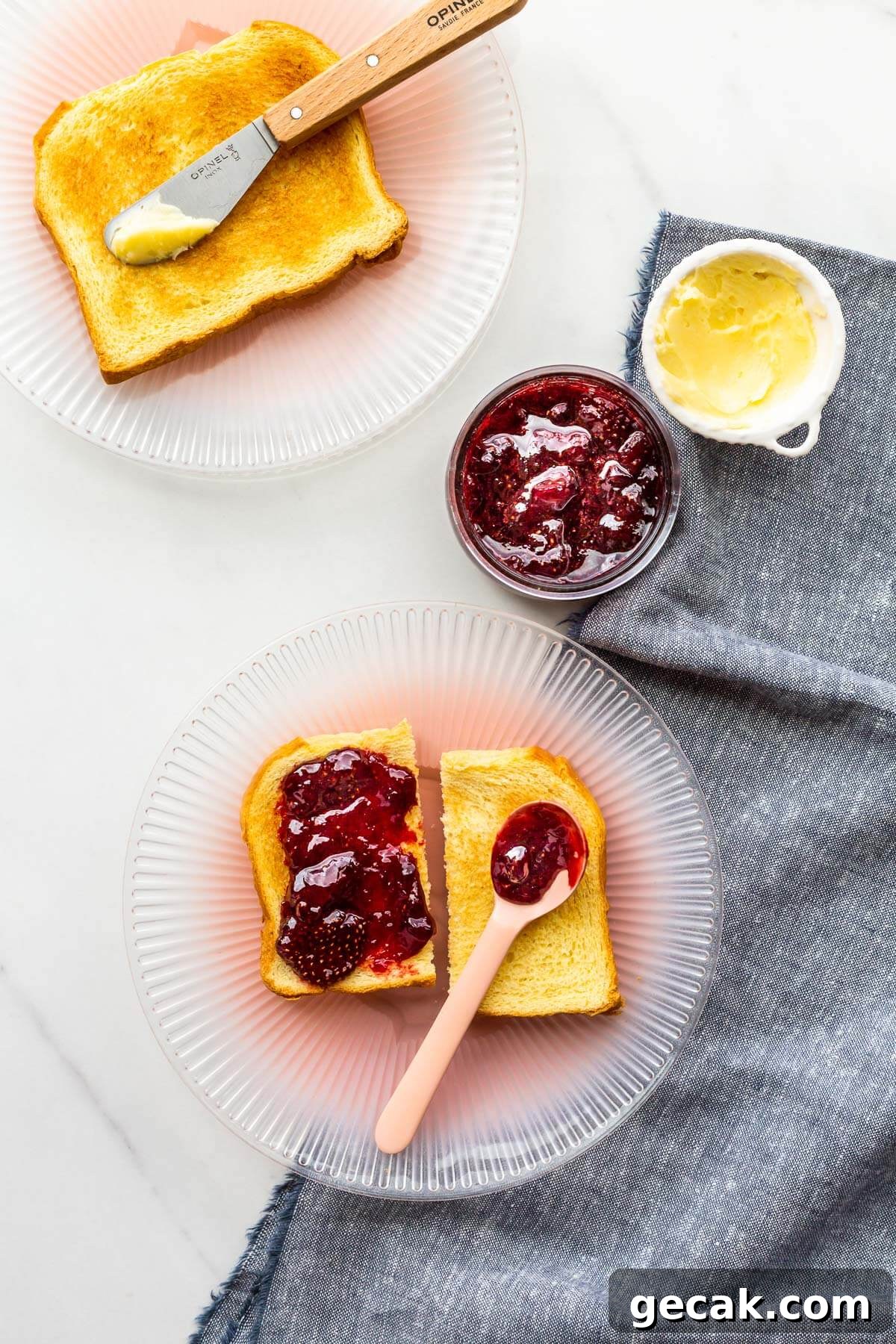
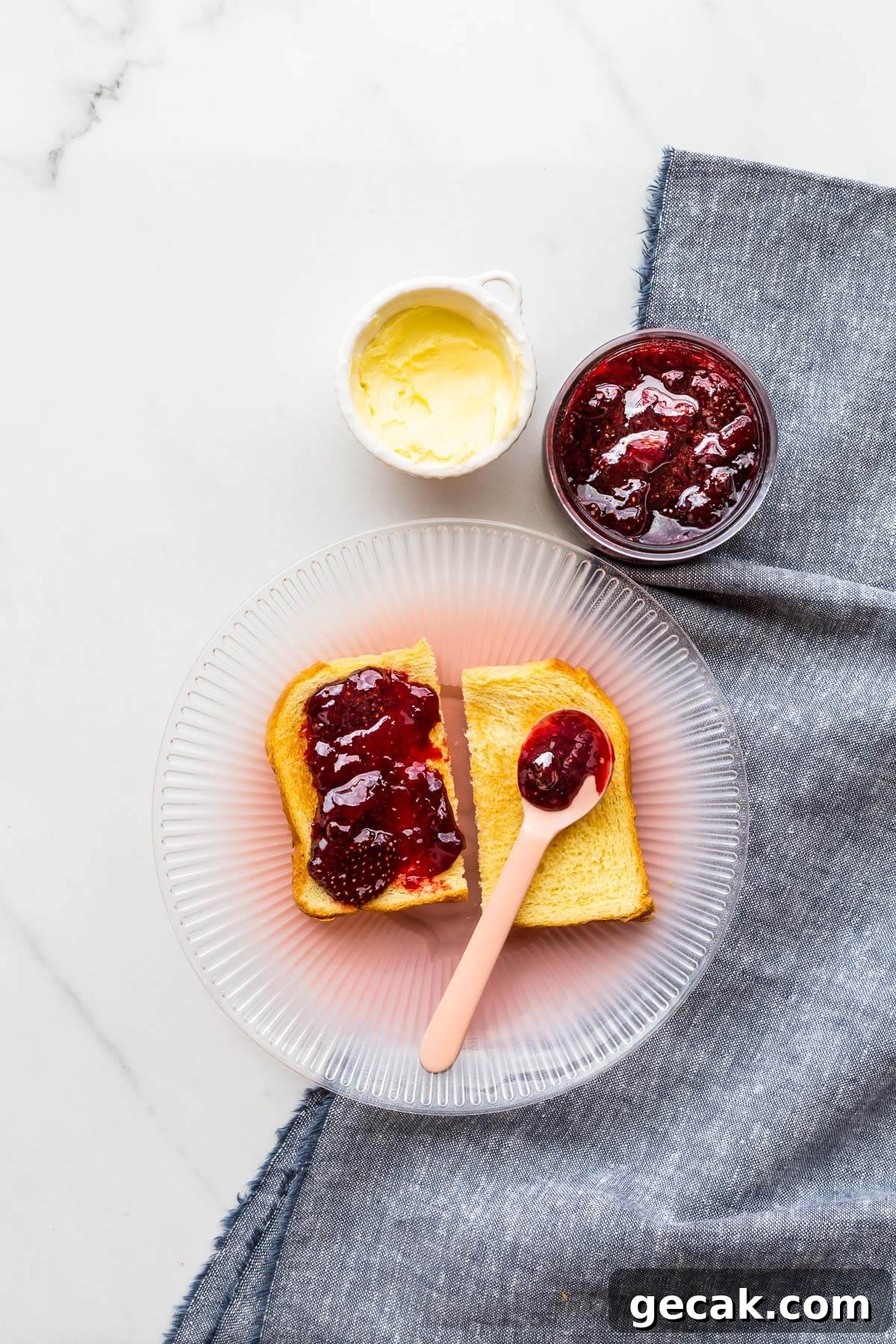
- Scones, butter biscuits, or brioche — fresh bread and jam are classic pairings.
📖 Recipe
Strawberry Jam
Make strawberry jam without added pectin by following the ingredient ratios and reaching the jam setting point.
Ingredients
- 1 kg fresh strawberries (weigh after washing and hulling)
- 500 g granulated sugar
- 60 mL fresh lemon juice
Optional
- ½ vanilla bean, split
Instructions
- Mix berries, sugar, lemon juice, and the split vanilla bean (if using) in a large pot.
- Cover and let macerate at room temperature for 30 minutes, stirring every 10 minutes to help the sugar dissolve.
- Bring the mixture to a boil over medium-high heat, uncovered. Skim foam if it appears.
- Cook until the jam reaches the setting point: about 104°C (220°F) for a firm set; 103°C (217–218°F) for a softer set. Alternatively, use the freezer plate test.
- Remove from heat, discard the vanilla pod, and let the jam rest 5 minutes to thicken slightly, then stir to distribute fruit evenly.
- Ladle into sterilized jars leaving ¼ inch headspace, remove air bubbles, wipe rims, and tighten lids fingertip-tight. If not sealing for storage, cover and refrigerate any jars you plan to use soon.
- To seal, invert hot jars for 2 minutes or process in a water bath according to jar manufacturer instructions. Let jars sit undisturbed 24 hours before storing.
Notes
This recipe yields about 4–5 jars of 250 mL each. To sterilize jars, wash thoroughly and warm them in an oven at 250°F for at least 30 minutes, keeping them hot until filling. Skim foam during boiling for a clearer jam.
Nutrition (approx.)
Calories per tablespoon: ~30 kcal (nutrition information is approximate).
Further reading on jams and jellies
- Read about the jam setting point and testing methods to confidently determine when a jam will set.
- For guidance on adding a small amount of fat to reduce foam, consult reputable home-canning resources or food-safety guides.
- If you want more recipes and ideas, explore preserve and jam cookbooks for inspiration and flavor pairings.