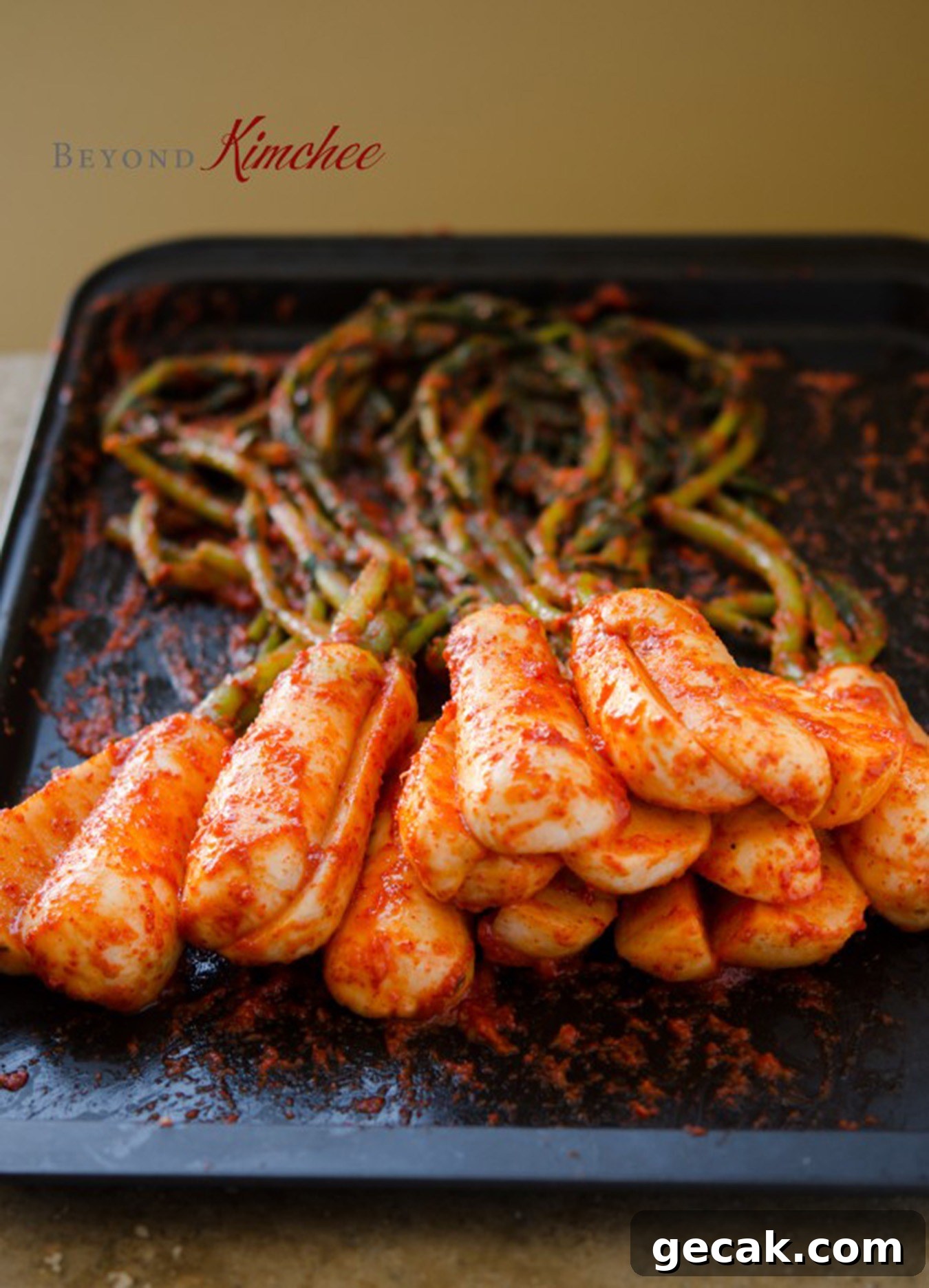
Bachelor kimchi is a beloved radish kimchi made with ponytail radish, known in Korean as altari mu. It stays crunchy even after extended fermentation and offers a mild, refreshing flavor. It’s simple and satisfying to make, and I think everyone should try it at least once.
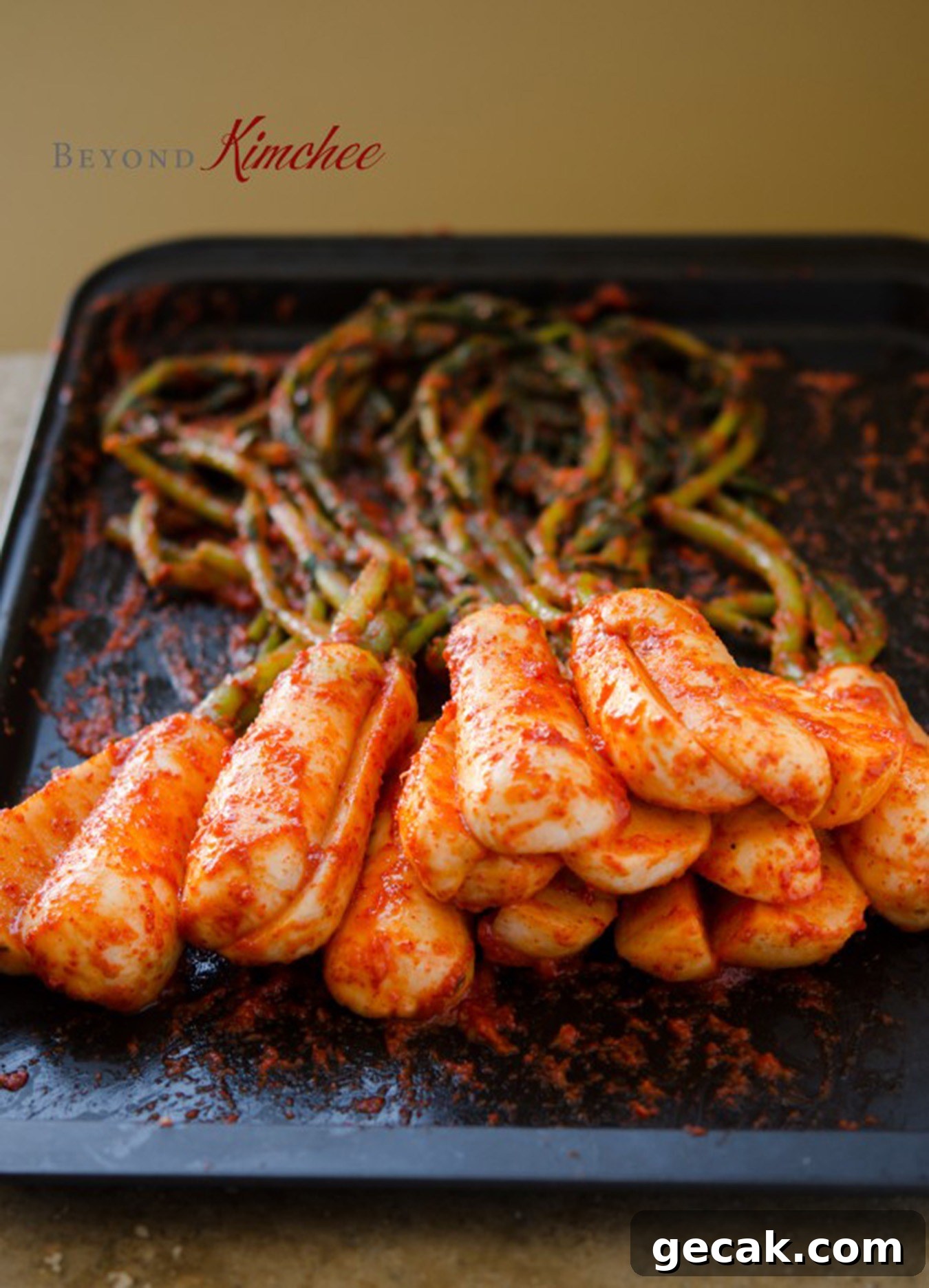
Koreans often give kimchi honest, descriptive names, and this one—known as Bachelor Kimchi—is no exception. Chonggak kimchi (총각김치) is especially popular and frequently enjoyed at family meals. It’s particularly favored for its firm texture and complex flavor when fully fermented.
The name chonggak means “bachelor” in Korean. The ponytail radish—with its white bulb and long leafy greens—resembles the long braided hair that unmarried men used to wear in traditional Korea. When a bachelor married, he would arrange his braid into a bun, so the radish’s appearance inspired the name.
Why is it named Bachelor Kimchi?
The shape of the ponytail radish evokes the braided ponytails worn by single men in older Korean customs. Because of that resemblance, this kimchi was named to honor those bachelors. Some people also call it altari mu kimchi, referring to the specific variety of radish used.
This kimchi develops a deep, robust flavor after fermenting while maintaining a satisfying crunch. Unlike napa cabbage kimchi that can be enjoyed fresh, ponytail radish kimchi is best after several days of fermentation when its flavors mellow and become addictive.
Ponytail Radish
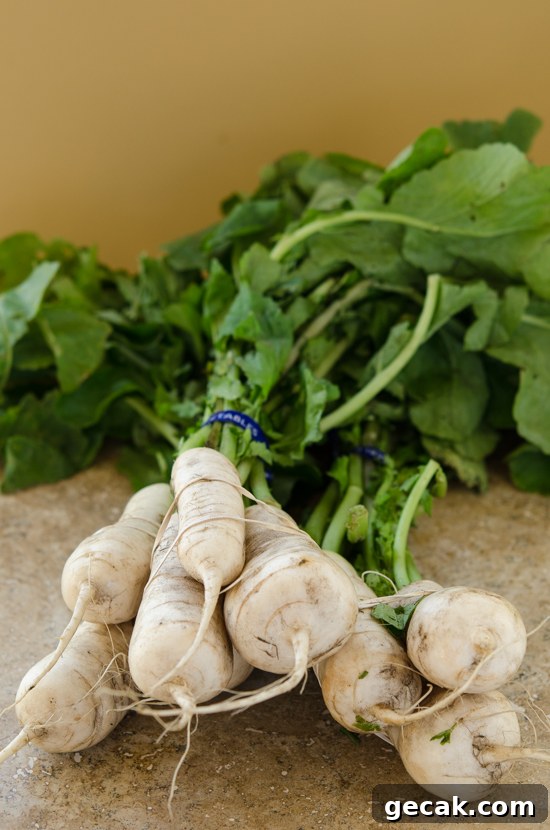
These charming radishes are called “Altari Mu” (알타리 무). You can commonly find them at Korean grocery stores and sometimes at farmers’ markets. Their shape and texture make them ideal for this style of kimchi.
How to make Bachelor Kimchi (Ponytail Radish Kimchi)
Step 1: Clean the ponytail radish
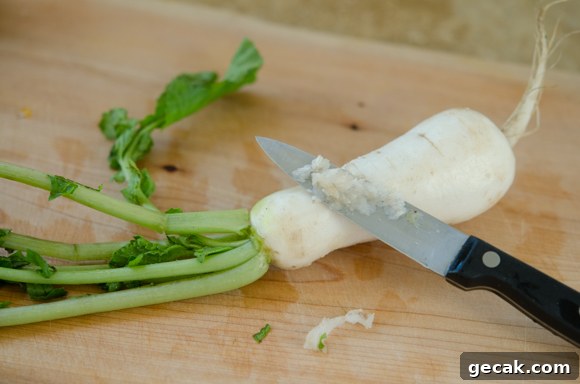
Scrape off dirt from the radish surface and trim the long top if needed, but keep the leafy stem attached. If the skin looks clean, peeling is unnecessary. If the radishes are large, cut them in half or quarters lengthwise so they are manageable.
Step 2: Salt brine the radish
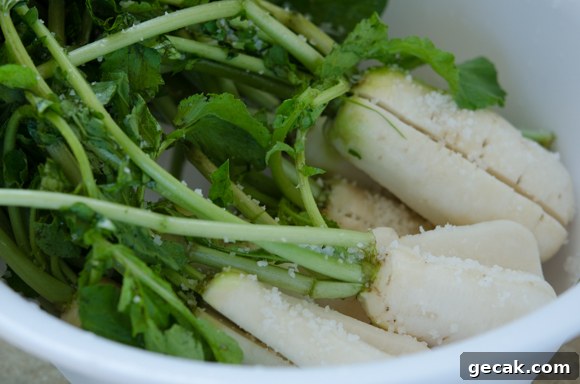
Sprinkle the radishes evenly with coarse sea salt and let them sit for about 2 hours, turning them once or twice. After they soften and look slightly wilted, rinse thoroughly and let them drain in a colander.
Step 3: Make fish stock and rice paste
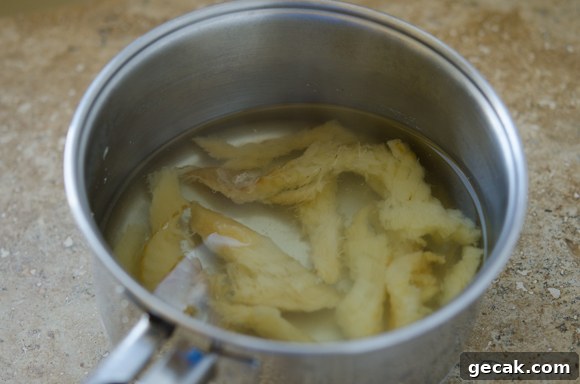
Prepare a simple fish stock by simmering dried pollock slices or anchovies in water for a few minutes, then strain. Reserve about 3/4 cup plus 2 tablespoons of the stock and discard the solids.
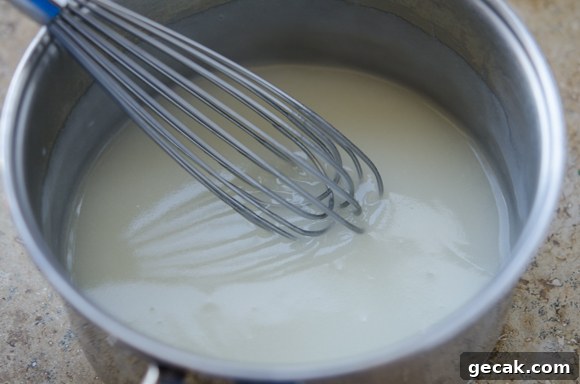
Combine 3/4 cup of the reserved stock with 2 tablespoons of sweet rice flour in a small pot and cook over medium heat, whisking constantly until it thickens into a paste—about 2–3 minutes. Let it cool. You’ll use about 1/2 cup of this paste for the kimchi; freeze any extra for future batches.
Step 4: Make the kimchi seasoning paste
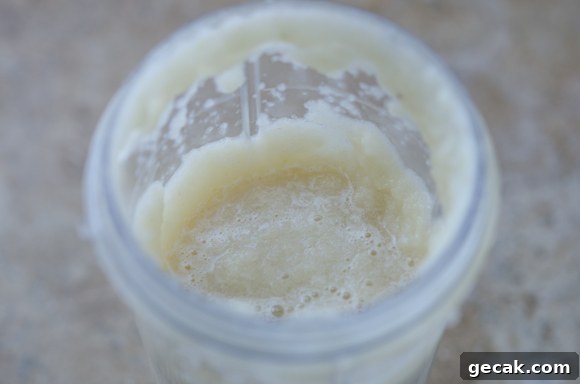
In a blender, puree diced onion, apple, garlic, ginger, and 2 tablespoons of the reserved fish stock until smooth.
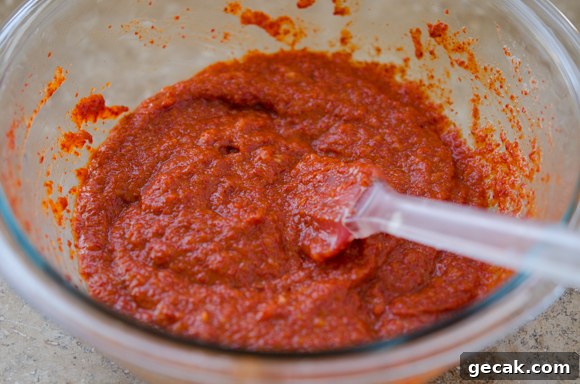
In a mixing bowl, combine 1/2 cup of the sweet rice paste, 1/2 cup Korean chili flakes (gochugaru), the onion-garlic-apple puree, 3 tablespoons anchovy sauce, 1 tablespoon salted shrimp (optional), and 1 tablespoon sugar. Mix well and let it rest for about 10 minutes so the chili flakes can soften.
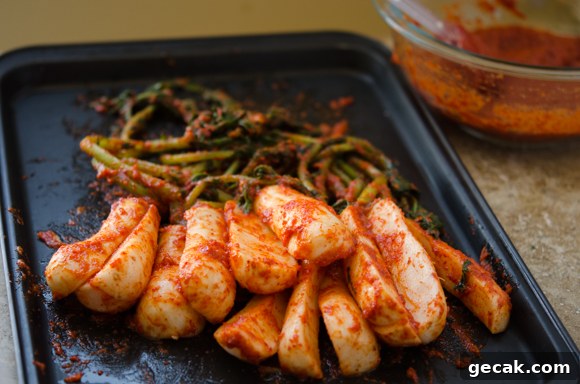
Spread the chili paste over the radishes in a large bowl or on a baking sheet, working in batches if needed to avoid overflow. Rub and toss so each radish and its greens are evenly coated with the seasoning.
How to ferment and store Korean Radish Kimchi
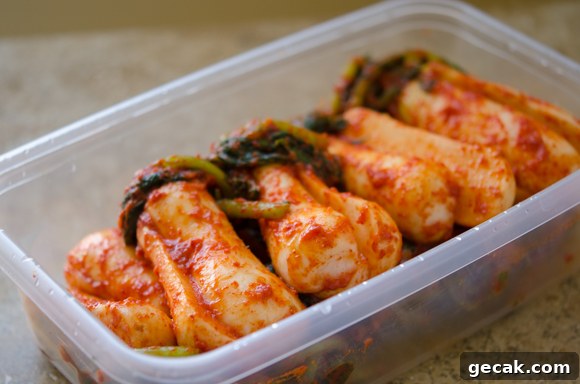
Pack the seasoned radishes into an airtight container or glass jar. Leave at room temperature for 2 days to start fermentation, then transfer to the refrigerator and continue fermenting for about 5 more days. After a week, the kimchi should be flavorful, crunchy, and well fermented.
This ponytail radish kimchi has a slightly different profile from cubed radish kimchi (kkakdugi). Its firm texture and balanced taste make it a favorite for many households.
And to answer the playful question: “Is there a bachelorette kimchi?”—no, there isn’t. Enjoy these charming bachelors on your table and savor their unique texture and flavor.
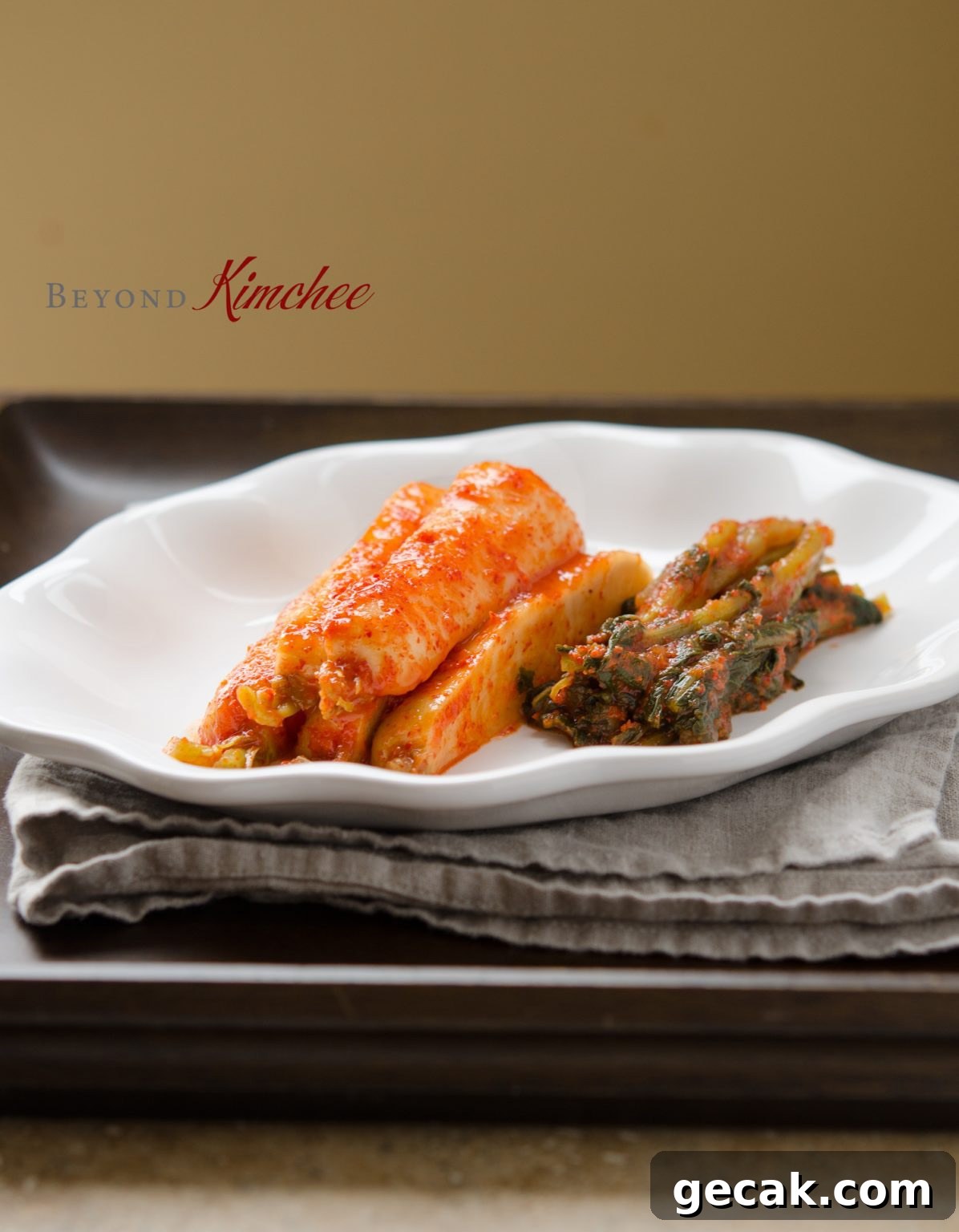

Bachelor Kimchi (Ponytail Radish Kimchi)
Pin Recipe
Leave a Review
Ingredients
- 3 1/4 lb young radish bunches
- 1/2 cup Korean coarse sea salt
- 1 handful dried shredded pollock or 5–6 dried large anchovies
- 2 tablespoon sweet rice flour (chapssal-garu)
- 2 cups water
- 1/2 medium onion, diced
- 1/2 apple, diced
- 4 cloves garlic
- 1/2 inch ginger
- 3 tablespoon Korean anchovy sauce
- 1 tablespoon Korean salted shrimp, optional
- 1 tablespoon sugar
- 1/2 cup Korean chili flakes (gochugaru)
Instructions
-
Clean the radishes by scraping off dirt and trimming the tail, keeping the leafy stem attached. Cut large radishes in half or quarters and rinse well.
-
Place the radishes in a large shallow bowl and sprinkle evenly with sea salt. Let soak for 2 hours, turning once or twice. Rinse and drain in a colander until they are ready for the filling.
-
Make the fish stock by simmering dried pollock or anchovies with 2 cups of water for 5 minutes. Strain and reserve 3/4 cup plus 2 tablespoons of stock. Discard the solids.
-
Combine 3/4 cup reserved stock with 2 tablespoons sweet rice flour in a small pot. Bring to a boil over medium-high heat, whisking until thickened. Cool the paste; you will use 1/2 cup.
-
Blend onion, apple, garlic, ginger, salted shrimp (if using) and 2 tablespoons reserved stock until smooth. In a bowl, mix the puree with 1/2 cup rice paste, gochugaru, anchovy sauce, and sugar. Let sit 10 minutes to soften the flakes.
-
Coat the radishes and their stems evenly with the chili mixture in batches if necessary. Pack into an airtight container.
-
Leave the kimchi at room temperature for 2 days, then refrigerate and continue fermenting for about 5 more days. Toss with any juice before serving.