
As I mentioned in my last post, this week features guest posts and I’m thrilled with the lineup. There is a wonderful collection of recipes and contributors, and I’m confident you’ll enjoy each one. A few weeks ago I posted on Facebook asking for guest posters for the second week of July and was encouraged by how quickly people responded. Most were food bloggers, but I received a couple of offers from writers outside the food-blog world. One of those offers came from today’s guest, and I was especially excited. Susan and I have known each other for many years. Although she doesn’t run a food blog, she is a gifted writer and a creative, talented cook. She has a personal blog called Fish in Motion and I encourage you to check it out.
Let’s welcome Susan Fish to The Black Peppercorn.
About Susan Fish
I’m a writer, editor and mother of three living in Waterloo, Ontario. I met Steve almost 20 years ago when he was a student at Laurier, where I worked. Cooking is a creative outlet for me — I’m not the world’s most adventurous eater, but I love trying innovative flavors and learning how people cook and eat while traveling. I always seek out farmers’ markets on trips and often bring home honey or other local products. On a recent trip to Newfoundland I fell in love with cloudberries. I enjoy cooking for large groups, using fresh ingredients, and have supported local food movements and community-supported agriculture for more than a decade. One of my food quirks is that not everything I make looks perfect — I prioritize flavor over presentation.
A Taste of Italy
In early March 2009 my husband and I traveled to Italy. Florence had always been on my list, but we also rented a car and drove through the Italian Alps to spend two nights in Parma — simply for the cheese. We visited dairies, sampling large, grainy hunks of some of the most delicious cheeses I’ve ever tasted. We arranged a private tour of an acetaia — the upstairs of a winery where balsamic vinegar is aged for decades. We dined in small, out-of-the-way restaurants where we were often the only English speakers. It was foodie heaven.
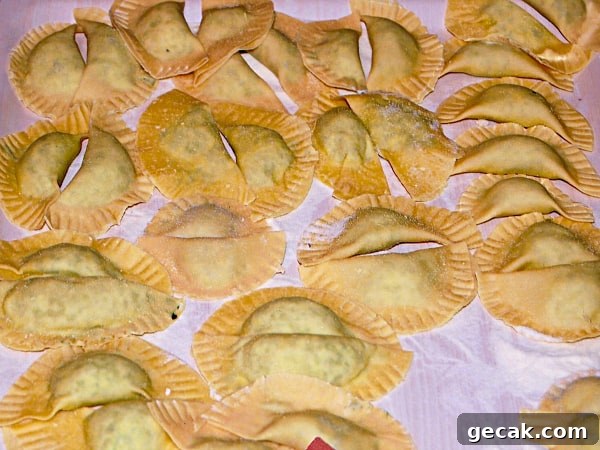
We also wanted to bring home techniques we could use in our own kitchen, so in Florence we took a pasta-making class at a centuries-old farmhouse. When Steve asked me to share a recipe, I thought you’d enjoy learning how to make classic Italian ravioli. The photos here show the pasta we made in the farmhouse basement. The hostess incorporated our work into a magnificent meal upstairs.
Spinach-Ricotta Ravioli
This method is time-consuming if you work alone, but with a few family members, friends or pasta-loving helpers it moves surprisingly quickly. A pasta maker is very helpful for best results.
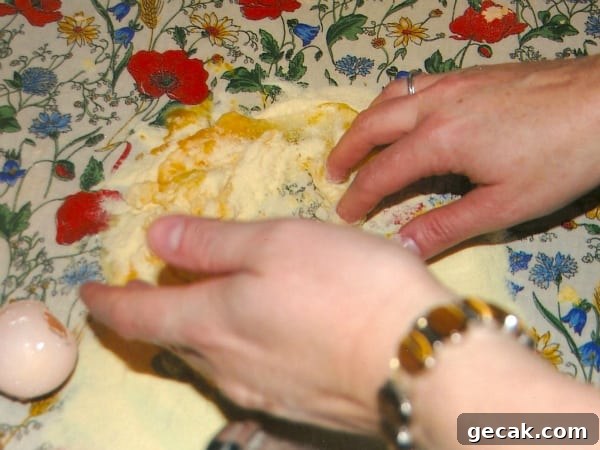
Begin by piling almost a cup of semolina flour on your work surface. Semolina, made from durum wheat, is slightly coarser and yellower than regular flour and is widely available. Make a small well in the center of the flour pile and add an egg to the well.
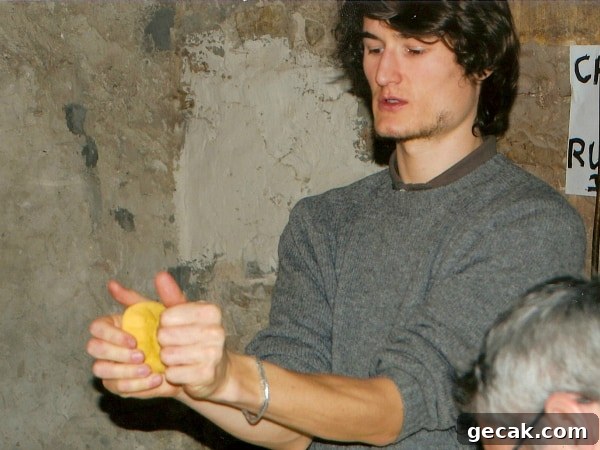
Quickly pierce the egg with your fingers and begin incorporating the surrounding flour using the heel of your hand. Work the mixture into a dough by flattening, folding and repeating several times. Semolina contains a lot of gluten, so the dough will become supple yet substantial. Form the dough into a disk, wrap it in plastic wrap and let it rest for about 15 minutes to let the gluten relax. If the dough is sticky, add a little more semolina; if it falls apart, add small amounts of water. Note: you’ll need at least three batches of dough to use all the filling.
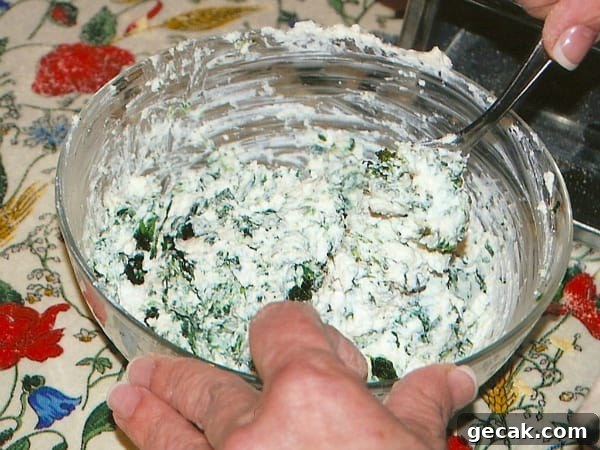
While the dough rests, prepare the filling. Steam about two cups of spinach, chop it finely (in Italy we used a mezzaluna) and squeeze out excess moisture. Combine the spinach with two cups of ricotta, a pinch of nutmeg, salt, a few turns of freshly ground pepper, and roughly 1/3 cup freshly grated Parmesan or Grana Padano. Mix well and let it sit so the flavors meld.
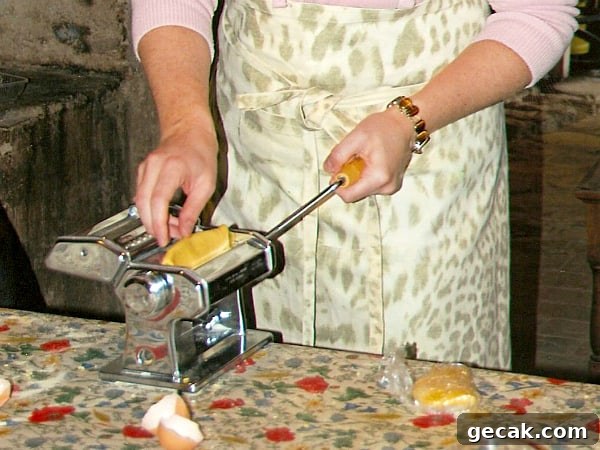
Set your pasta machine to its thickest setting and pass the dough through the rollers, folding it and repeating a dozen times. This helps develop a silky texture. Gradually reduce the thickness one notch at a time, running the dough through at each setting until it becomes nearly translucent.
Lightly dust your counter with semolina and lay the thin pasta sheet on it. Cut circles from the sheet — a clean tuna can makes an excellent ravioli cutter. Gather any leftover scraps into a ball and either combine with another batch or re-roll through the machine to use up all the dough.
Place roughly 1 teaspoon of the spinach-ricotta mixture in the center of each circle. Moisten the edges lightly with water, fold the circle in half, and press the edges together with the tines of a fork to seal. Lay the finished ravioli on a semolina-dusted cookie sheet to prevent sticking.
Bring a large pot of salted water to a rolling boil. Using a slotted spoon, gently slide a few ravioli into the water at a time. They cook quickly — about 3 to 4 minutes.
While the ravioli cook, brown butter in a skillet and add fresh sage leaves. Drain the ravioli and transfer them into the skillet, tossing gently to coat in the butter and sage. Serve immediately, sprinkled with additional fresh Parmesan.
Though this meal takes time to prepare, it is devoured in moments — and the flavor makes every minute worthwhile. Even if you’re not usually a fan of fresh pasta, this recipe is worth trying at least once. Buon appetito!