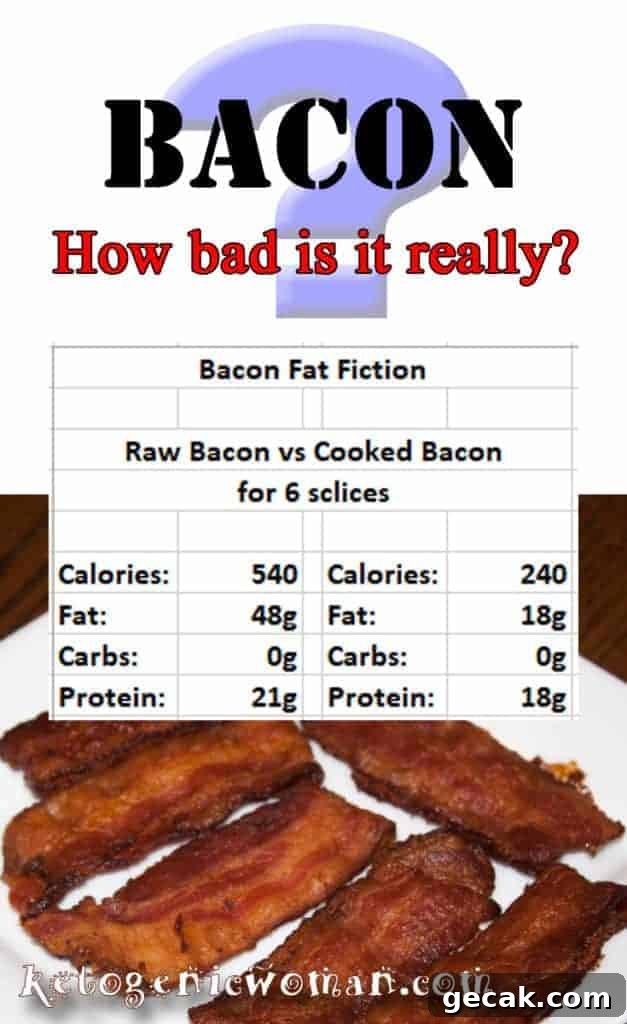
 Bacon Calories and Fat: Fact vs Fiction
I often hear uninformed comments about bacon, so I want to clear up common misconceptions about bacon calories and fat. Many people reference raw packaged nutrition facts and assume those numbers apply to cooked bacon on the plate. In reality, cooking changes the weight and fat content considerably. For example, my usual breakfast is six slices of oven-baked, folded bacon — a simple, convenient meal I even carry with me when I’m out.
That plate of six slices, cooked crisp and drained, comes to about 240 calories. People are often surprised to learn that this prepared bacon can have fewer calories and less fat than many popular breakfast items.
Compare my plate of bacon to common breakfast choices I see friends and coworkers eat:
My plate of bacon: 240 calories, 18 g fat, 18 g protein, 0 g carbs
- McDonald’s Bacon Egg McMuffin: 310 calories, 14 g fat, 16 g protein, 29 g carbs
- Tim Hortons Bagel B.E.L.T: 530 calories, 24 g fat, 24 g protein, 61 g carbs
- McDonald’s Bacon Hashbrown Wrap: 590 calories, 31 g fat, 24 g protein, 54 g carbs
- Tim Hortons Wholegrain Muffin: 350 calories, 11 g fat, 6 g protein, 60 g carbs
These comparisons show how bacon, when prepared properly, can be a lower-calorie, higher-protein option compared with many fast-food or bakery breakfasts that are high in carbohydrates and overall calories.
The key point: package labels for bacon usually report values for raw weight. During cooking, bacon loses moisture and renders fat, so the cooked portion that you eat contains different amounts per serving. To reflect what’s actually consumed, use cooked bacon nutrition values—cooked crisp with excess fat drained off is a practical standard and what many people prefer.
*NOTE* Cooked bacon refers to bacon cooked until crisp with excess fat drained. That yields the most accurate serving-size numbers.
Bacon Power! Show your bacon pride!

I bake my bacon in the oven at 350°F. Folding the slices and letting them crisp on a rack produces consistent results: evenly cooked, crispy bacon with fat rendered away. This method is easy and reliable, and many home cooks prefer it for texture and convenience.
Next time someone tells you bacon is automatically a high-calorie, high-fat choice, remind them that cooked servings differ from raw-package numbers. When prepared and served drained, bacon can be a reasonable, protein-rich breakfast option compared with many processed or carb-heavy alternatives.
Make yourself a plate of bacon, enjoy it the way you like, and don’t be afraid to show a little bacon pride.