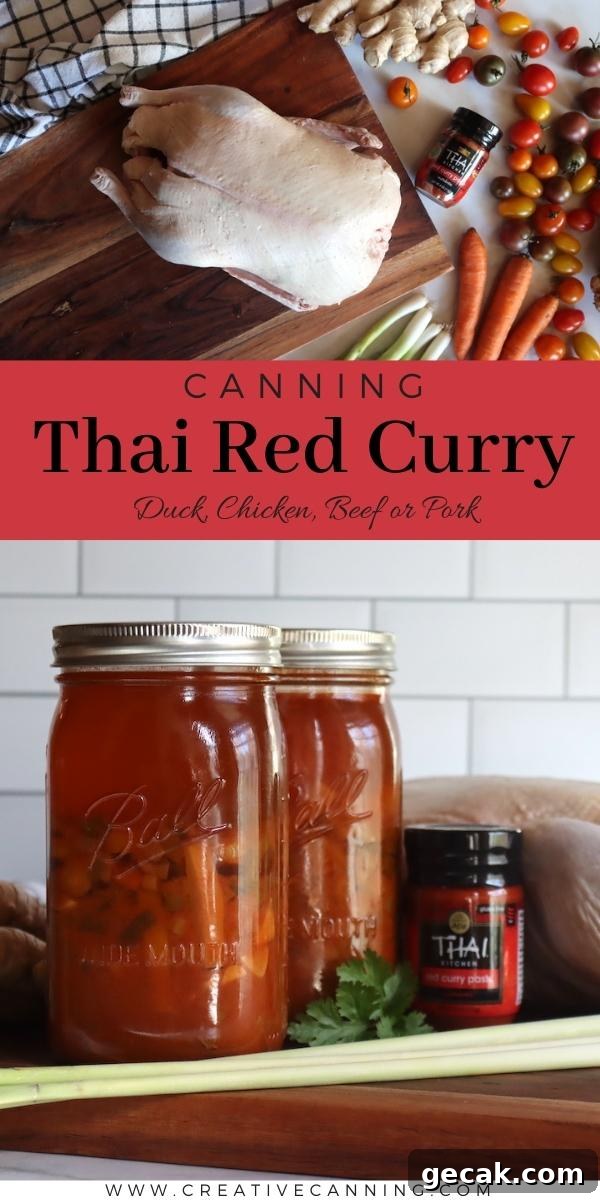
Thai red curry duck is a household favorite—rich, flavorful, and surprisingly easy to adapt for home pressure canning. With the right method you can preserve ready-to-heat jars that sit conveniently on your pantry shelf.
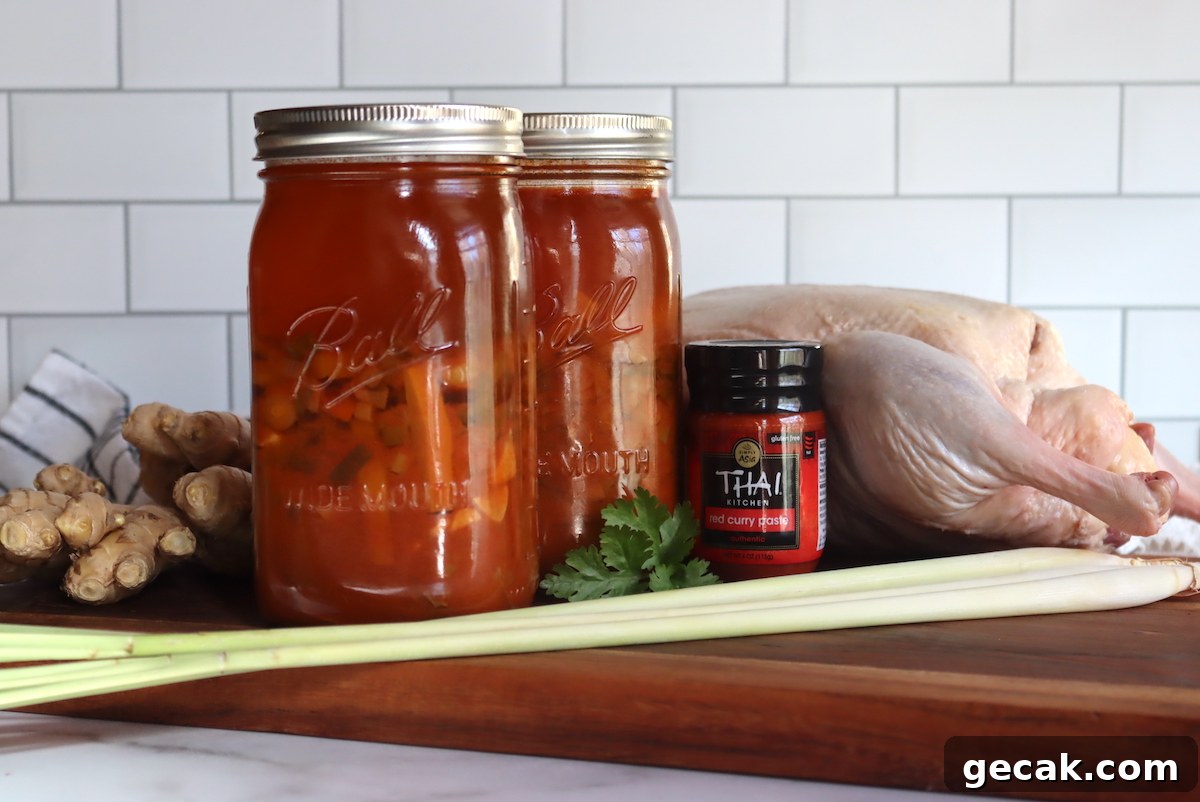
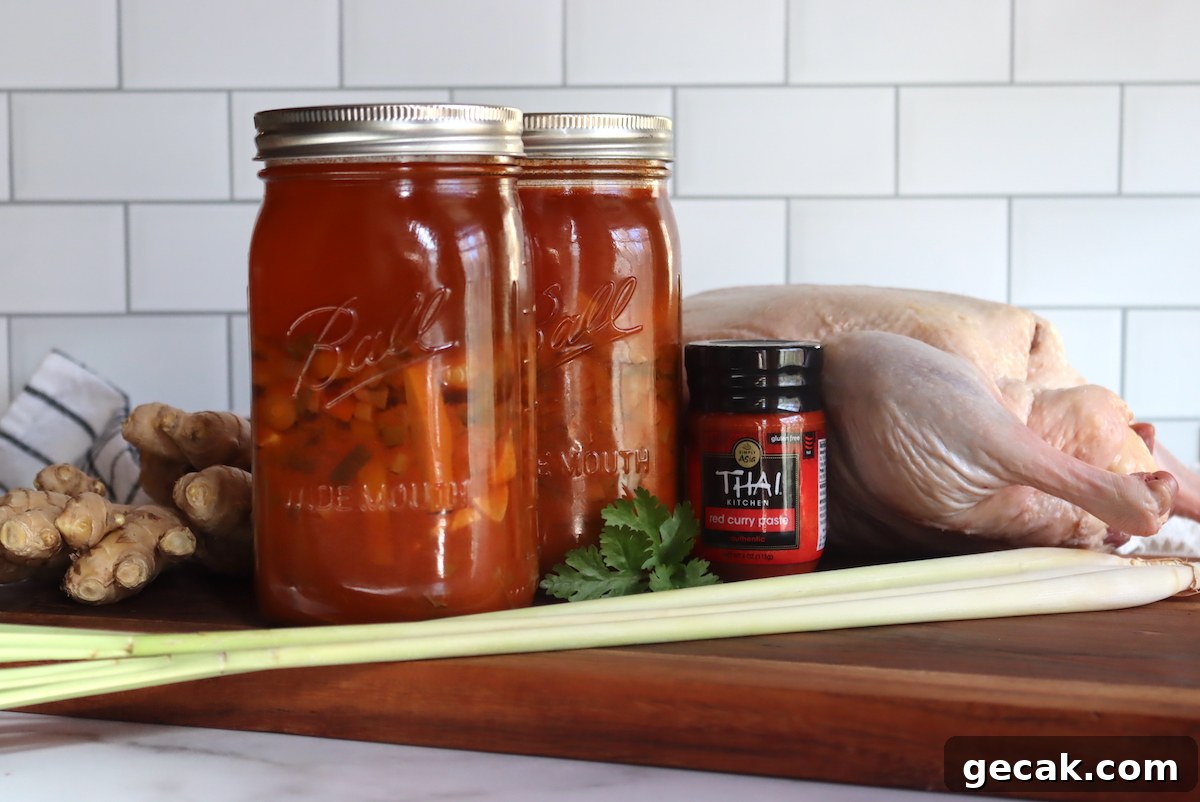
We eat Thai curries frequently because they can be made largely from shelf-stable ingredients: curry paste, canned coconut milk (added at serving), canned vegetables or fruits, and broth. Add cooked meat and fresh produce from the garden and you have a fast, satisfying meal.
Red curry duck is one of our go-to dishes. We used to raise ducks, so duck appears often at our table, but the canning approach described here works equally well with chicken, pork, or beef.
This method adapts a tested pressure-canning approach so you can safely preserve Thai-style curries without compromising flavor.
Canning curries made sense once I tried it. Curries are essentially meat and vegetables in a seasoned broth, which fits well with standard pressure-canning guidelines. Coconut milk and other dairy-like thickeners are not safe to process in home canners, so you simply add full-fat coconut milk when reheating a jar.
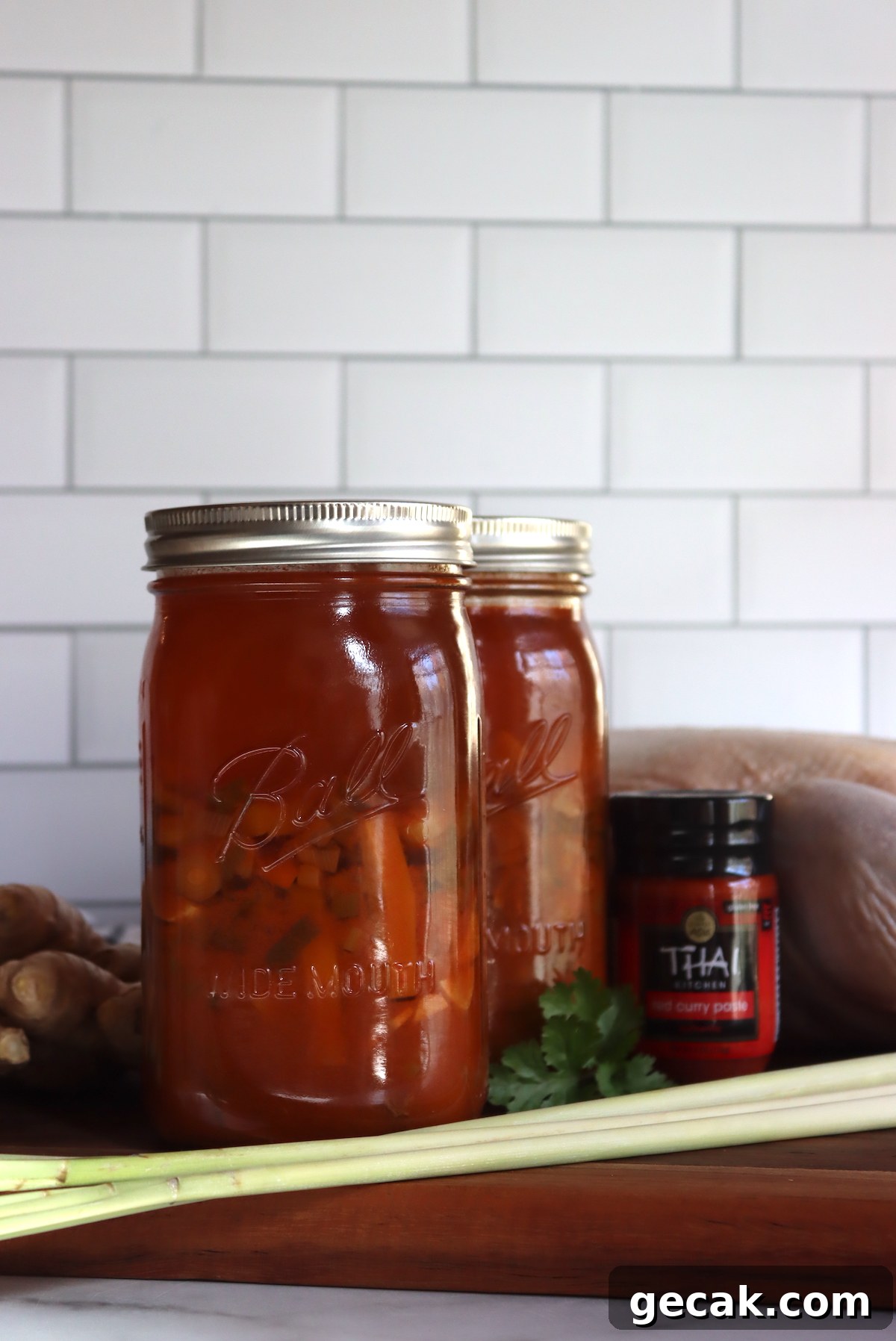
Is Thai Curry Safe for Canning?
Yes—when you follow tested canning practices. The National Center for Food Preservation and USDA guidelines explain how to safely develop and preserve seasoned meats and mixes of meat and vegetables for home canning.
There are two main, safe approaches:
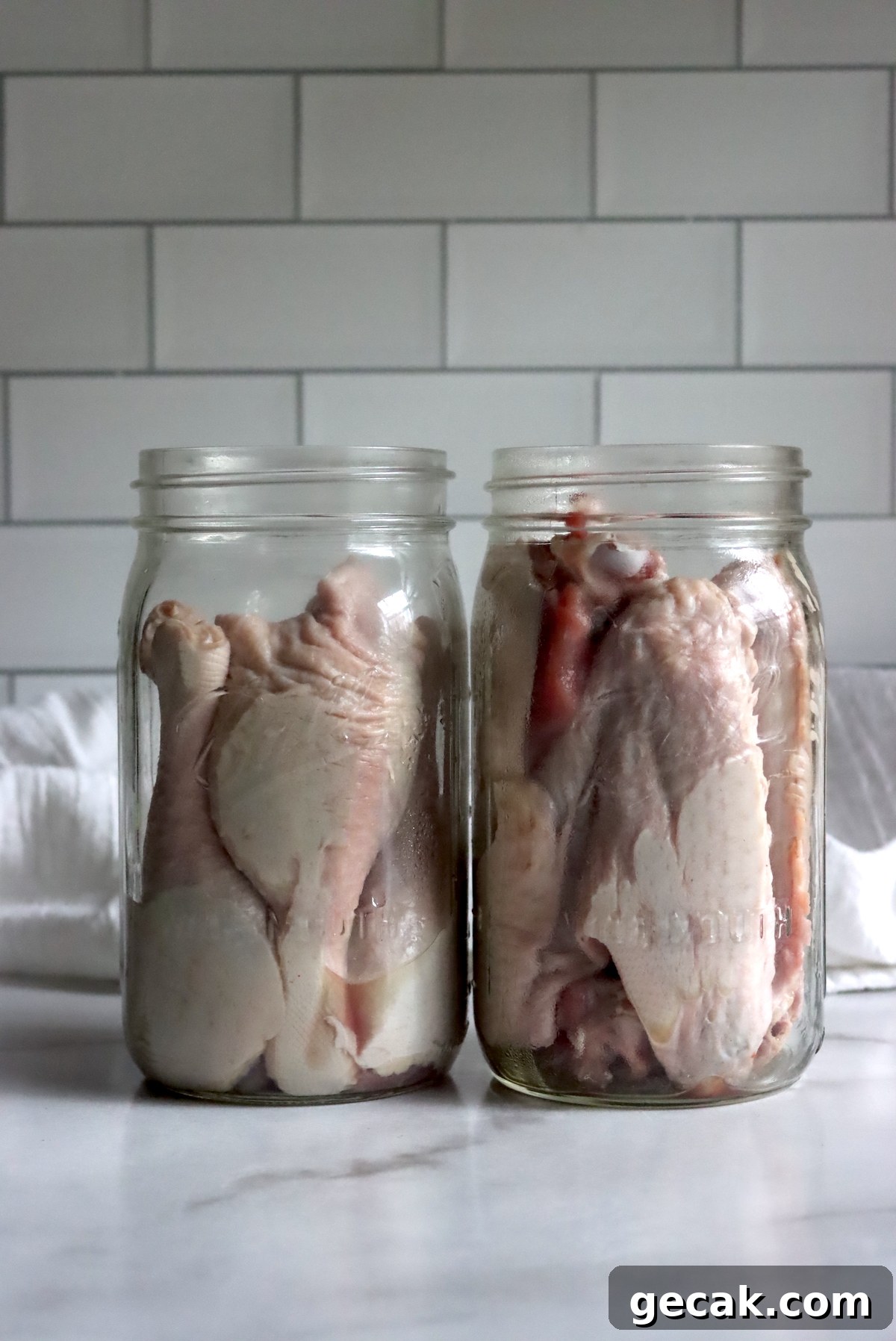
- Pack bone-in meat raw into jars with a boiling seasoned broth (a raw-pack meat method). The broth infuses the meat during processing.
- Follow the USDA “Your Choice” soup protocol: mix cooked meat and vegetables with broth, pack jars so solids make up about half the jar, and fill the remainder with liquid. This approach creates a soup-style curry that’s safe to process.
Keep in mind: do not add thickeners (flour, cornstarch), dairy, or coconut milk before processing. Add coconut milk at serving time to achieve the usual creamy texture.
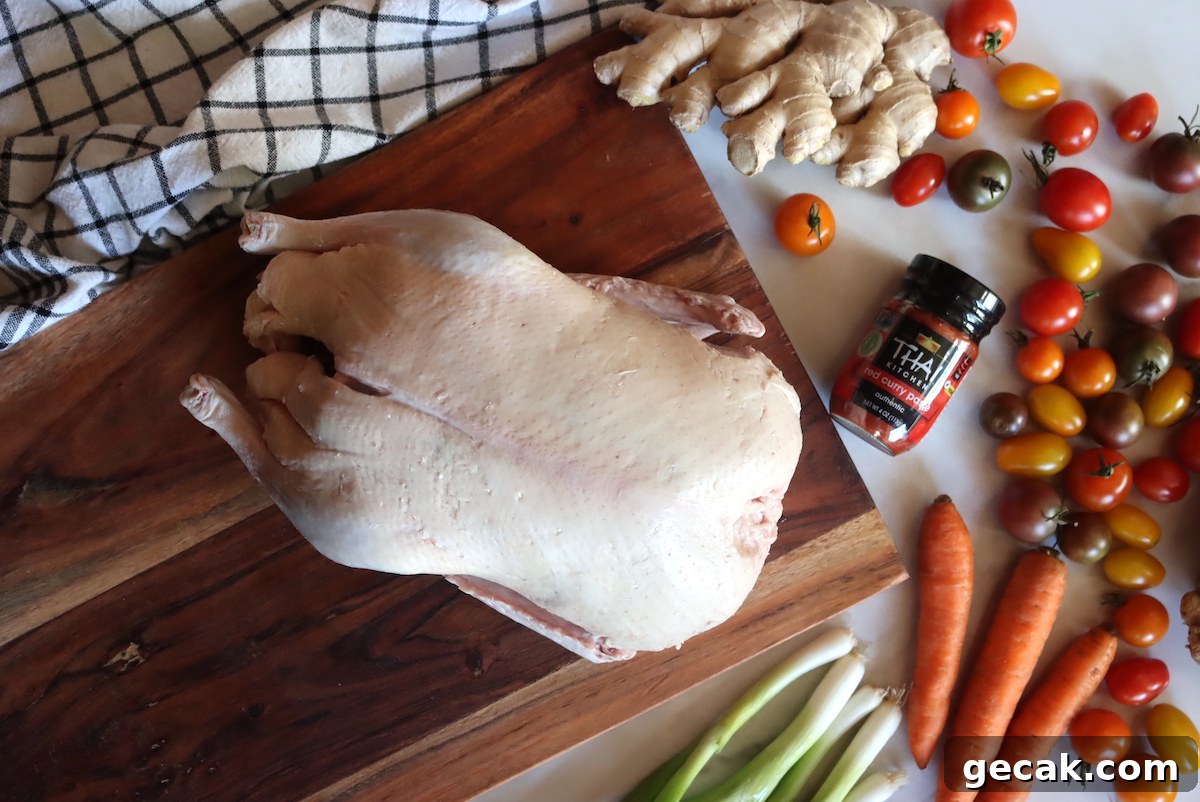
Ingredients for Canning Thai Curry (Two Safe Methods)
Below are two tested approaches. Version 1 is a seasoned hot broth used for raw-packing bone-in duck pieces. Version 2 follows the USDA soup protocol and is a cooked, mixed curry with meat and vegetables packed into jars.
Thai Curry Broth for Bone-in Duck (Version 1)
Enough broth to pack three quart jars tightly with parted bone-in duck:
- 1 quart (960 ml) chicken or duck broth
- 2 stalks lemongrass, optional
- 2 tbsp (30 g) red curry paste
- 2 tsp fish sauce
- 4 tsp garlic powder
- 2 tsp onion powder
- 1/2 tsp crushed red pepper flakes, optional
- 2 tsp dried ground ginger
- 2 tsp (12 g) salt (adjust to taste)
- 1 tsp ground black pepper
- 2 tsp sugar
In this method a whole 6 lb duck can be parted into sections and packed raw into three quart jars. Pour boiling broth over the raw-packed meat, then process quarts at the pressure and time specified for meat in jars—adjusting for altitude as required.
Note: Angi’s original recipe is on the saltier side. Taste the broth before canning and reduce salt if desired, keeping in mind the meat will absorb seasoning during processing.
Thai Red Curry Duck with Vegetables (Version 2)
This version follows the USDA soup protocol and uses cooked, deboned meat plus fresh aromatics and vegetables. Fresh garlic, ginger, and onion are allowed under the soup protocol because the recipe is tested as a mixed soup. Remember jars must be about half solids and half broth.
Example batch for a 7-quart canner:
- 7–8 cups cooked, deboned duck meat (from 2 roast ducks)
- 5 quarts duck stock (or other stock)
- 4 cups carrots, cut into matchsticks
- 2½–3 cups chopped pineapple (or a 20 oz can)
- 3 cups chopped scallions
- 1 bulb garlic, peeled and diced (or pressed)
- 12 oz red curry paste (three 4-oz jars)
- 2–4 inches fresh ginger, peeled and grated
- 1/4 cup lime juice
- 2 tbsp fish sauce
- 2 tsp salt
The cooked ingredients are gently simmered together, then packed into jars so solids fill about half the jar. Top with curry broth, leaving 1″ headspace, seal, and process using the USDA “Your Choice Soup” instructions.
Allowed vegetables are those with individually tested canning recipes. Do not add coconut milk, cabbage, or other items lacking tested canning guidance before processing. You can add non-canned-approved items (like water chestnuts or bamboo shoots) only at serving time from separate cans.
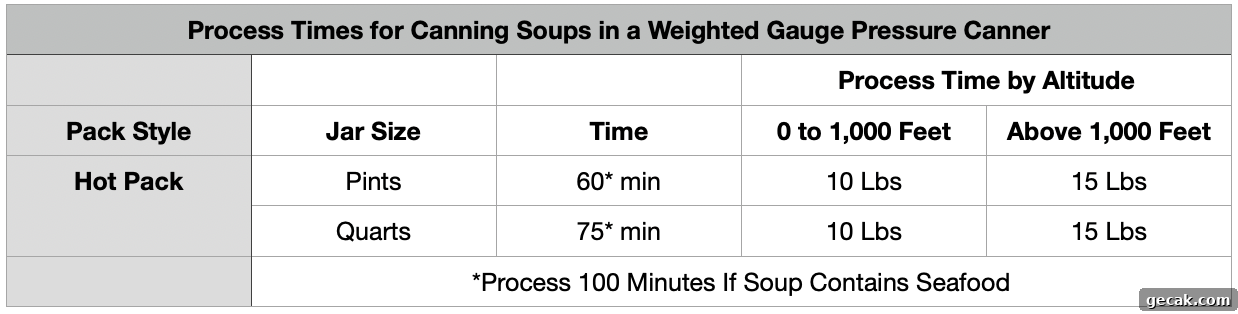
Process times under the USDA soup protocol:
- Pints: 60 minutes
- Quarts: 75 minutes
- If the soup contains seafood: 100 minutes for pints or quarts
Pressure varies by canner type and elevation. Consult your canner manual for exact pressures for dial- or weighted-gauge canners and make altitude adjustments.

Serving Canned Thai Curries
To serve: pour the contents of a jar into a saucepan and reheat. For each quart, add one 15-oz can of full-fat coconut milk while reheating to recreate the classic creamy texture. Serve over rice.
You can also add drained cans of items not processed in the jars—such as water chestnuts, bamboo shoots, or baby corn—at serving time to bulk the meal.
A single quart plus a can of coconut milk is a generous main-course portion for hearty eaters; for moderate appetites a quart typically serves 3–4 people when served over rice.
Properly canned and sealed jars will remain high quality for 12–18 months on the pantry shelf. Refrigerate after opening.
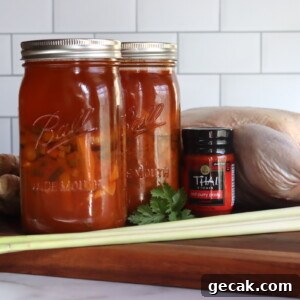
Canning Thai Red Curry Duck (or Chicken)
Ingredients
- 7 to 8 cups cooked duck meat, de-boned from 2 whole roast ducks (5–6 lbs each)
- 5 quarts duck stock, made from carcasses (or store-bought stock)
- 4 cups carrots, cut into 2″ matchsticks (about 1 lb)
- 2½ to 3 cups chopped pineapple (or a 20 oz can)
- 3 cups chopped scallions (about 3 bunches)
- 1 bulb garlic, peeled and diced or pressed
- 12 oz red curry paste (three 4 oz jars)
- 2–4 inches fresh ginger, peeled and grated
- 1/4 cup lime juice
- 2 tbsp fish sauce
- 2 tsp salt
Instructions
- Remove cooked meat from two whole roasted ducks and break into small pieces.
- If making stock, simmer carcasses with aromatics for 4–12 hours, then strain. Alternatively use store-bought stock.
- Preheat a pressure canner for hot pack and prepare jars, lids, and rings.
- Combine all ingredients in a stock pot, stir to incorporate, and bring to a gentle simmer for about 5 minutes.
- Use a slotted spoon to divide solids evenly among 7 quart jars (or 14 pints). Jars should be roughly half solids. Top with hot curry broth, leaving 1″ headspace.
- Seal jars with lids and rings, place in the canner, vent steam for 10 minutes, then bring to the correct pressure for your altitude and canner type.
- Process pints for 60 minutes or quarts for 75 minutes (longer if seafood is included). After processing, allow the canner to cool naturally before opening.
- Remove jars, check seals, and refrigerate any jars that did not seal. Properly sealed jars store on the pantry shelf.
- To serve, heat the jar contents in a saucepan, add one 15-oz can of full-fat coconut milk per quart, stir and heat through, and serve over rice.
Notes
Altitude Adjustments
Processing times are constant, but required pressure changes with altitude. Consult your pressure canner manual for exact pressures. Typical guidance:
Dial gauge pressure canners
- 0–2,000 ft: 11 lbs
- 2,001–4,000 ft: 12 lbs
- 4,001–6,000 ft: 13 lbs
- 6,001–8,000 ft: 14 lbs
Weighted gauge pressure canners
- 0–1,000 ft: 10 lbs
- Above 1,000 ft: 15 lbs
Meal-in-a-Jar Canning Recipes
If you enjoy pantry-ready meals, try other heat-and-eat canning recipes to keep your shelves stocked. Jars like these make meal planning and emergency prep simple.