Table of contents
- Notes From the MGC Kitchen
- Key Ingredients
- How to Make Moist and Flavorful Bread Stuffing
- Storage and Reheating Instructions
- More Stuffing Recipes To Try
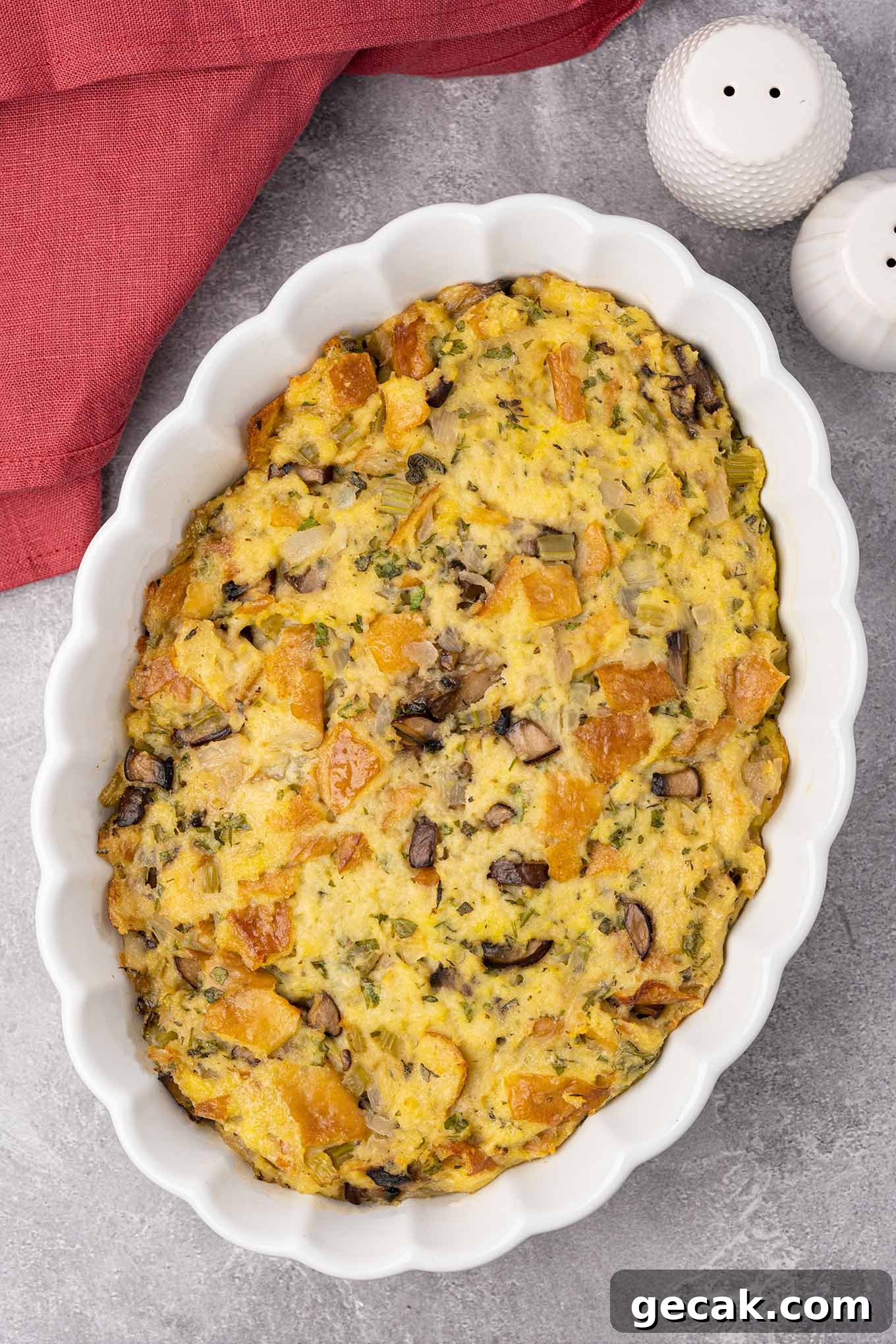
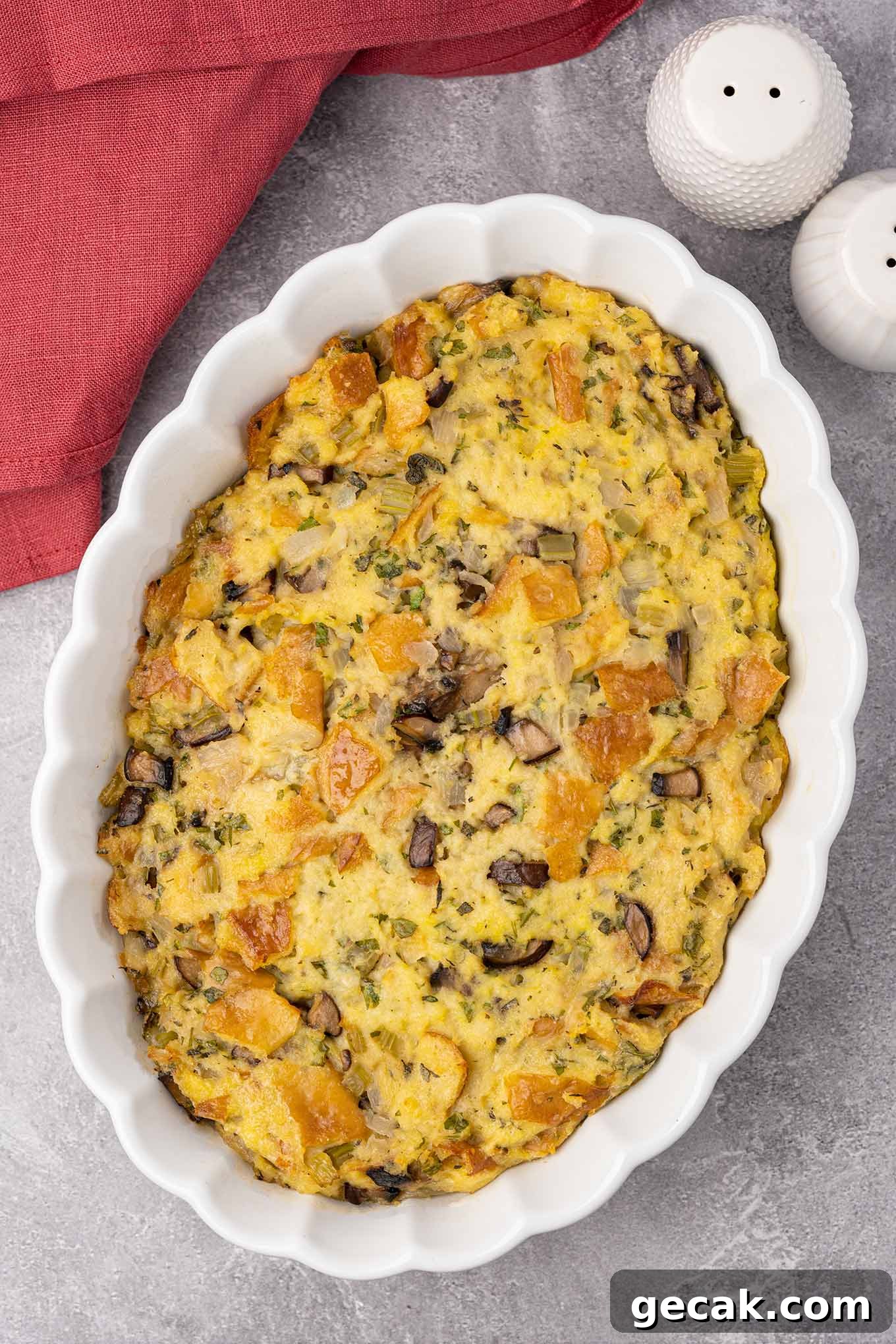
Stuffing is often the highlight of a holiday meal, so having a reliable bread-stuffing recipe matters. This family recipe delivers a light, moist texture and rich flavor, making it a satisfying choice compared with denser or drier versions you may have encountered. Fresh herbs, sautéed aromatics and the right bread create a classic stuffing that complements roasted poultry beautifully.
Notes From the MGC Kitchen
The key to moist but not soggy stuffing is using the proper bread and balancing moisture from butter, eggs and broth. Sautéed onions, celery and mushrooms add depth and texture while a mix of fresh parsley, sage and thyme brightens the overall flavor. A final drizzle of pan drippings or a buttered broth gives the dish that savory, baked-in-the-bird quality.
Key Ingredients
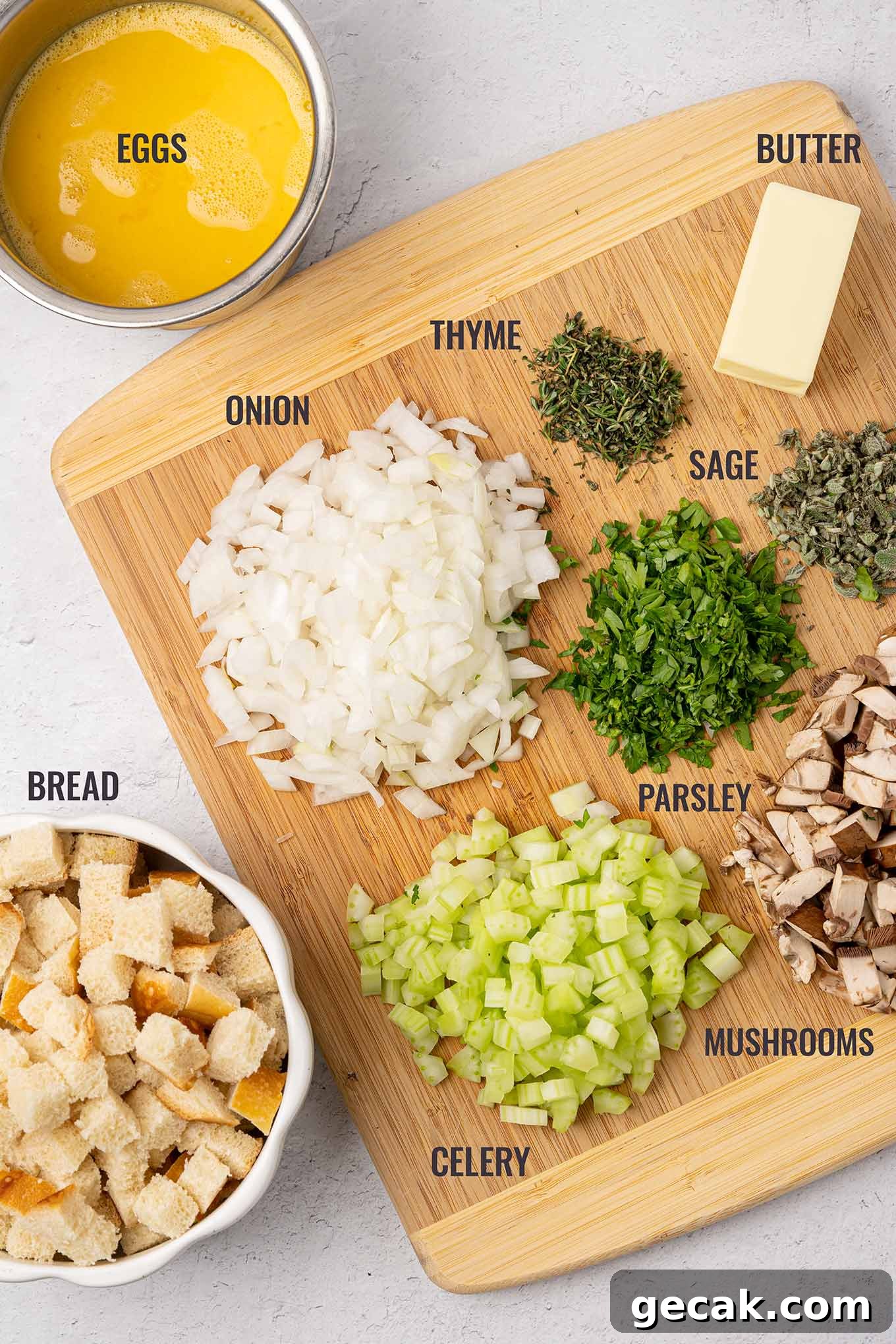
A few ingredients are essential to this recipe. Quantities are listed in the recipe card below.
- BREAD: Use a firm white or mild sourdough sandwich loaf with a slightly dense crumb and tender crust. It soaks up moisture from butter and eggs without turning mushy and yields a tender stuffing. A one-pound loaf (about 14 slices) cut into 1/2-inch cubes makes roughly 4 to 5 cups loosely packed. There’s no need to remove the crust.
- MUSHROOMS: Chopped mushrooms add gentle umami and a bit of moisture that improves texture. The amount used enhances flavor without dominating; omit them if you prefer.
- HERBS: Fresh parsley, sage and thyme lend classic stuffing flavor. If substituting dried herbs, reduce the amount by two-thirds to avoid over-seasoning.
How to Make Moist and Flavorful Bread Stuffing
Below is an overview of the method and a few tips; full instructions follow in the recipe section.
BEFORE YOU BEGIN: Preheat the oven and butter a 1 1/2- to 2-quart casserole dish.
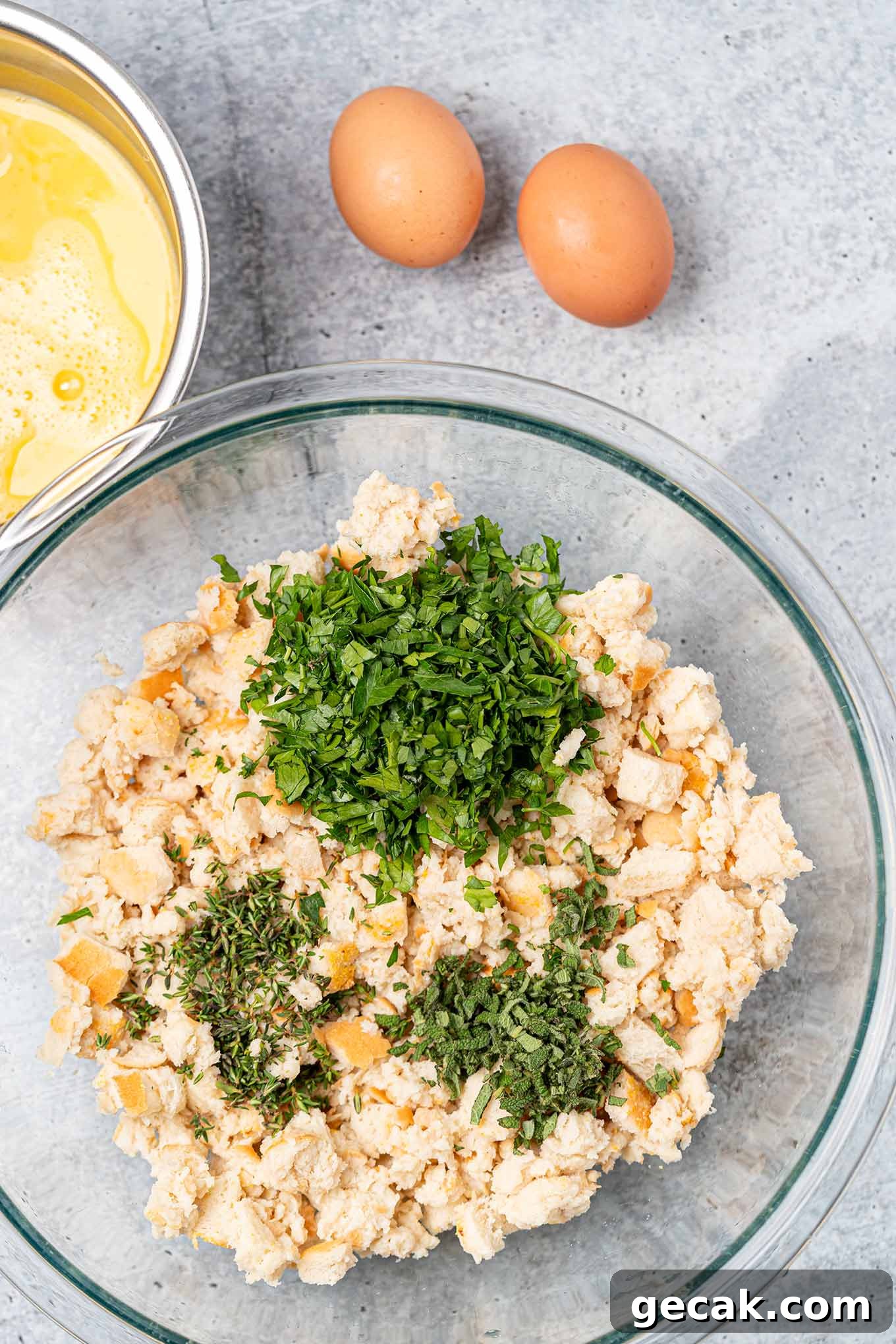
PREPARE THE BREAD: Place the bread cubes in a colander, moisten briefly with water, then gently squeeze out excess—this step helps achieve a soft, fluffy texture. Transfer the moistened cubes to a mixing bowl, break up large pieces, add the chopped fresh herbs and set aside.
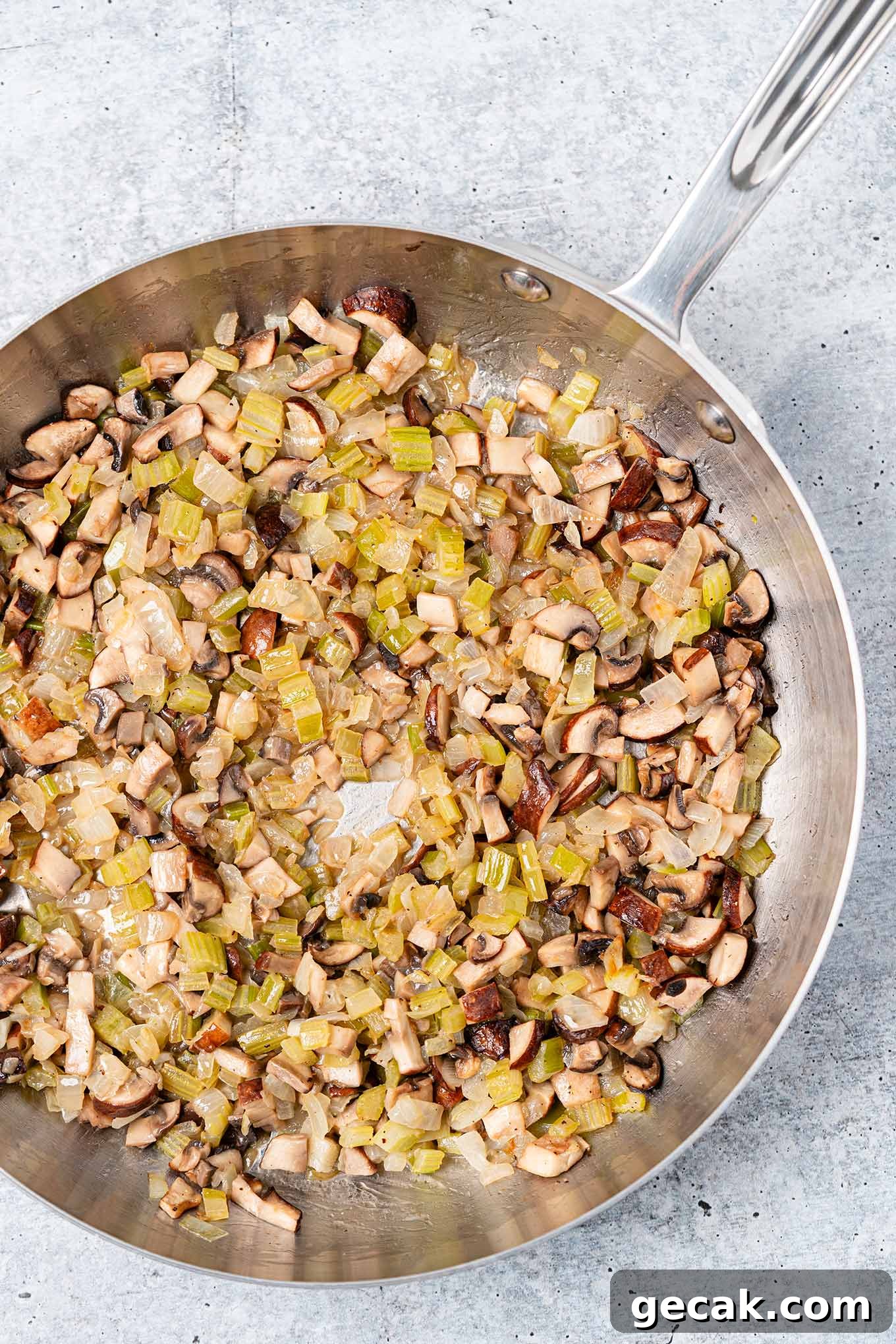
SAUTÉ THE VEGETABLES: Melt butter in a skillet over medium heat. Sauté diced onion until soft and translucent (3–5 minutes). Add diced celery and cook 2 minutes, then add chopped mushrooms and cook another 2 minutes. Season with salt and pepper.
MAKE THE STUFFING: Combine the sautéed vegetables with the bread and herbs by hand, taste and adjust seasoning, then stir in the lightly beaten eggs. Transfer the mixture to the prepared casserole dish and smooth the top.
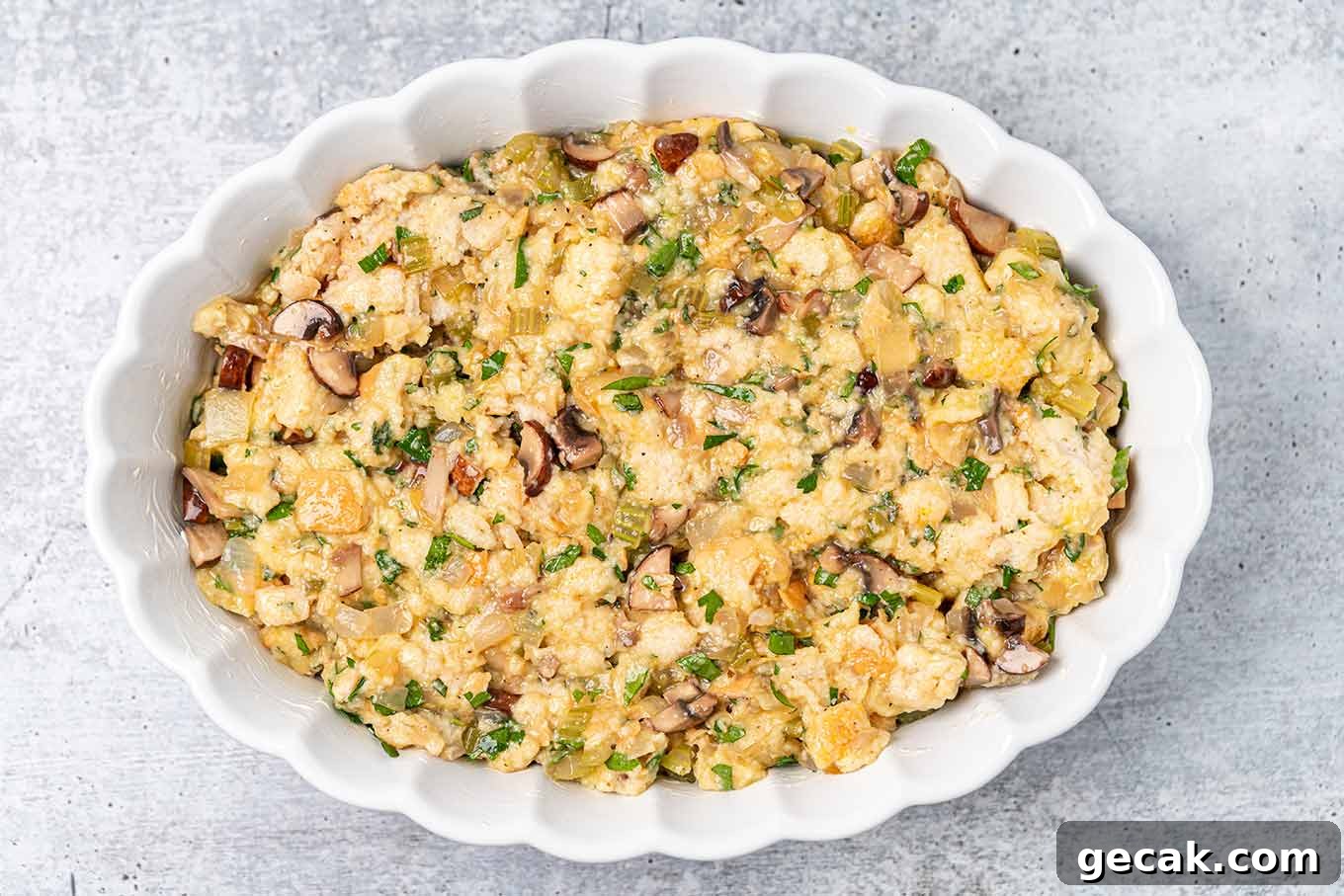
BAKE THE STUFFING: Cover the dish with foil and bake at 350°F for 45 minutes. Remove foil and drizzle 1/4 cup pan drippings or a mixture of 1/4 cup chicken broth and 1 tablespoon melted butter over the top. Bake uncovered an additional 10 minutes.
KEEP WARM: Replace the foil and keep the casserole warm in a low oven (200°F) for up to 90 minutes if needed.
Storage and Reheating Instructions
Refrigerate leftovers wrapped in foil for up to three days. If reheating in foil, spray it lightly with nonstick spray first; otherwise transfer the stuffing to a casserole dish. Add a splash of water or chicken broth to restore moisture, cover tightly and bake 20–30 minutes at 350°F or until heated through.
To freeze, wrap tightly and freeze for 1–2 months. Thaw overnight in the refrigerator and reheat as above.
More Stuffing Recipes To Try
If you want different flavors, try cornbread-based stuffing or recipes that include sausage and herbs. Those options pair well with turkey, chicken, roast duck or pork and offer distinct profiles to suit varied menus.
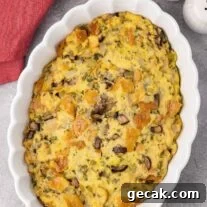
Old Fashioned Bread Stuffing
Pin Recipe
Rate Recipe
Print Recipe
Ingredients
- 1 loaf soft bread, cubed, 1 pound
- 1/2 cup chopped parsley, stems removed
- 1/2 to 1 tablespoon fresh sage, finely chopped
- 1/2 to 1 tablespoon fresh thyme leaves
- 4 tablespoons unsalted butter
- 2 cups diced onion
- 4 stalks celery, diced
- 8 ounces mushrooms, chopped
- 4 large eggs, lightly beaten
- Salt and pepper
- 1/4 cup pan drippings from roasted turkey, or 1/4 cup chicken broth whisked with 1 tablespoon melted butter
Instructions
-
Preheat the oven to 350°F and butter a 1 1/2- to 2-quart casserole dish.
-
Place bread cubes in a colander, moisten with water, then gently squeeze out excess. This moisture step is important for a soft, fluffy stuffing.
-
Transfer the bread to a mixing bowl, break up any large clumps, add parsley, sage and thyme, and set aside.
-
Melt butter in a skillet over medium heat. Cook onion until translucent (3–5 minutes), add celery and cook 2 minutes, then add mushrooms and cook 2 more minutes. Season with salt and pepper.
-
Add the sautéed vegetables, 3/4 teaspoon salt (or 1/2 teaspoon if using salted butter) and pepper to the bread and herbs.
-
Combine thoroughly by hand, taste and adjust seasoning. Stir in the beaten eggs, mix well, and transfer to the prepared casserole dish.
-
Cover with foil and bake 45 minutes. Remove foil, drizzle with pan drippings or buttered broth, and bake uncovered 10 more minutes.
-
Remove from oven, replace foil to keep warm, and serve within 45 minutes or keep in a low oven (200°F) up to 90 minutes.
Notes
Firm white or mild sourdough sandwich bread with a denser crumb works best. Avoid very soft, airy loafs that won’t hold up. A one-pound loaf cut into 1/2-inch cubes yields about 4 to 5 cups loosely packed; leave the crust on.
DAIRY-FREE BUTTER
A high-quality plant-based butter made with avocado oil can substitute for butter. If it’s salted, reduce added salt accordingly.
FRESH VS. DRIED HERBS
If using dried herbs, reduce the amount by two-thirds to avoid over-seasoning.
STORAGE AND REHEATING INSTRUCTIONS
Refrigerate leftovers for up to three days (wrap in foil). If reheating in foil, spray lightly with nonstick spray; otherwise place in a casserole, add a little water or broth, cover and bake 20–30 minutes at 350°F until hot. Freeze up to 1–2 months; thaw overnight and reheat the same way.
Nutrition
Nutrition information is automatically calculated, so should only be used as an approximation.