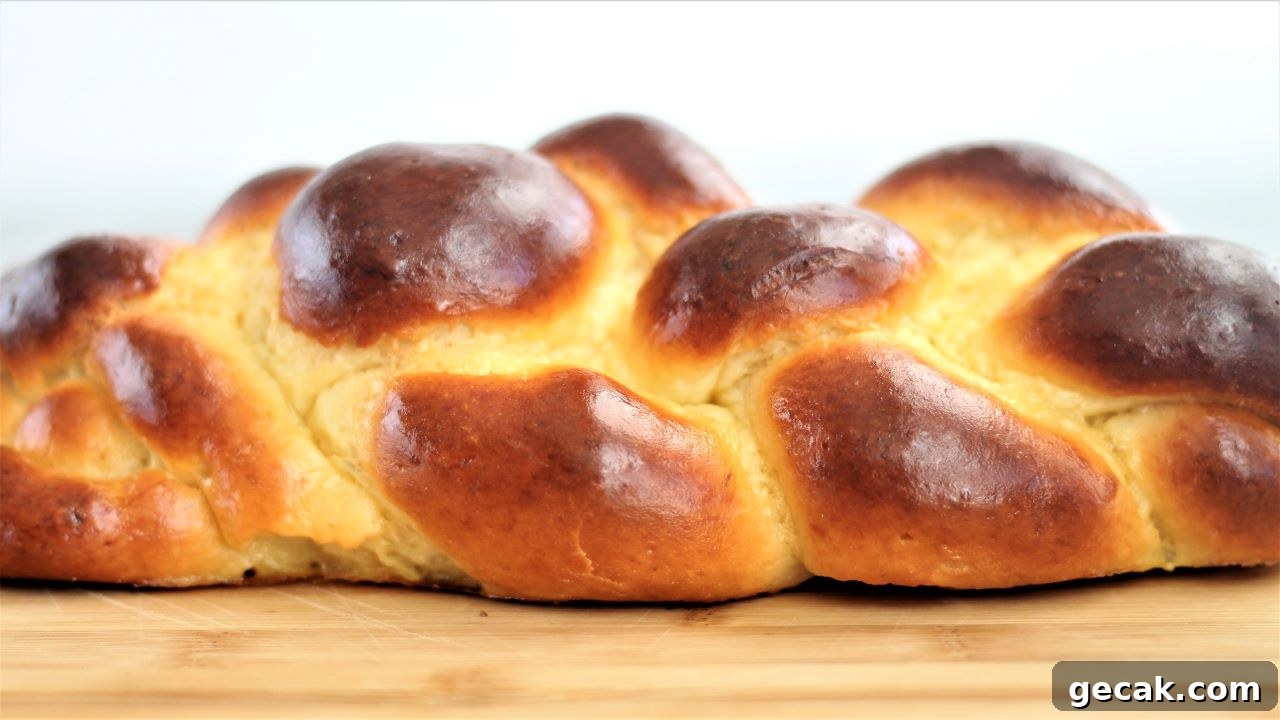
This gluten-free challah is rich, golden, gently sweet, and tender. It’s perfect for holidays but also wonderful any day of the week.
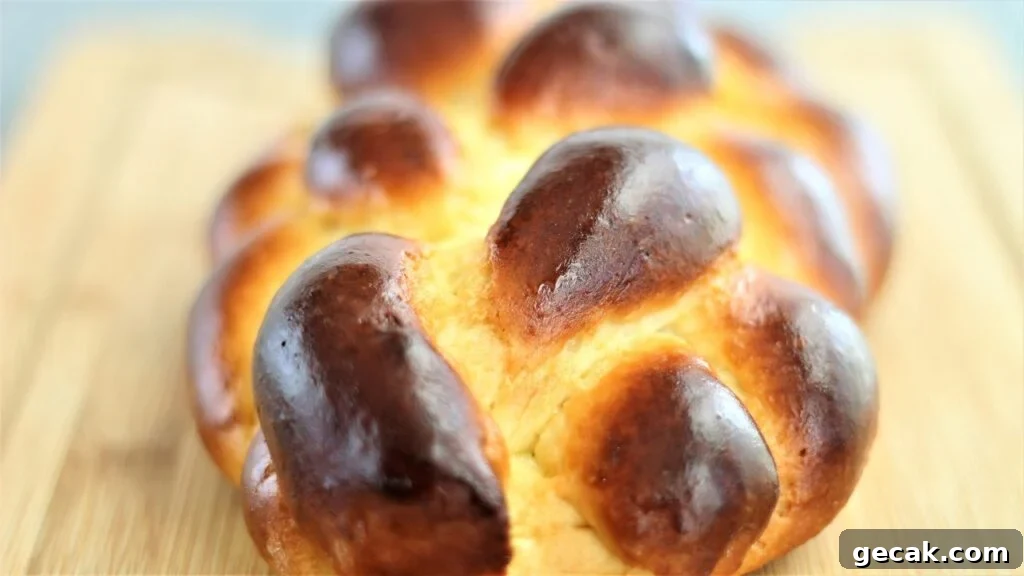
I’ve spent years refining this gluten-free challah. When I get an idea for a bread, I test and tweak until it’s reliable — which is why some recipes take months or even years to perfect. I only share versions that consistently deliver great results.
Before eating gluten-free, I remember a challah so good my kids and I devoured a whole small round loaf in a couple of hours. That memory inspired me to recreate that soft, eggy texture without gluten.
What is Challah?
Challah is an enriched, egg-forward bread with a golden crust and soft crumb. Traditionally served on Shabbat and many Jewish holidays (not during Passover, when leavened bread is avoided), challah also carries spiritual meaning in Jewish practice. Over time it has become popular beyond religious settings and is now commonly found in bakeries and stores.
Gluten Free Challah Dough
This gluten-free challah uses an enriched dough similar to my gluten-free Hawaiian rolls, but made dairy-free to respect traditional meat-and-dairy separation. Key components:
- Kim’s gluten-free bread flour blend (use a dairy-free protein powder if called for).
- Sugar — this recipe uses a significant amount; most of it feeds the yeast, creating lift and a soft crumb. Reducing sugar may affect texture.
- Psyllium husk powder — provides elasticity and helps the dough hold together for braiding.
- Baking powder — a small addition gives a lift boost in gluten-free yeast breads.
- Salt — for flavor and balanced fermentation.
- Water — used instead of milk to keep the dough dairy-free.
- Oil — neutral oils like canola or vegetable keep the loaf tender and dairy-free.
- Eggs — this version uses two whole eggs plus an extra yolk for richness.
Braiding Methods
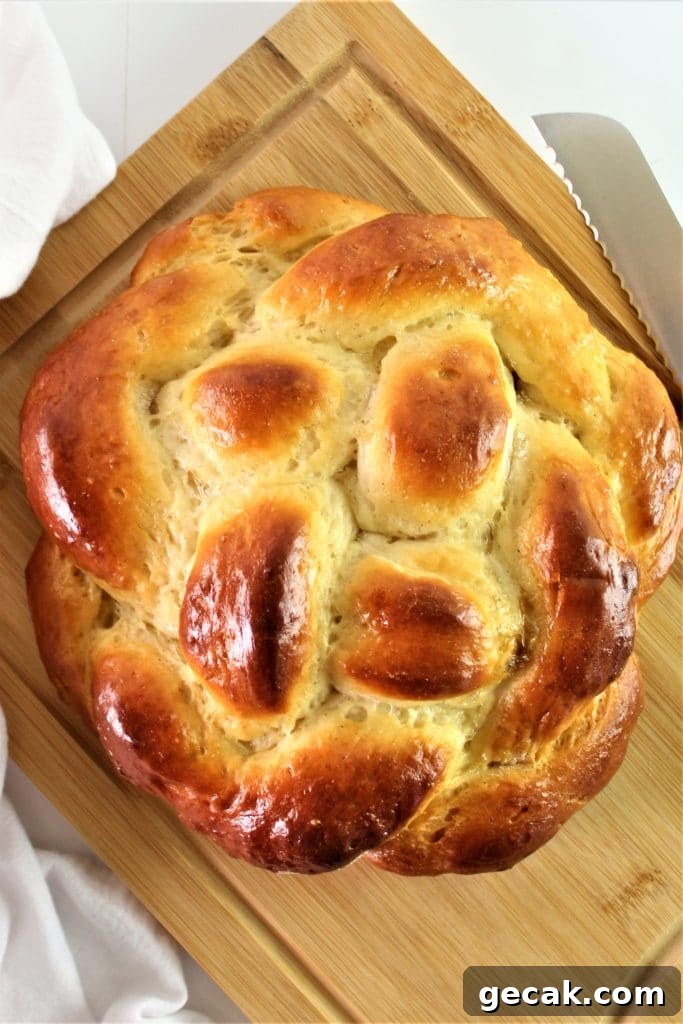
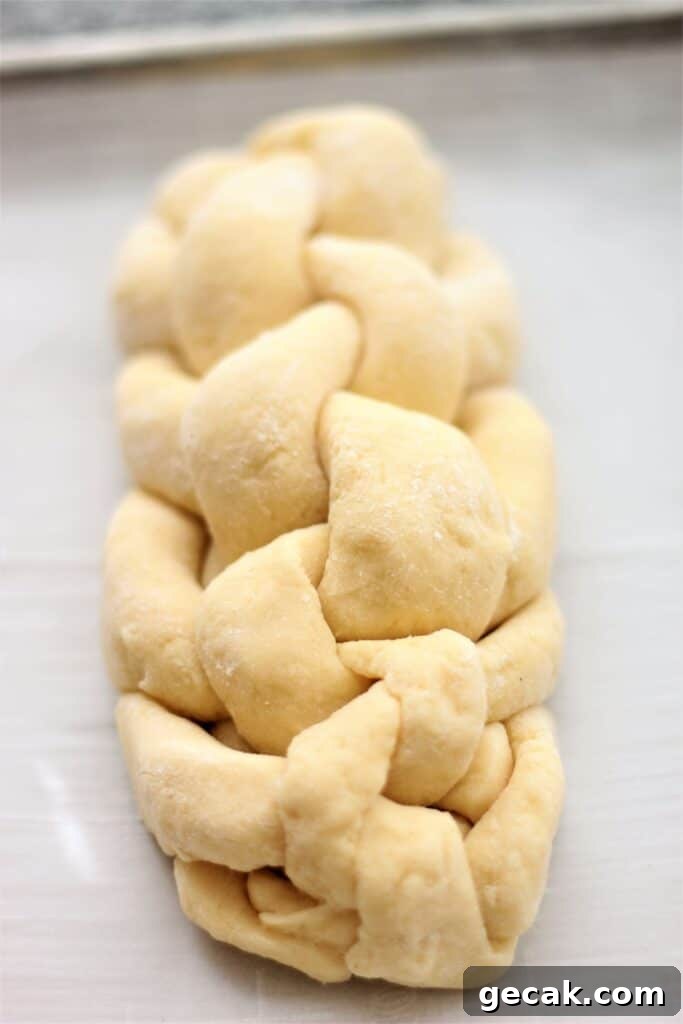
I watched many braiding tutorials before settling on a method I could reproduce consistently. The round four-strand braid is my go-to, and I also make a four-strand long loaf. Practice helps — don’t worry if your first attempts aren’t perfect.
Round challot are traditional for Rosh Hashanah because the circular shape symbolizes continuity or the cycle of life. I’m not an expert in religious tradition, so consult knowledgeable sources for deeper meaning.
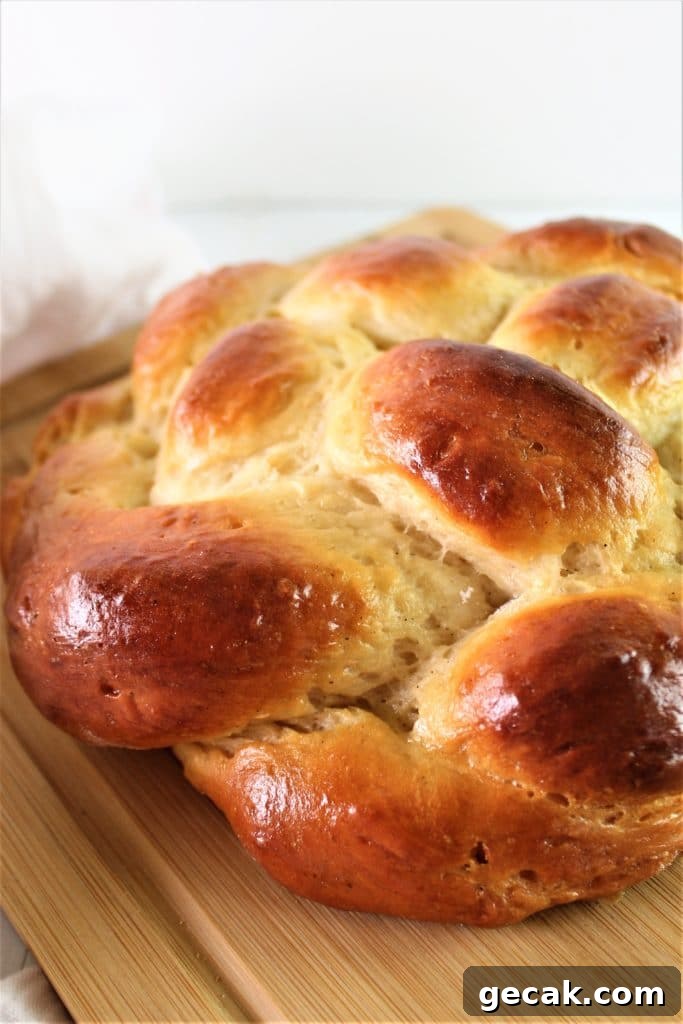
Brush Three Times with Egg Wash
Rather than covering the loaves while they rise, brush them with egg wash. This keeps the surface hydrated and forms a protective layer so the skin doesn’t dry out.
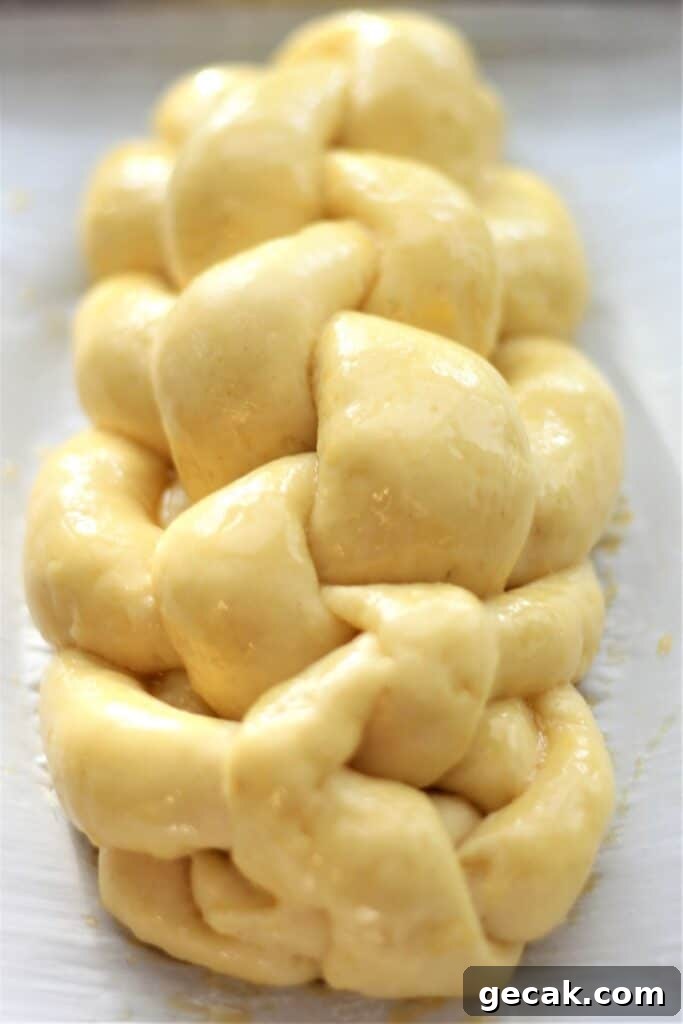
Proof the challah in a draft-free spot until almost doubled, about 30 minutes to 1½ hours depending on temperature. I often proof loaves in an oven briefly warmed on “warm” (around 170°F) then turned off.
When the loaves are nearly proofed, remove them and preheat the oven to 375°F. Brush another coat of egg wash, place the loaves in the oven and immediately reduce the temperature to 325°F. Bake about 40 minutes total: brush once more at the 20-minute mark to coat any newly risen sections, then finish baking.
Tips for Making the Best Gluten Free Challah Ever!!
- Chill the dough: cold dough is much easier to braid.
- Don’t stress about perfect braids: gluten-free dough isn’t as stretchy as wheat dough, so tucking and shaping are fine.
- Use plenty of egg wash for a shiny, deep-golden crust.
- You can refrigerate the dough up to 3 days. Bake one loaf fresh and save the other for later to enjoy fresh bread across multiple days.
- Leftover challah is excellent for French toast, bread pudding, or an overnight bake.
- To freeze, slice, flash-freeze on a tray, then store slices in a bag with as much air removed as possible. Thaw only what you need.
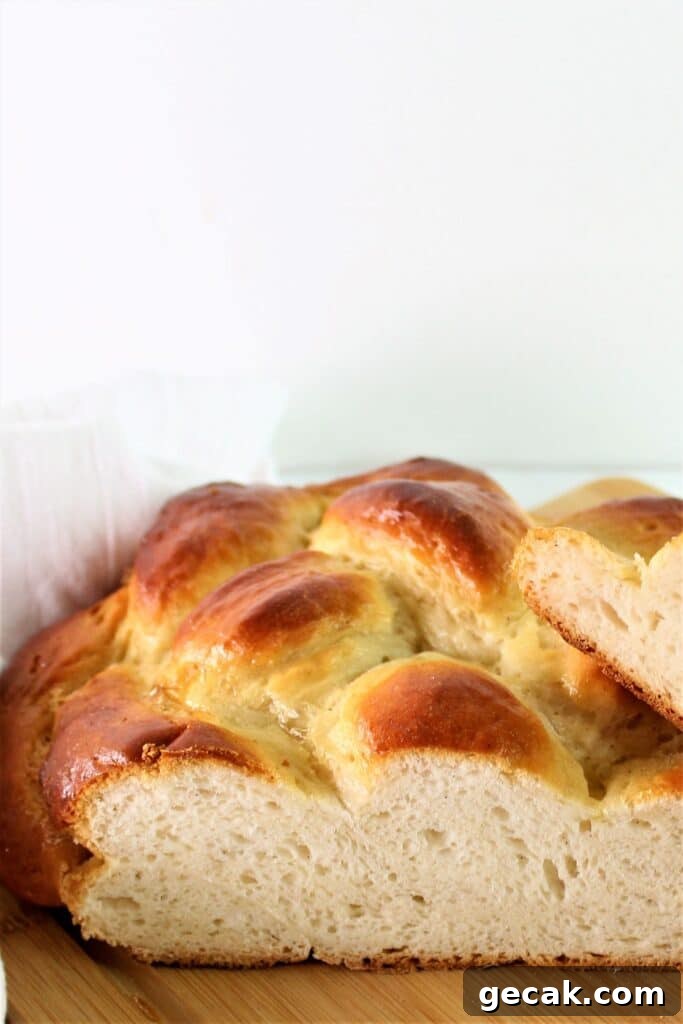
Whether you observe the tradition or simply love great bread, this gluten-free challah delivers an eggy, rich, soft loaf with a hint of sweetness. Leftovers make outstanding French toast.
Gluten Free Challah Bread
Ingredients
- 3½ cups (495g) Kim’s gluten-free bread flour blend* (made with dairy-free protein powder)
- 10 grams whole psyllium husks (or 7g psyllium husk powder)
- 200 grams granulated sugar
- 6 grams baking powder
- 24 grams instant yeast
- 6 grams kosher salt
- 300 grams water
- 120 grams canola or vegetable oil
- 2 large eggs, plus one egg yolk
- 1 large egg mixed with a pinch of salt and 1 tablespoon water for egg wash
Instructions
-
In a stand mixer bowl, whisk the flour blend, psyllium, sugar, baking powder, yeast, and kosher salt.
-
With the mixer on low (use the paddle/flat beater), slowly pour in the water and oil. Add the eggs and extra yolk and mix until combined.
-
Switch to the dough hook and mix on medium-high for about 5 minutes. Scrape the dough into the center of the bowl, cover, and chill.
-
Allow the dough to cold-rise in the refrigerator at least 4 hours, preferably overnight, and up to 3 days.
-
On baking day, remove dough from the fridge and knead briefly until smooth, adding a bit more flour blend if needed. Divide in half for two loaves (or save one half refrigerated for later).
-
Flatten each portion to a small rectangle about ½–¾ inch thick. Cut each piece into four and roll into ropes to form your braids.
-
For a four-strand round braid: start with a hashtag layout, then cross strands over and under as you work around the circle. Tuck ends underneath.
-
Place the loaf on parchment, brush with egg wash, and proof in a warm, draft-free spot until almost doubled (30–45 minutes depending on conditions).
-
Preheat the oven to 375°F (190°C). Brush the loaf again, put it in the hot oven, then immediately reduce the temperature to 325°F (160°C). Bake 20 minutes, remove and brush any pale areas with egg wash, then bake another 20 minutes.
-
Cool before slicing. The loaf stays best about 24 hours; to refresh, wrap in foil and warm in a 325°F oven for 10–15 minutes.
Notes
*Leftover challah is excellent for French toast or bread pudding.
**The sugar amount is important for the texture shown here because much of it feeds the yeast. Reducing sugar will change the crumb and rise.