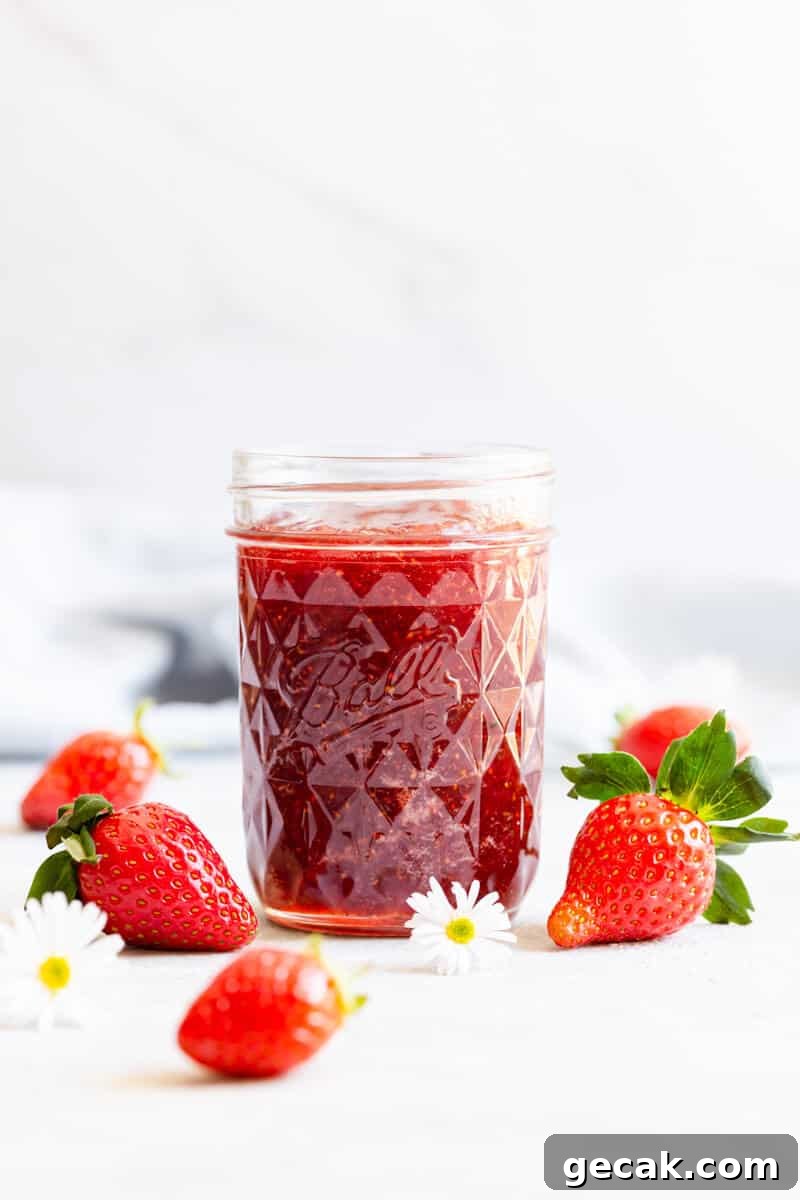
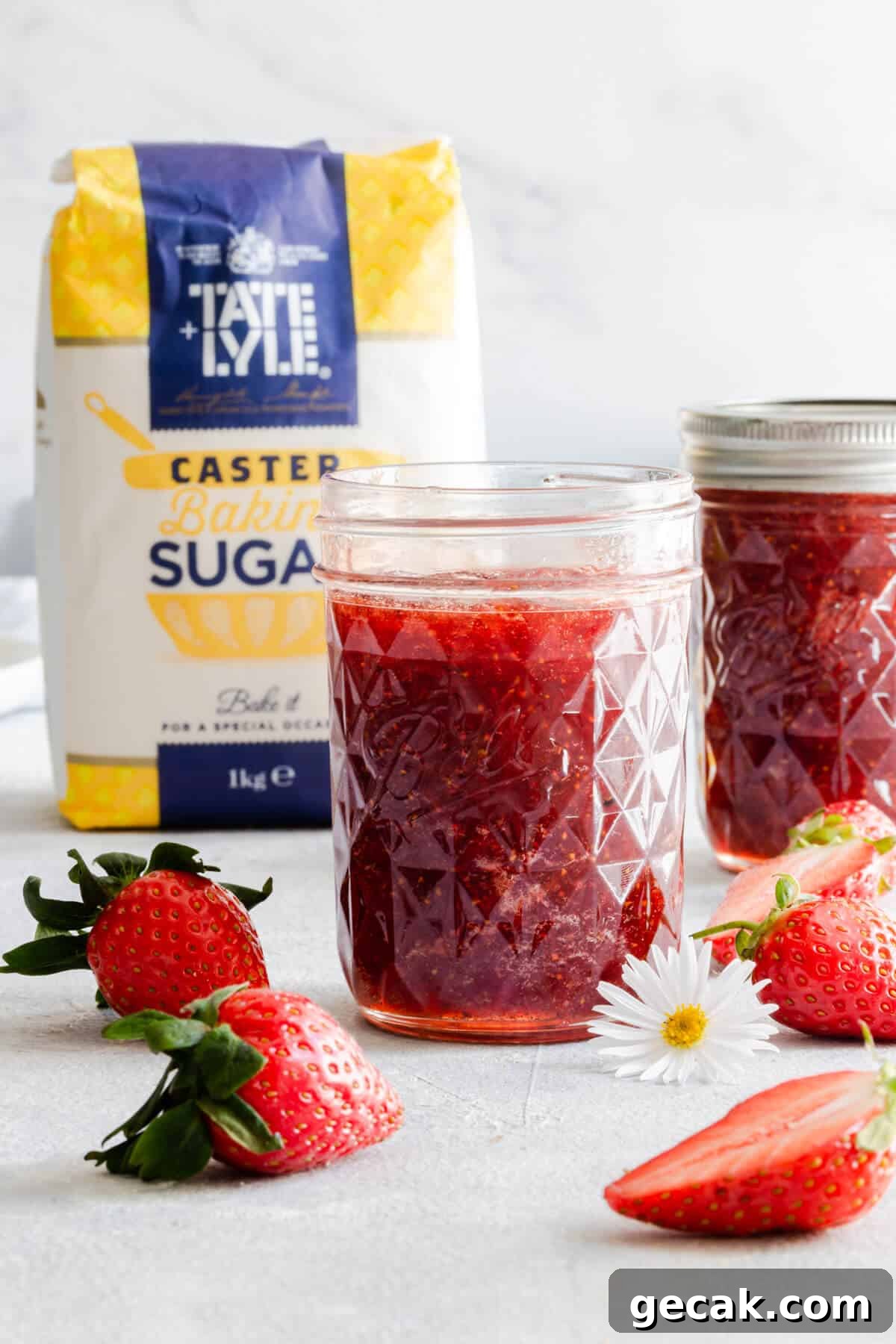
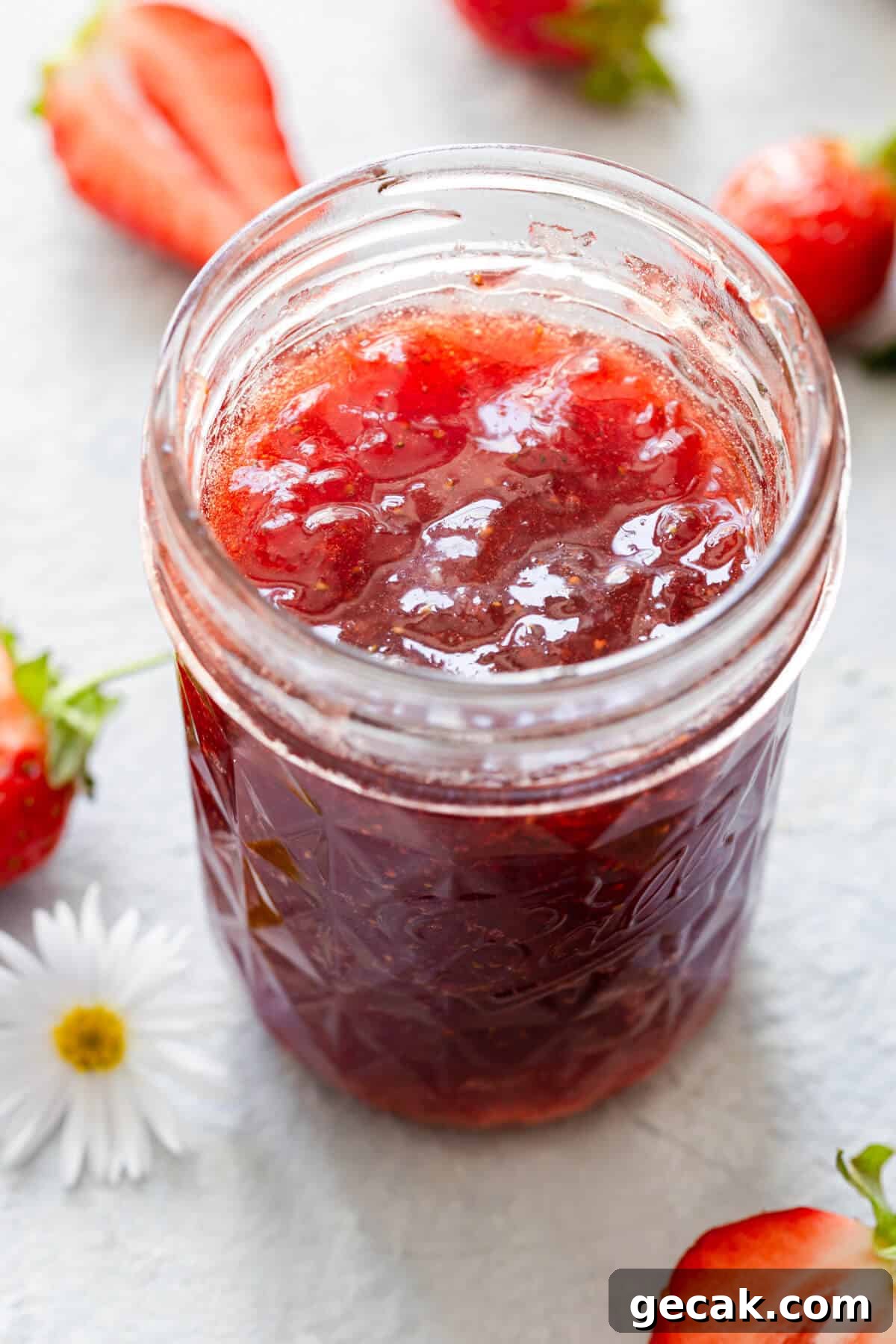
This easy homemade strawberry jam will quickly become a favorite. Made with only three ingredients and no added pectin, it outshines most shop-bought jars. Use it on toast, crumpets, in bakes, or simply enjoy it straight from the jar.
This post was created in collaboration with Tate & Lyle Sugar. All opinions are my own.
Strawberry season is in full swing, and this simple jam recipe is a great way to preserve the bright, sweet flavor of summer. With minimal ingredients and straightforward technique, you can make delicious jam to enjoy year-round.
Why make your own jam?
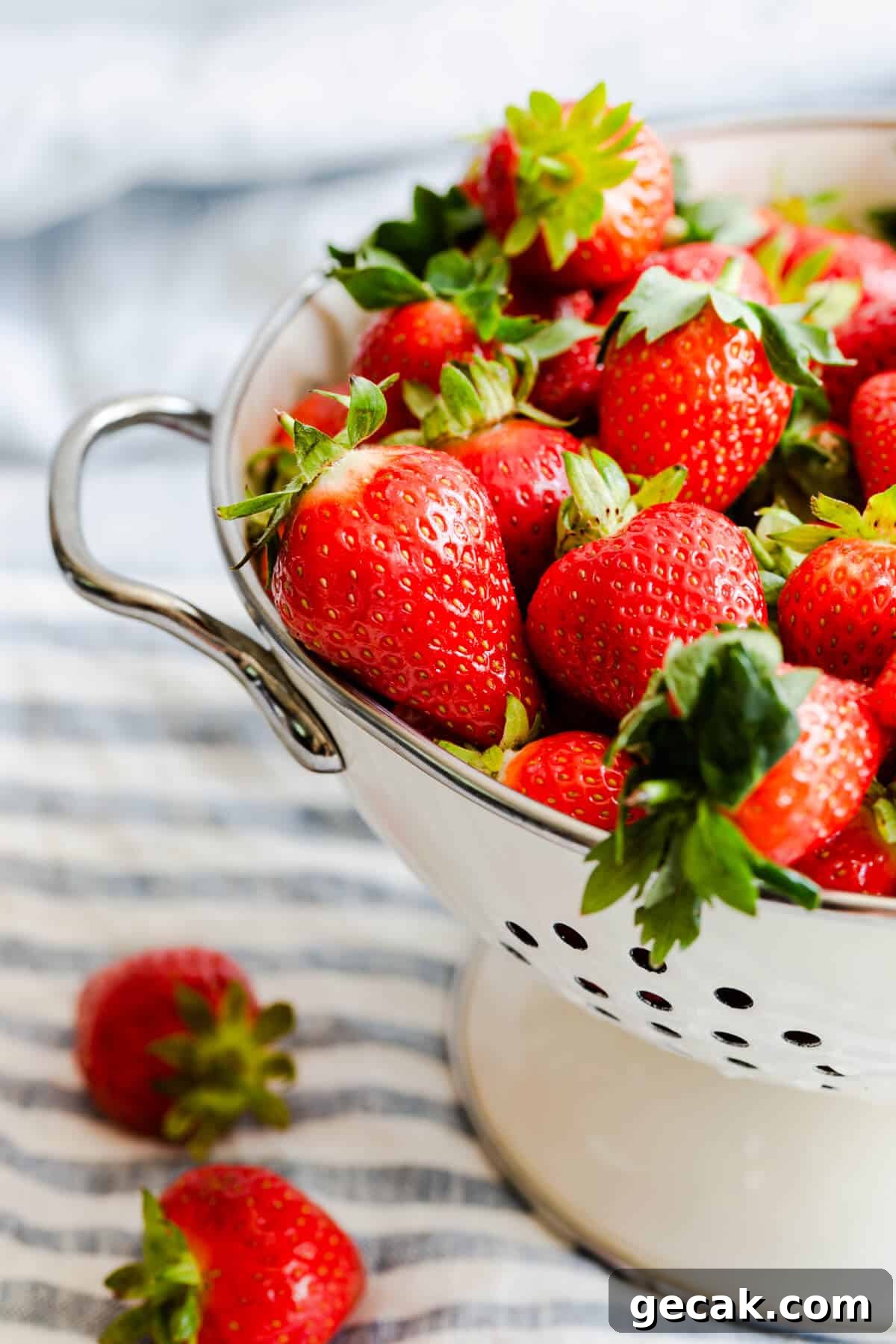
Homemade jam is simple to make, delicious, and a practical way to use seasonal strawberries. Even slightly overripe berries work well in jam, helping reduce food waste while transforming them into a flavorful spread. The taste and texture of fresh jam are often far superior to many commercial options.
What you need
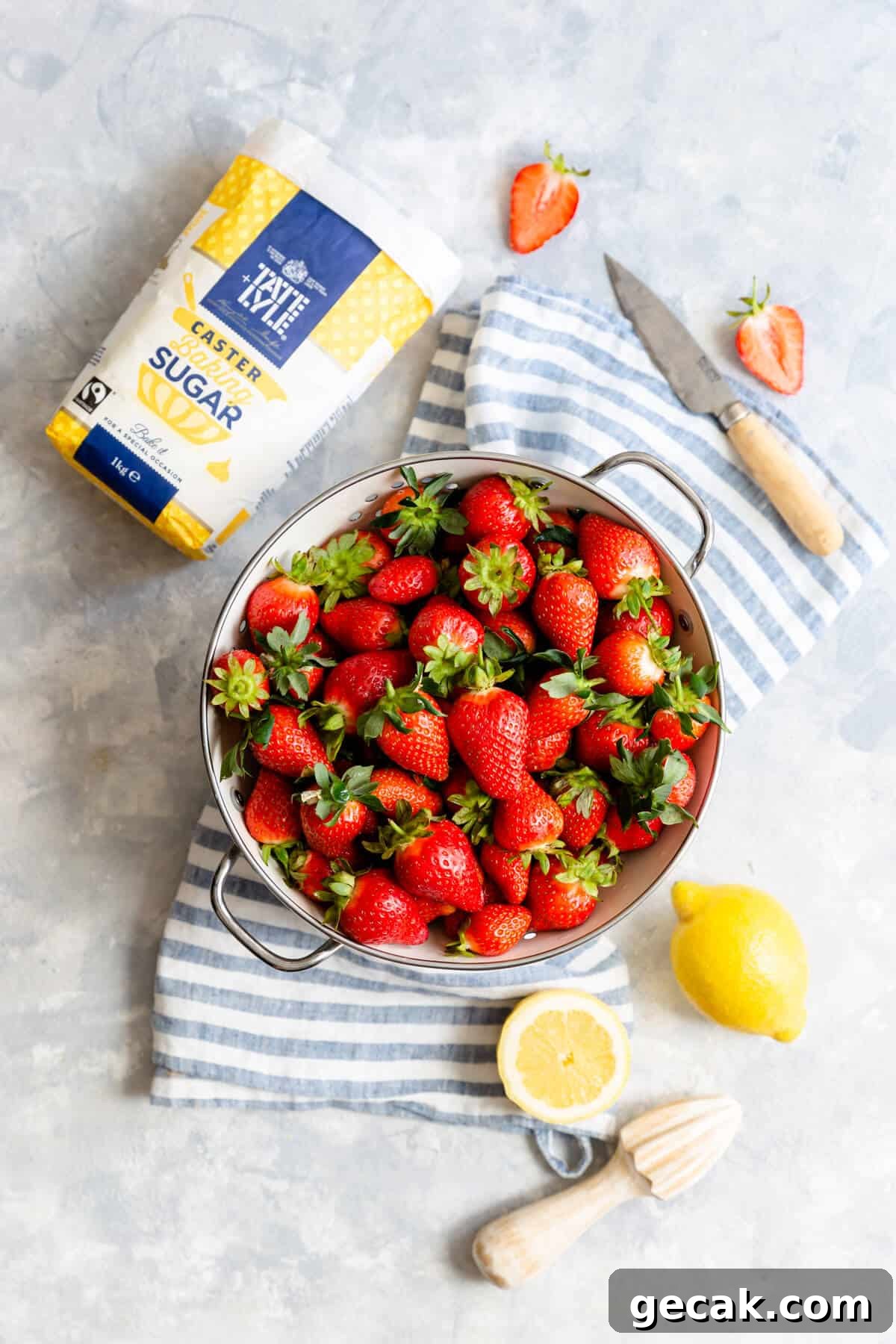
The recipe uses just three ingredients: strawberries, sugar, and lemon juice. You’ll also want a few simple pieces of equipment—most kitchens already have everything required.
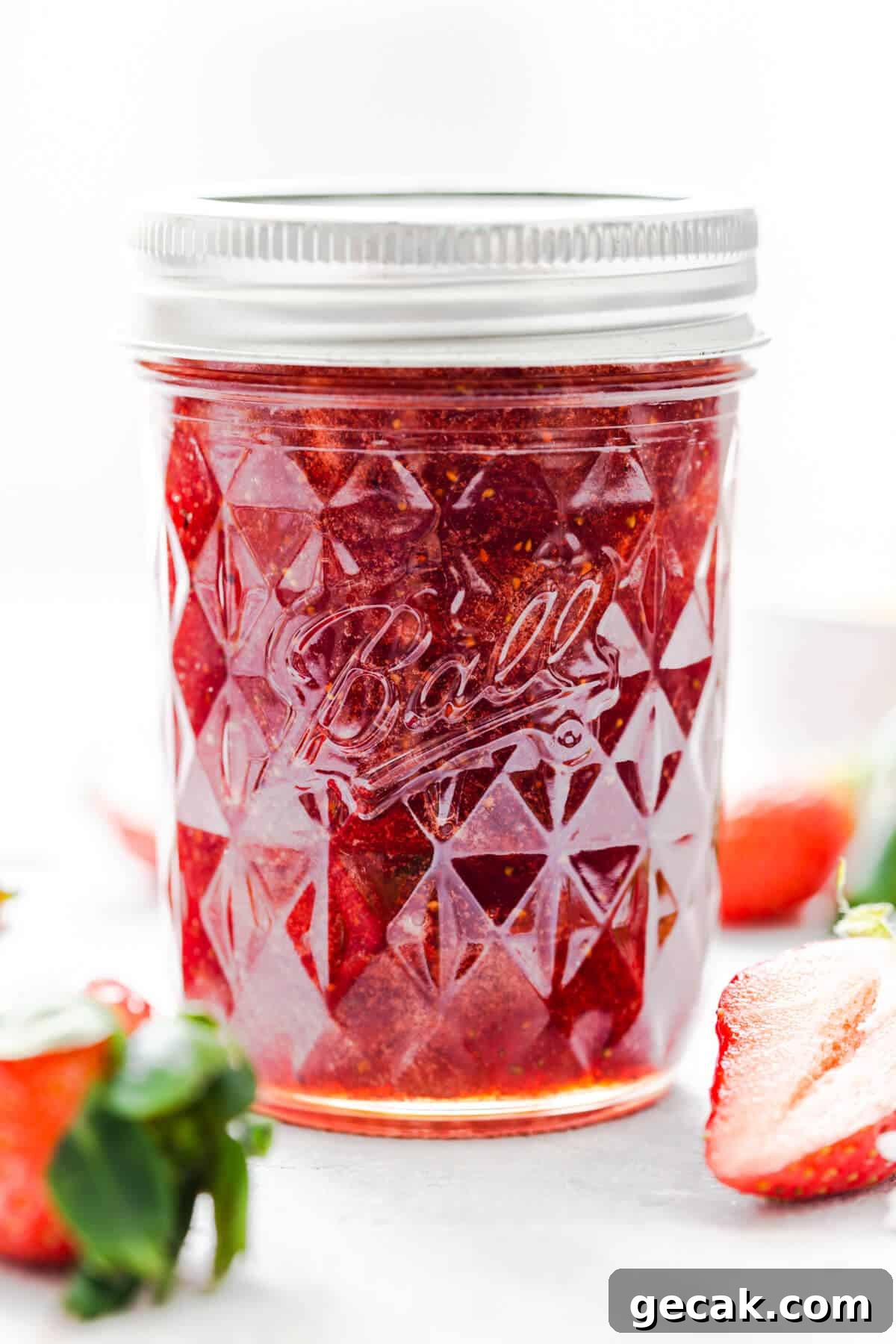
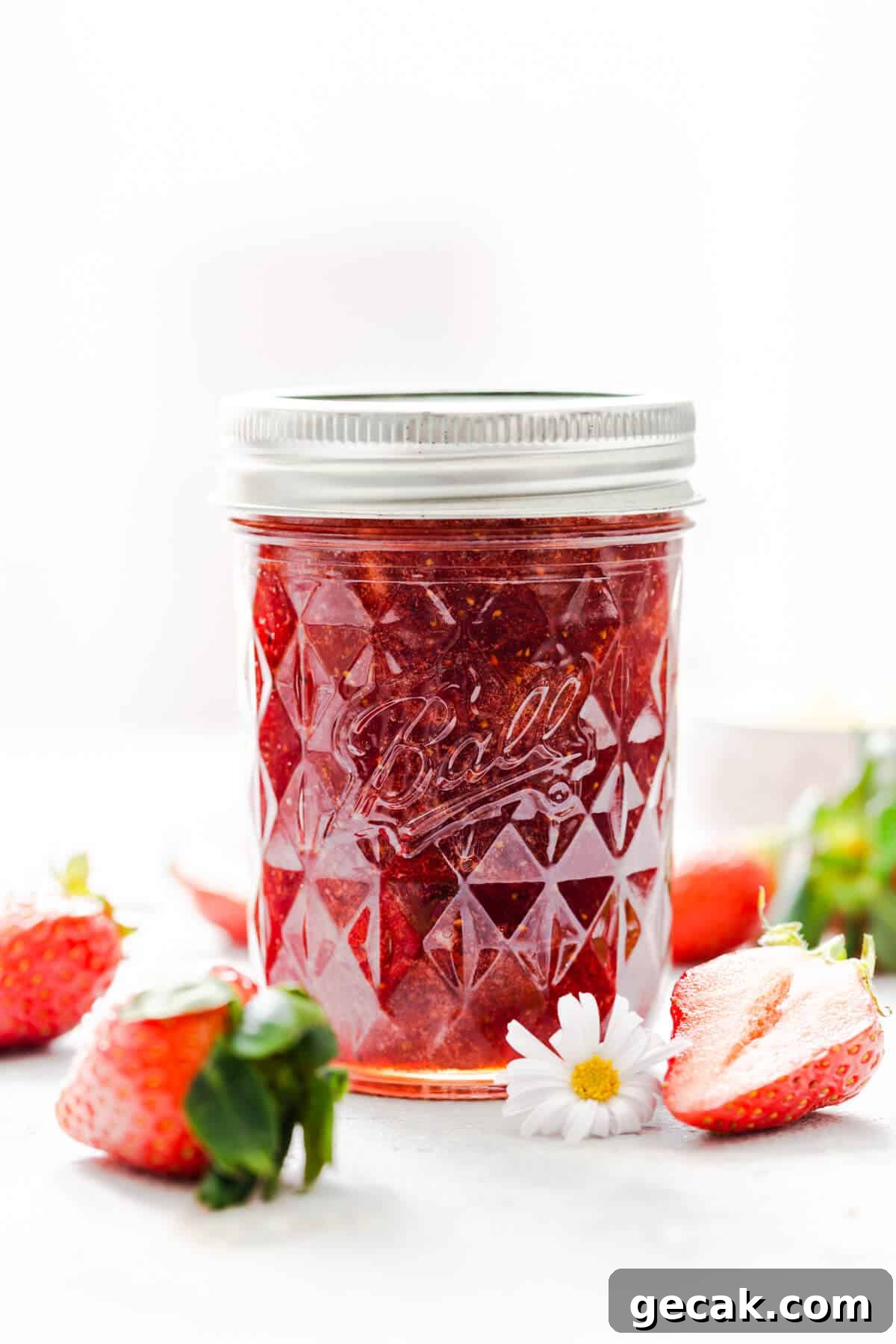
- Preserving jars – Reuse clean jars or buy new ones. Ball Mason jars with wax discs and screw lids are convenient. Sterilise jars before filling.
- Heavy-bottomed saucepan – A thick-based, non-reactive pan gives even heat distribution. Avoid aluminium; low sides are helpful for evaporation.
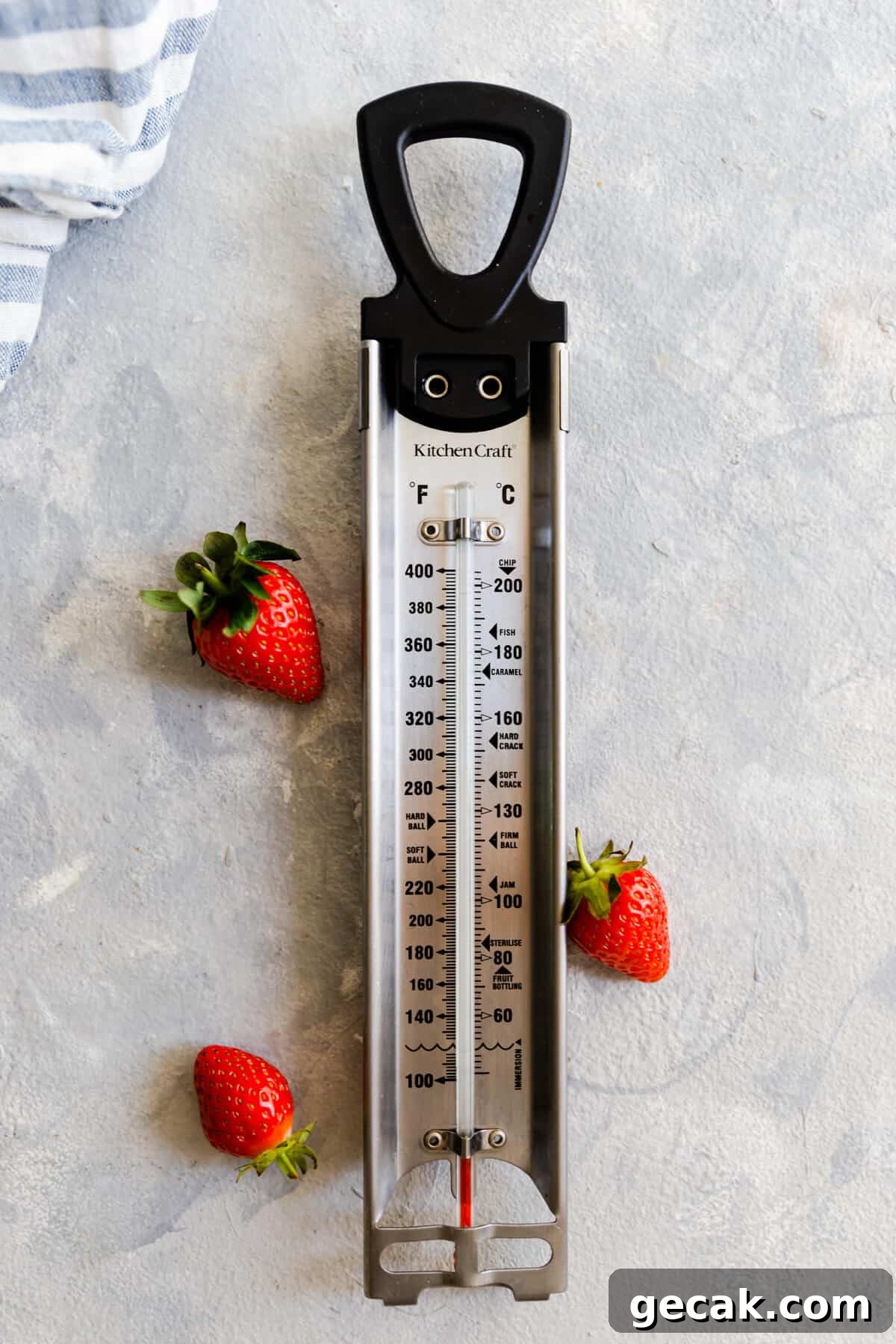
- Kitchen thermometer – Helpful but optional. It ensures you reach the correct setting temperature for jam.
Do I need pectin?
No. This recipe relies on natural fruit pectin and lemon juice to set. Jam made without added pectin will have a softer, more spoonable texture and may take slightly longer to cook, but the flavor is excellent.
Lemon juice helps the jam reach the right consistency by balancing acidity and aiding natural pectin performance.
Tips for success
Follow these simple tips to get great results:
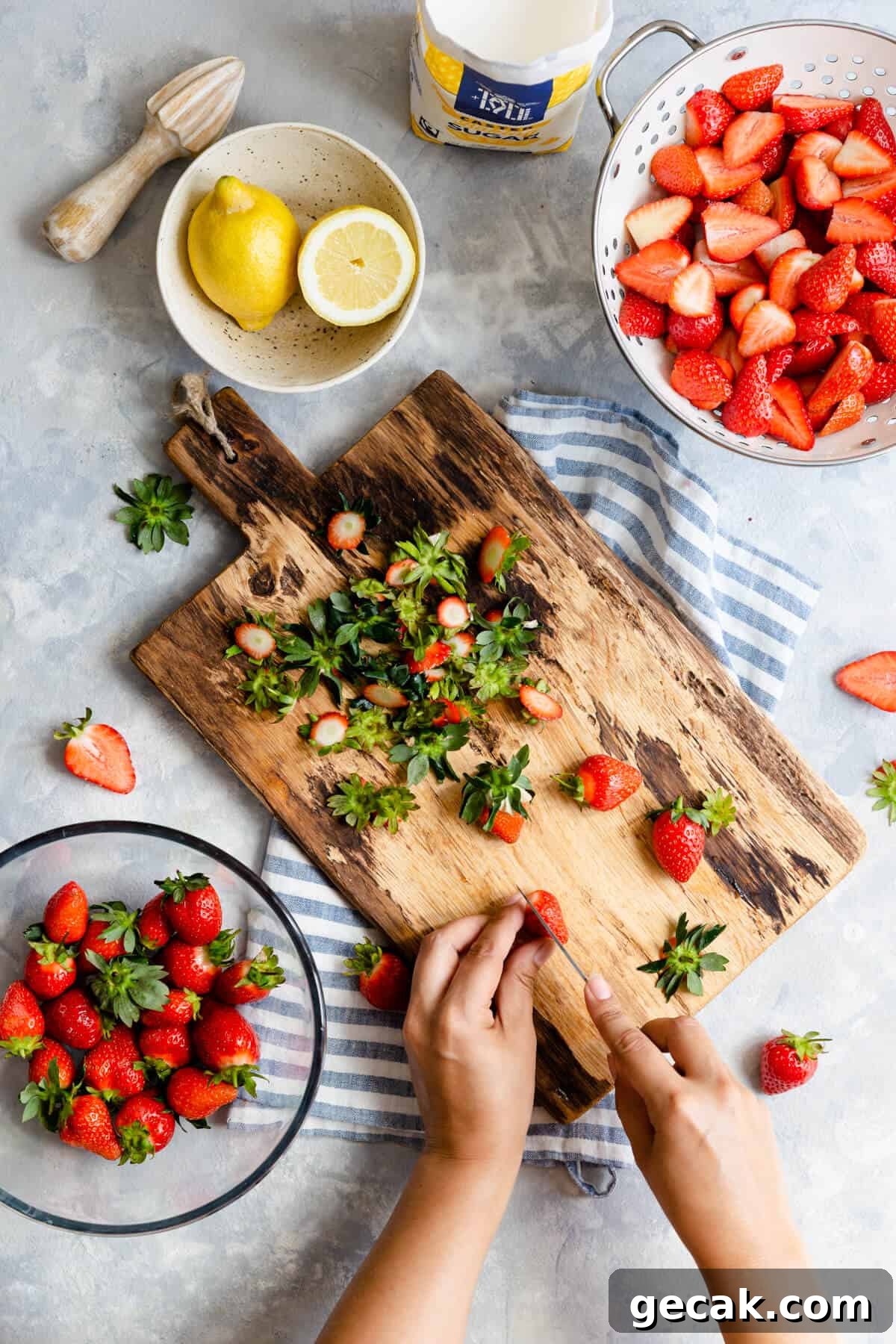
- Cut strawberries into similar-sized pieces so they cook evenly.
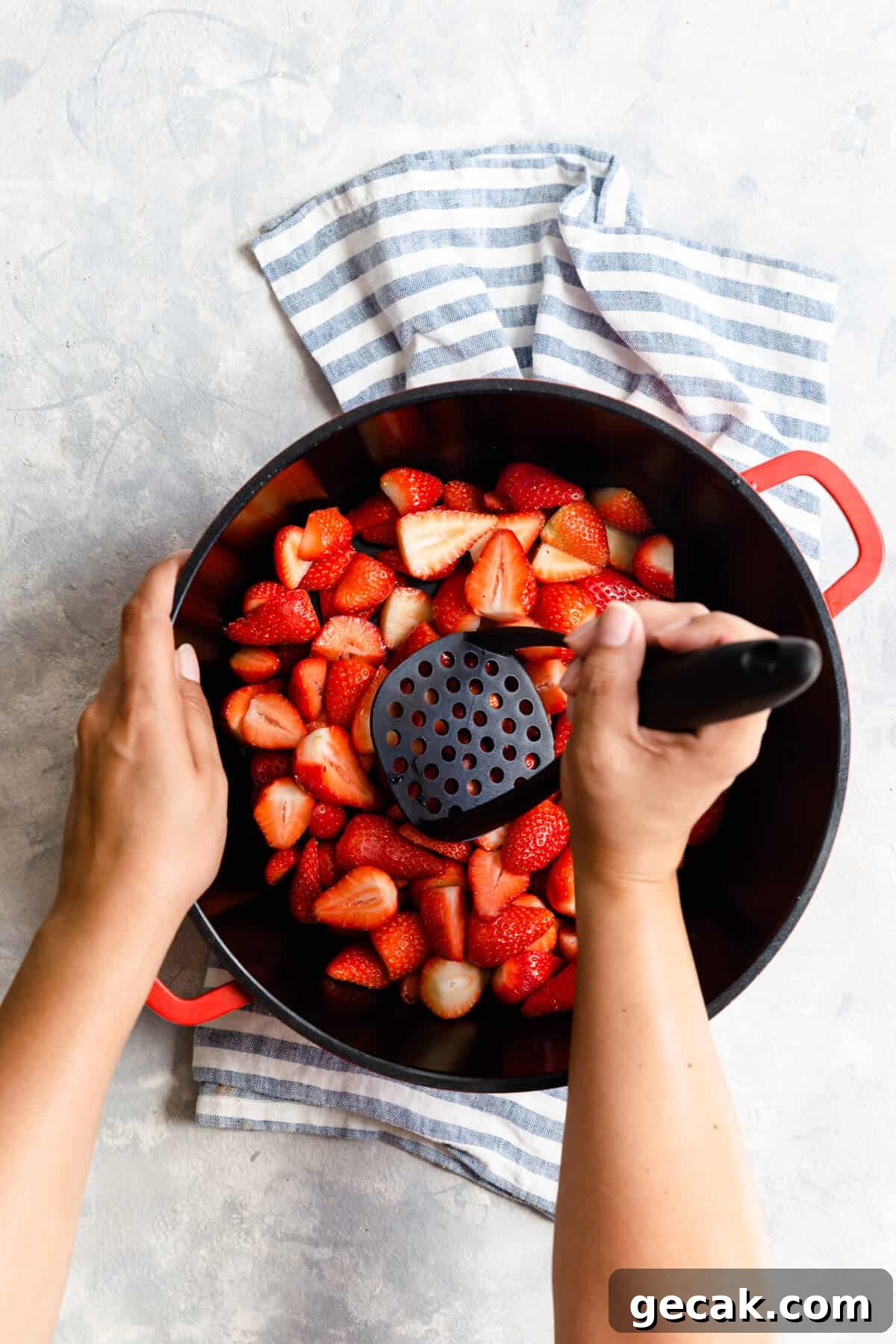
- Use a potato masher to crush the fruit and release juices.
- Start on low heat until the sugar dissolves, then raise to high to bring to a rolling boil.
- Stir frequently to prevent sticking or scorching.
- You can use regular granulated sugar or caster sugar; jam sugar with added pectin will set faster but isn’t necessary for this recipe.
How to sterilise jars
Sterilising jars is essential for safe preserving. I recommend sterilising jars immediately after cooking the jam so everything stays hot.
Preheat the oven to 160°C. Wash jars and lids in hot, soapy water and rinse, leaving them wet. Arrange the jars on a baking tray and heat in the oven for 10 minutes. Place lids in boiling water for a few minutes and keep them in the hot water until ready to use. Remove jars from the oven, fill with hot jam, leave about 1 cm headspace, add a wax disc if using, and seal with the lid.
No thermometer? Use the plate test
If you don’t have a kitchen thermometer, the plate test works well. Put a couple of small plates or saucers in the freezer before cooking. After the jam has been at a hard boil for 15–20 minutes, spoon a small amount onto a cold plate, wait 30 seconds, then press it with your finger. If the surface wrinkles and doesn’t flood back to fill the indentation, the jam is ready. If not, continue boiling a few minutes more and test again.
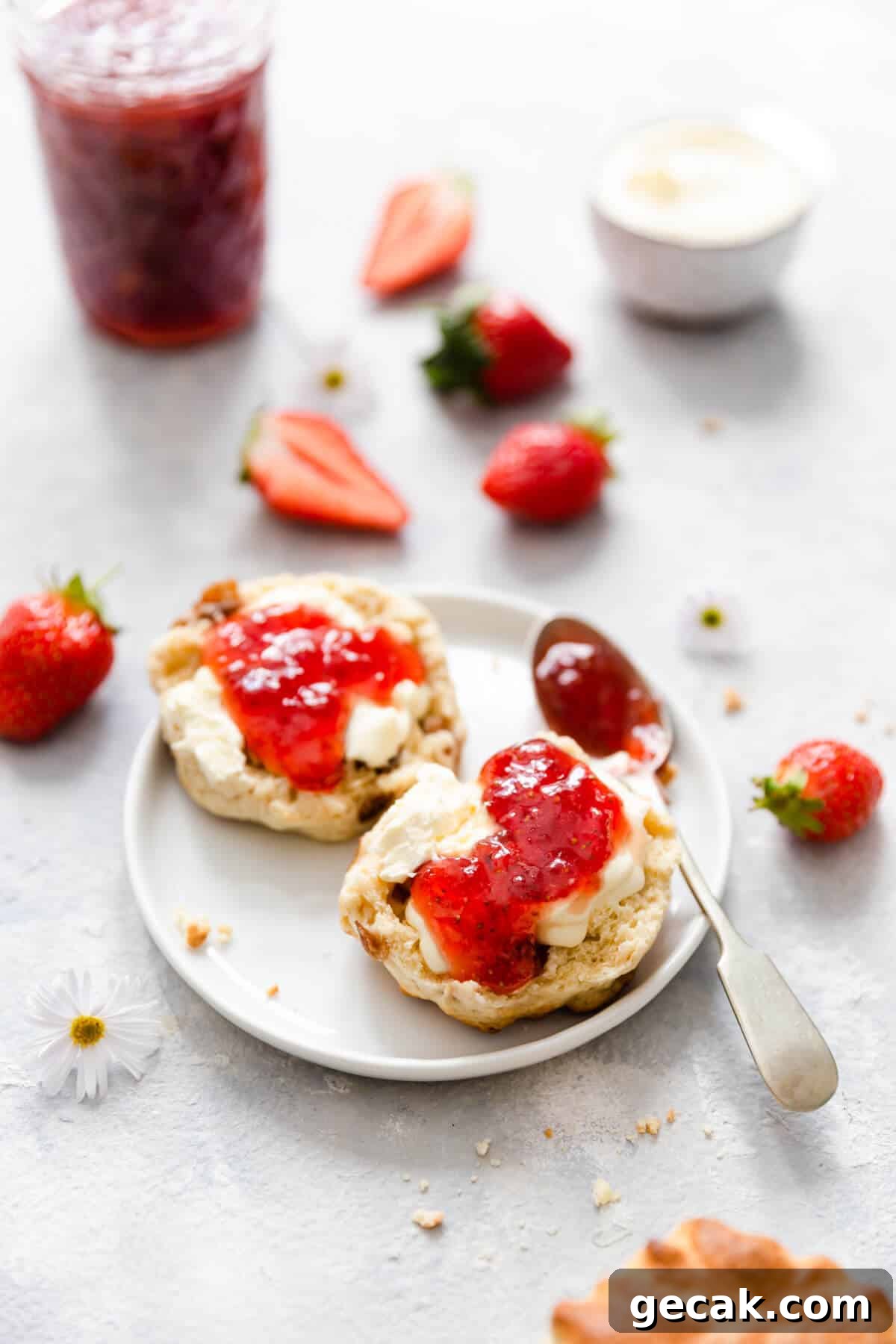
Serving ideas:
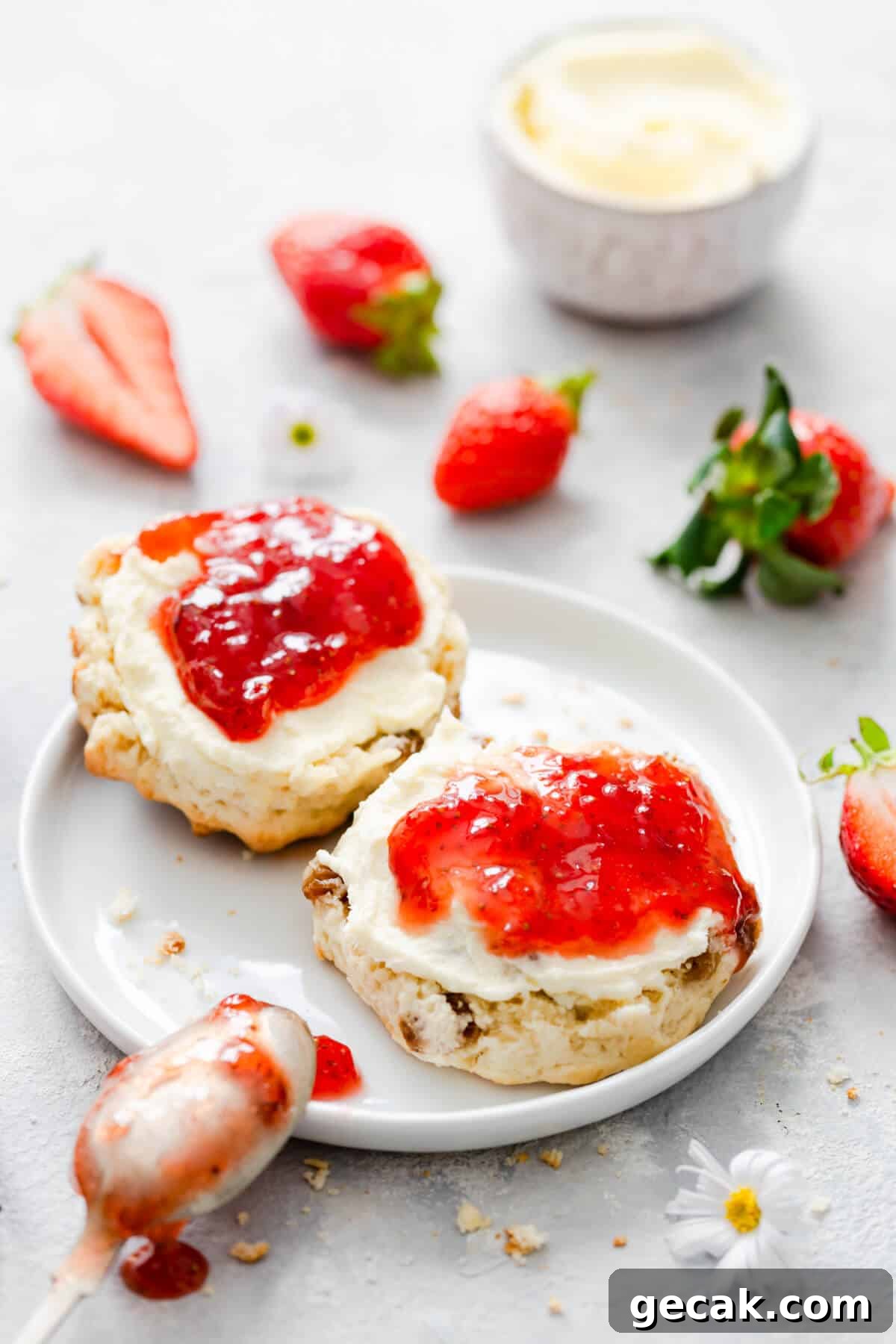
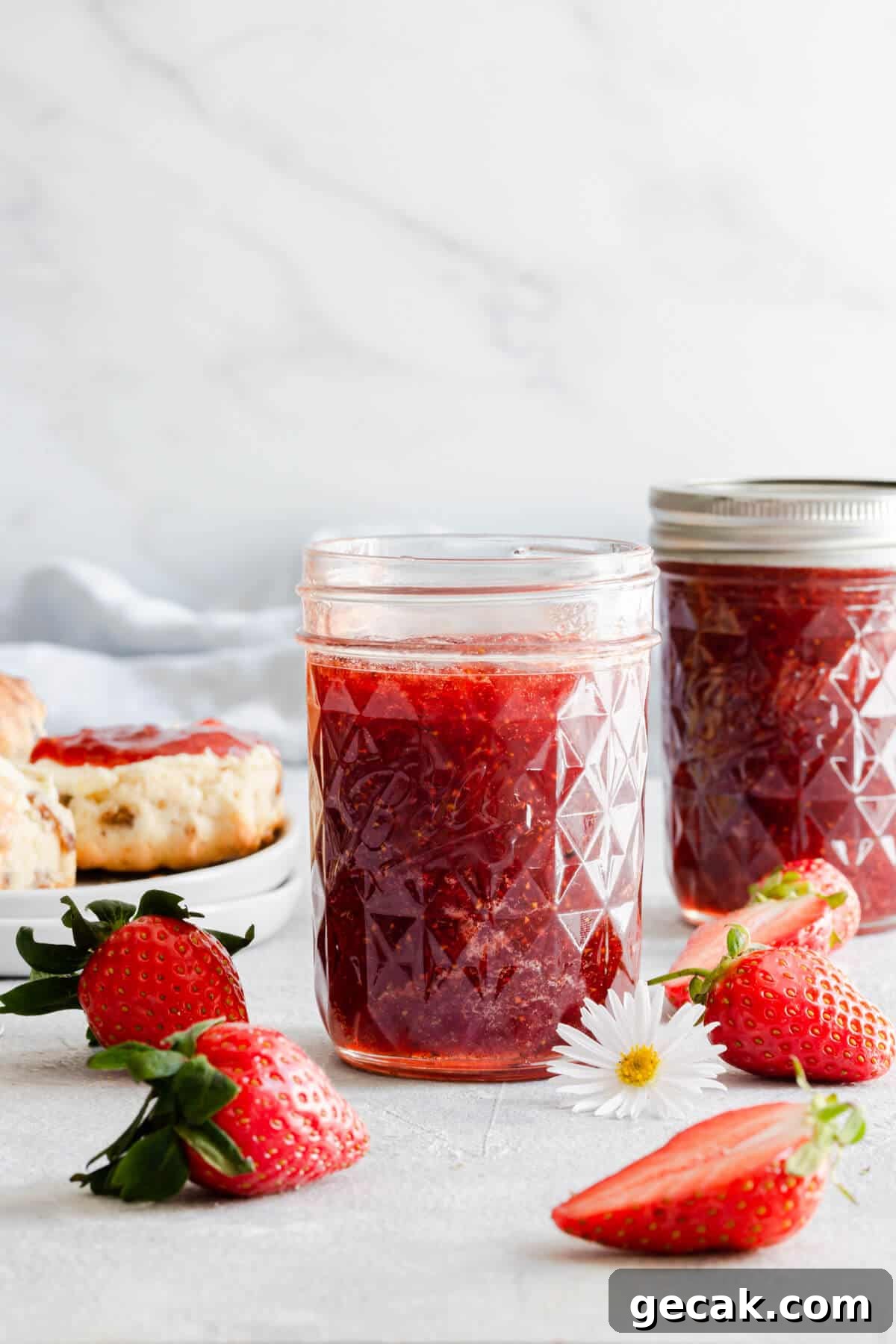
- Spread on toast, scones, or crumpets.
- Use as a topping for crepes or pancakes.
- Fold into cakes, muffins, or cupcakes as a filling or swirl.
Thanks for reading. You can follow me on social media to see more recipes and updates.
📖 Recipe

Easy homemade strawberry jam
20 mins
25 mins
Equipment
- medium heavy bottom saucepan
- potato masher
- wooden spoon or rubber spatula
- 3 x 450g sterile jars with lids
- kitchen thermometer (optional)
Ingredients
- 900 g fresh strawberries, hulled and halved
- 800 g caster sugar
- Juice of 2 medium lemons (about 4 tbsp)
Instructions
- Place strawberries in a heavy-bottomed saucepan. Use a potato masher to crush the fruit slightly until juices are released.
- Add the sugar and lemon juice. Start on low heat and stir gently until the sugar is fully dissolved. Increase heat to high and bring to a rolling boil. Continue boiling, stirring often, until the mixture reaches 105°C on a kitchen thermometer. If you don’t have a thermometer, use the plate test: spoon a small amount onto a frozen plate, wait 30 seconds, then press—if it wrinkles and doesn’t flood back, it’s ready.
- Turn off the heat and let the jam sit for 15 minutes while you sterilise jars.
- Ladle hot jam into sterile jars, leaving about 1 cm headspace. Seal immediately with wax discs and lids. If your lids require water-bath processing, follow that method instead. Refrigerate opened jars and store sealed jars in a cool, dark place.
Note: Recipes are developed and tested using metric measurements. For best results use digital scales. Conversions to US customary are provided but not tested.
Notes
- To sterilise jars, preheat the oven to 160°C. Wash jars and lids in hot, soapy water and rinse but do not dry. Place jars on a baking tray in the oven for 10 minutes. Soak lids in boiling water for a few minutes.
- If jars have rubber seals, remove them before placing jars in the oven.
- If using wax discs, place them on the jam immediately after filling.
- To process jars in a water bath: screw lids on, lower jars into a pot of boiling water so they are covered, boil for 10 minutes, then transfer to a towel and allow to cool for 12 hours.
Nutrition
Carbohydrates: 296 g |
Protein: 3 g |
Fat: 1 g |
Sugar: 283 g
Leave a comment or tag @anna_wierzbinska on Instagram with a photo—she loves seeing your creations!
If you’d like future recipes by email, consider subscribing to the author’s mailing list.