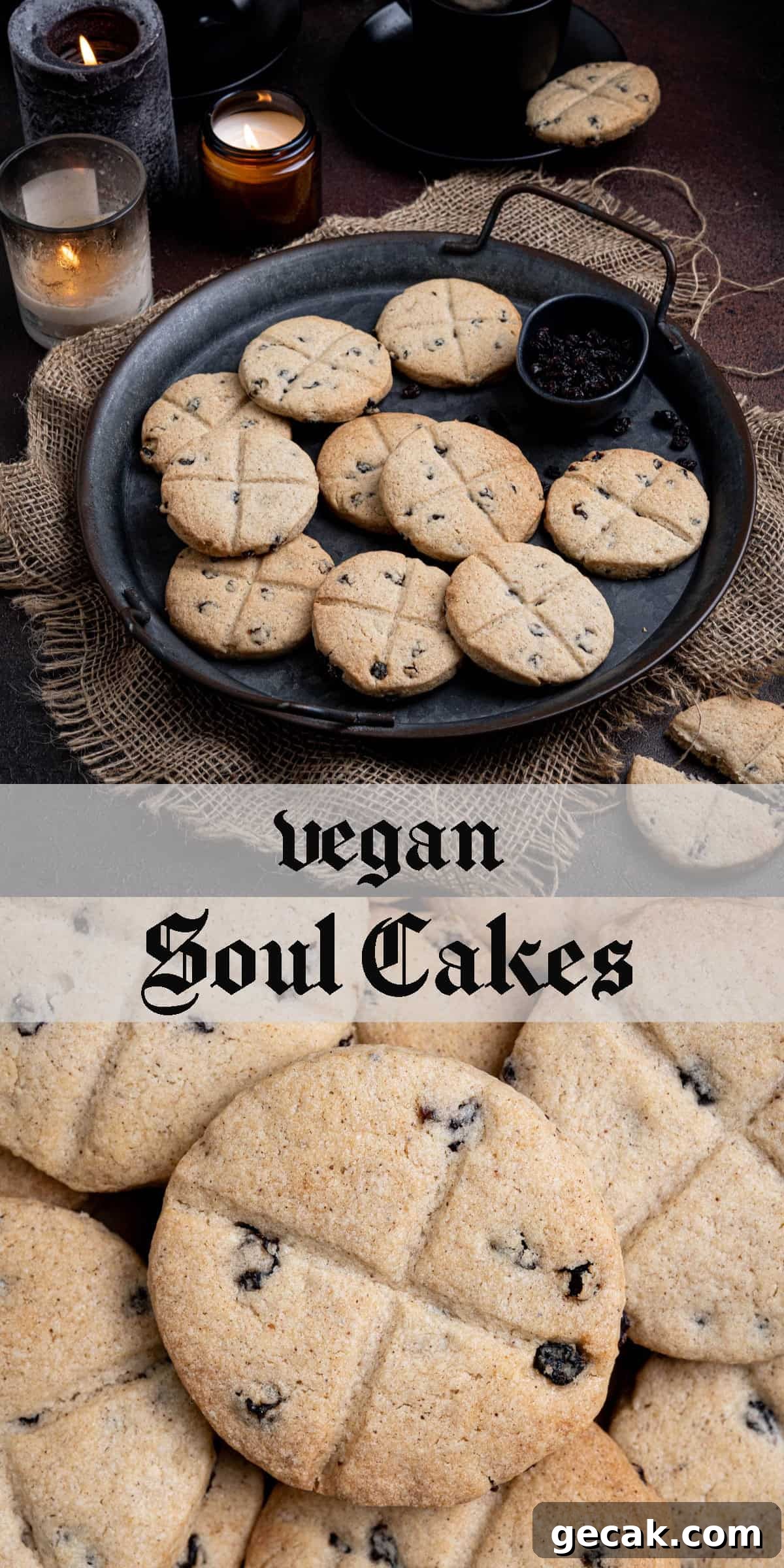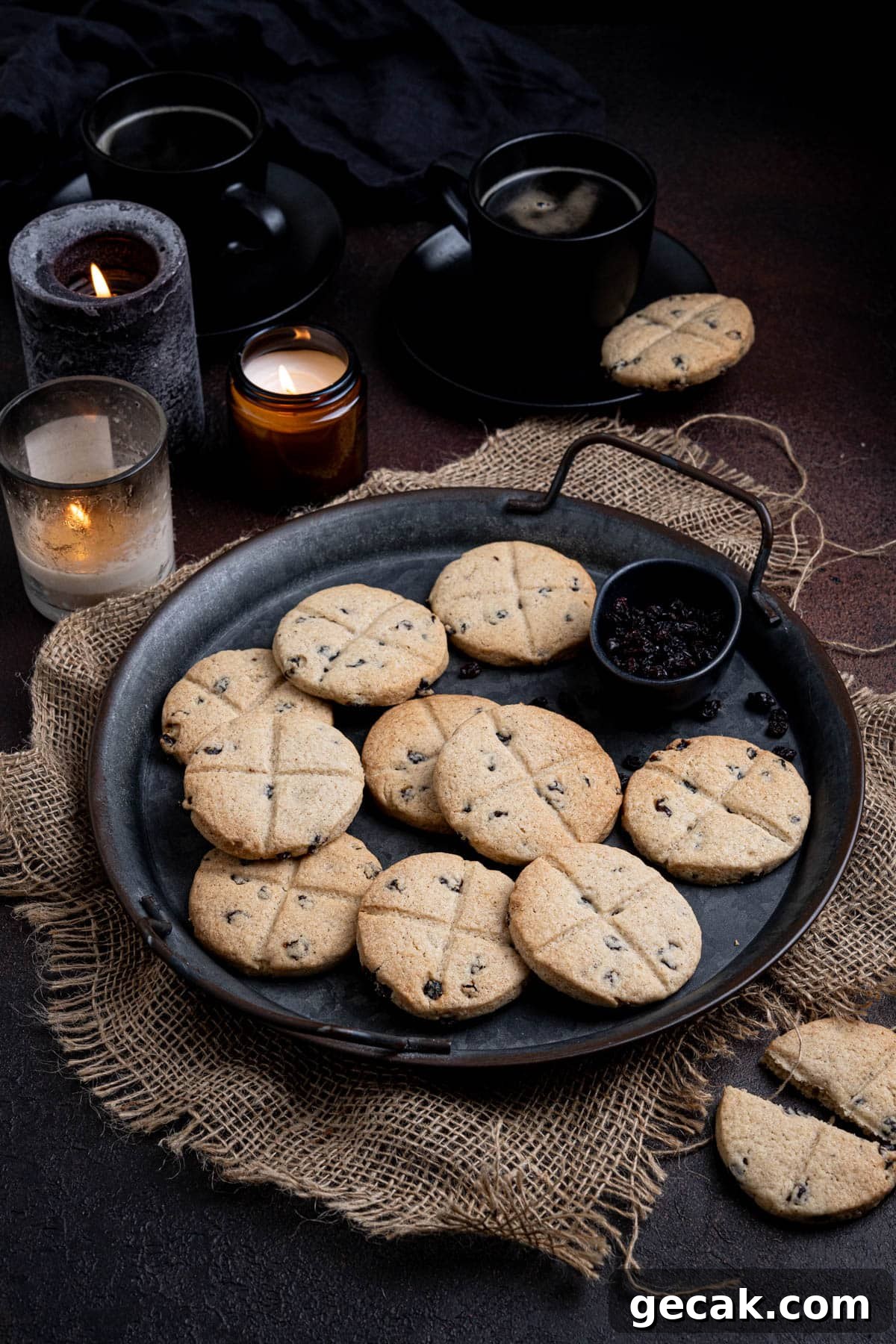
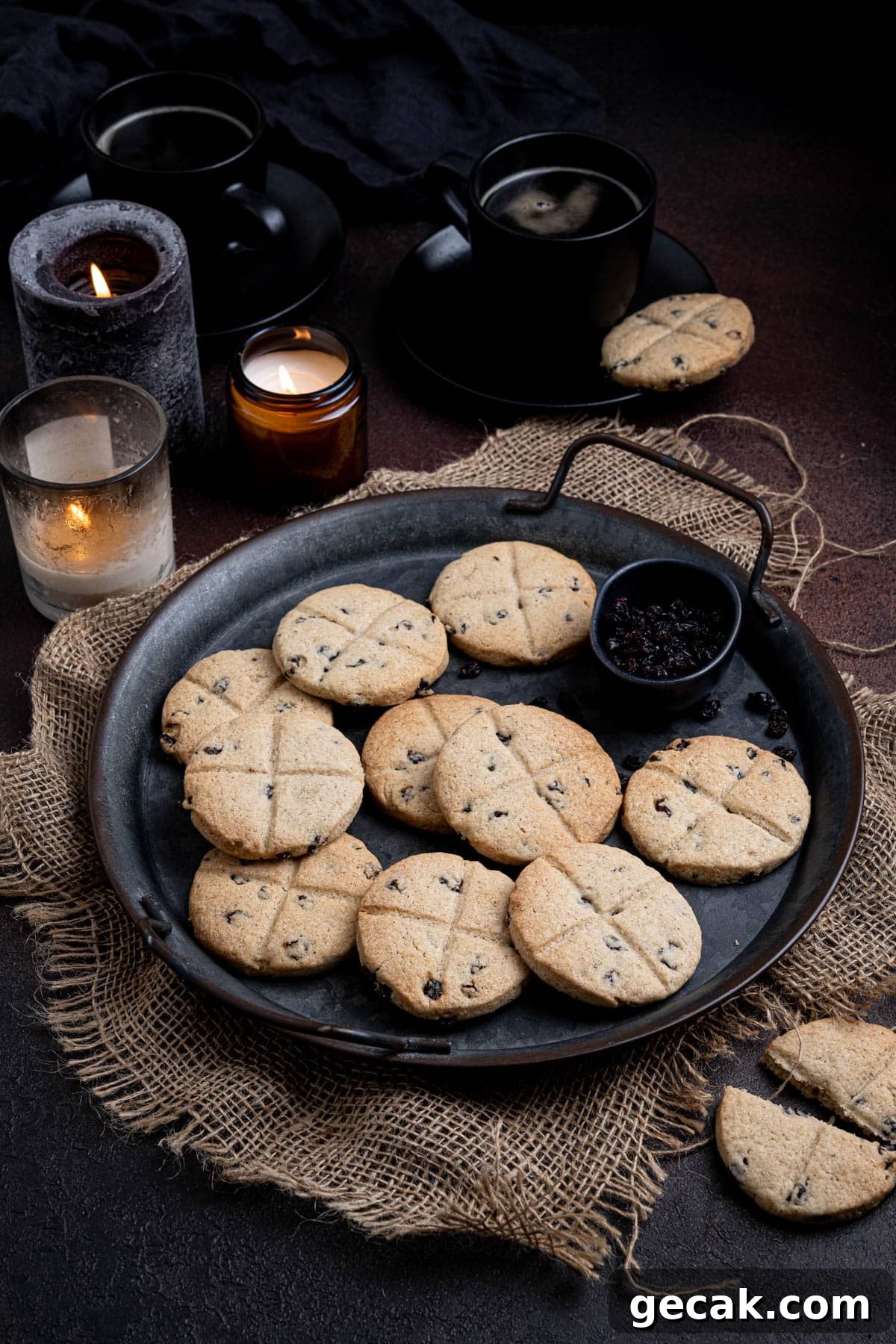
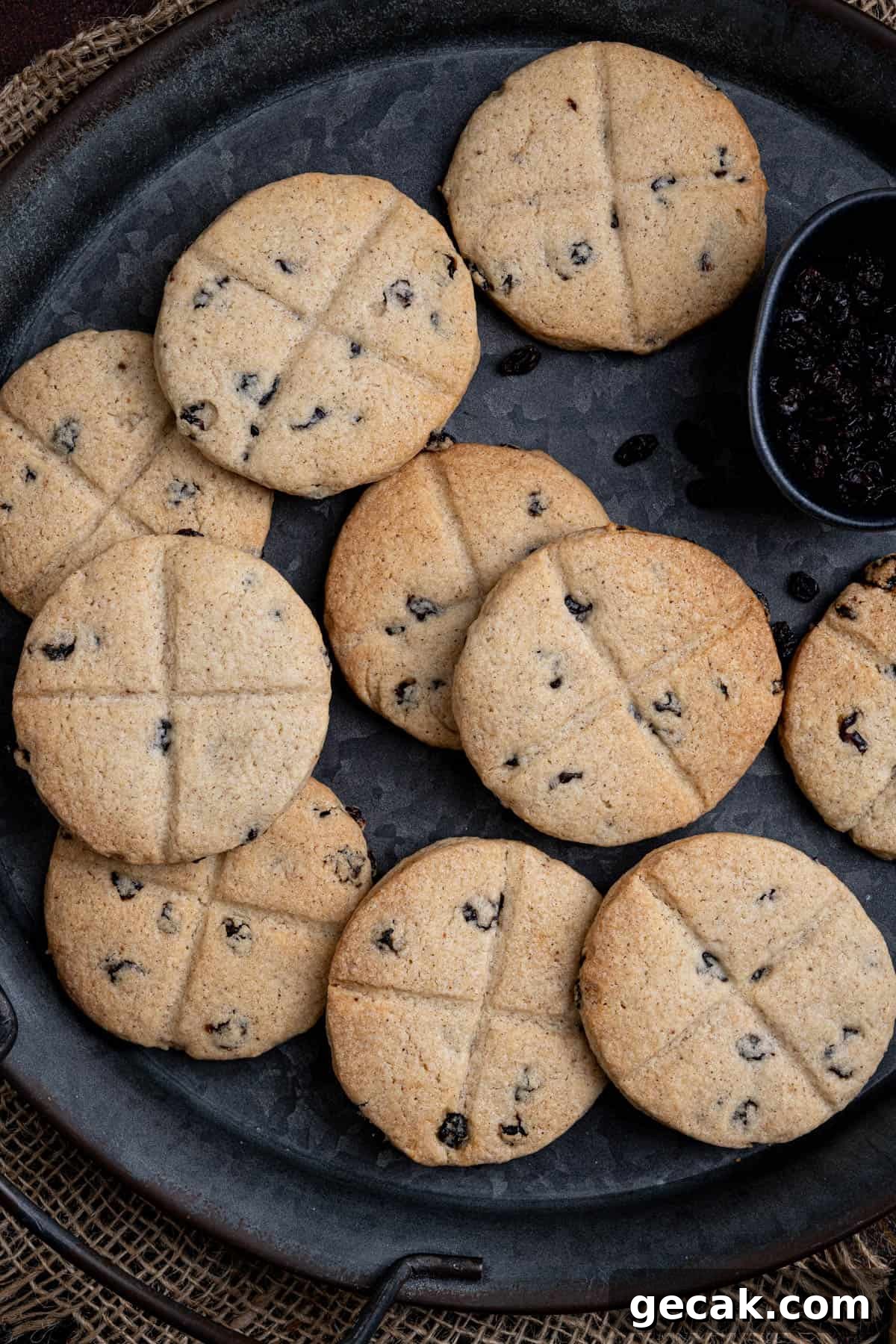
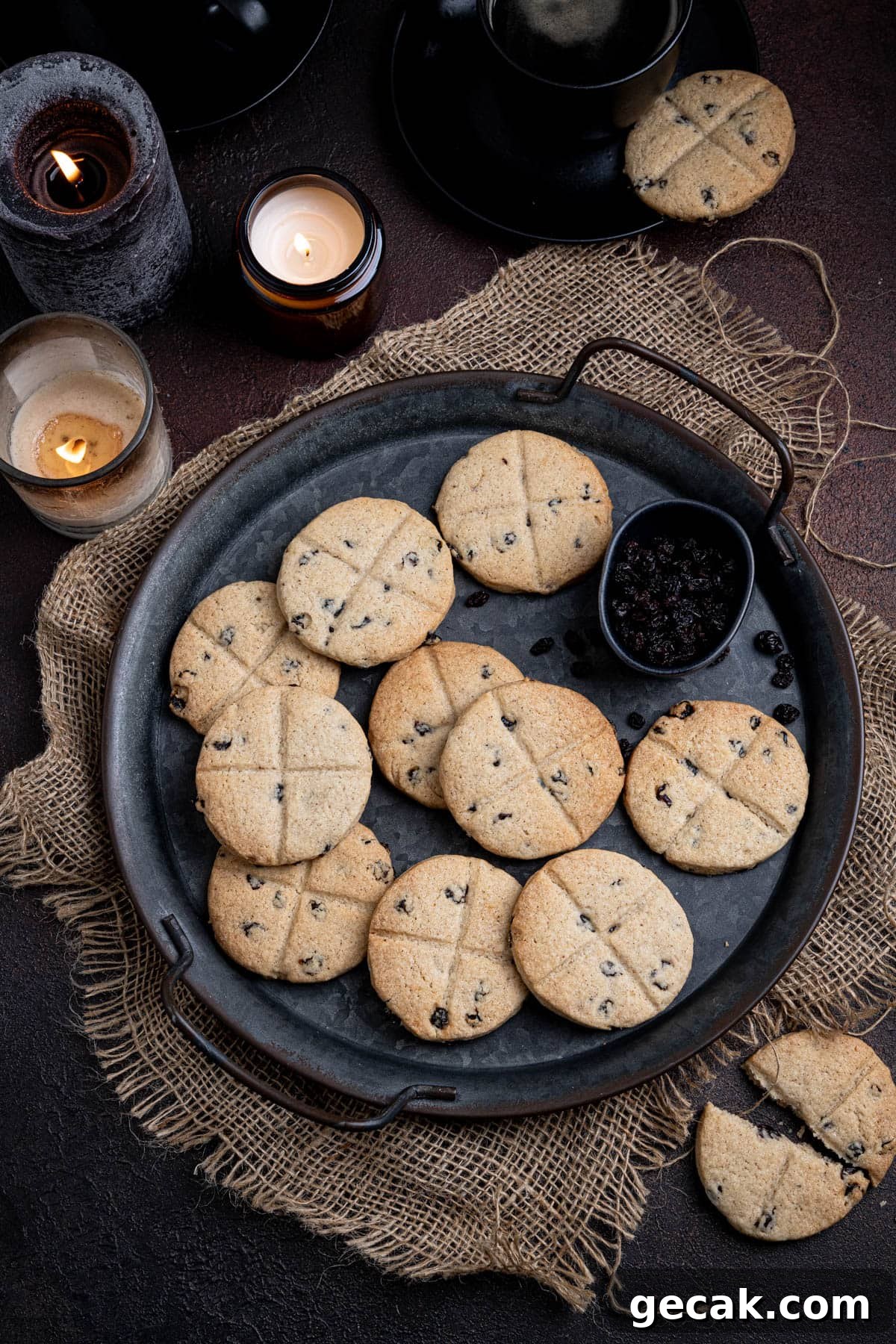
Vegan soul cakes are small, spiced cakes or biscuits rooted in medieval British tradition. Originally baked for All Hallows’ Eve, All Saints’ Day and All Souls’ Day, they were made as offerings to remember the dead. Today they make a comforting seasonal treat for Halloween or Samhain.
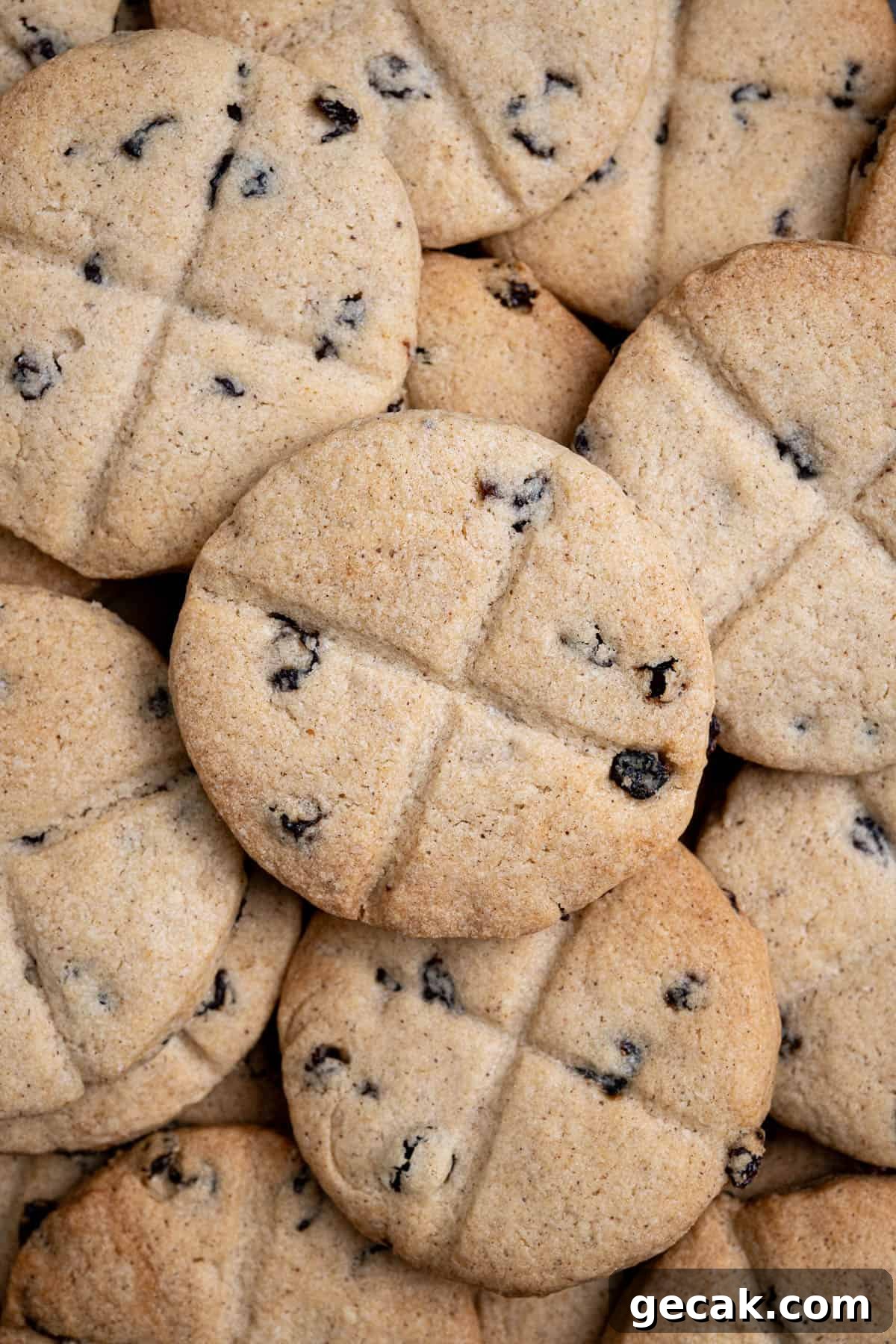
Texturally they sit between a shortbread biscuit and a scone: slightly crumbly but a little softer than classic shortbread. Their warm spice blend, plump currants and the signature cross pressed on top give them a distinct, nostalgic flavour and appearance.
What Are Soul Cakes?
Soul cakes are small, spiced rounds marked with a cross, traditionally associated with Allhallowtide (31 October–2 November). In medieval Britain these cakes were given to the poor on All Souls’ Day as part of a practice called “souling.” People would offer a prayer or a verse in exchange for a cake, believing it helped the souls of the departed.
Modern soul cakes keep the same comforting flavours and customs but are now often enjoyed simply as seasonal baked goods. Vegan versions omit eggs and dairy while preserving the classic spiced, fruity taste.
Ingredient Details
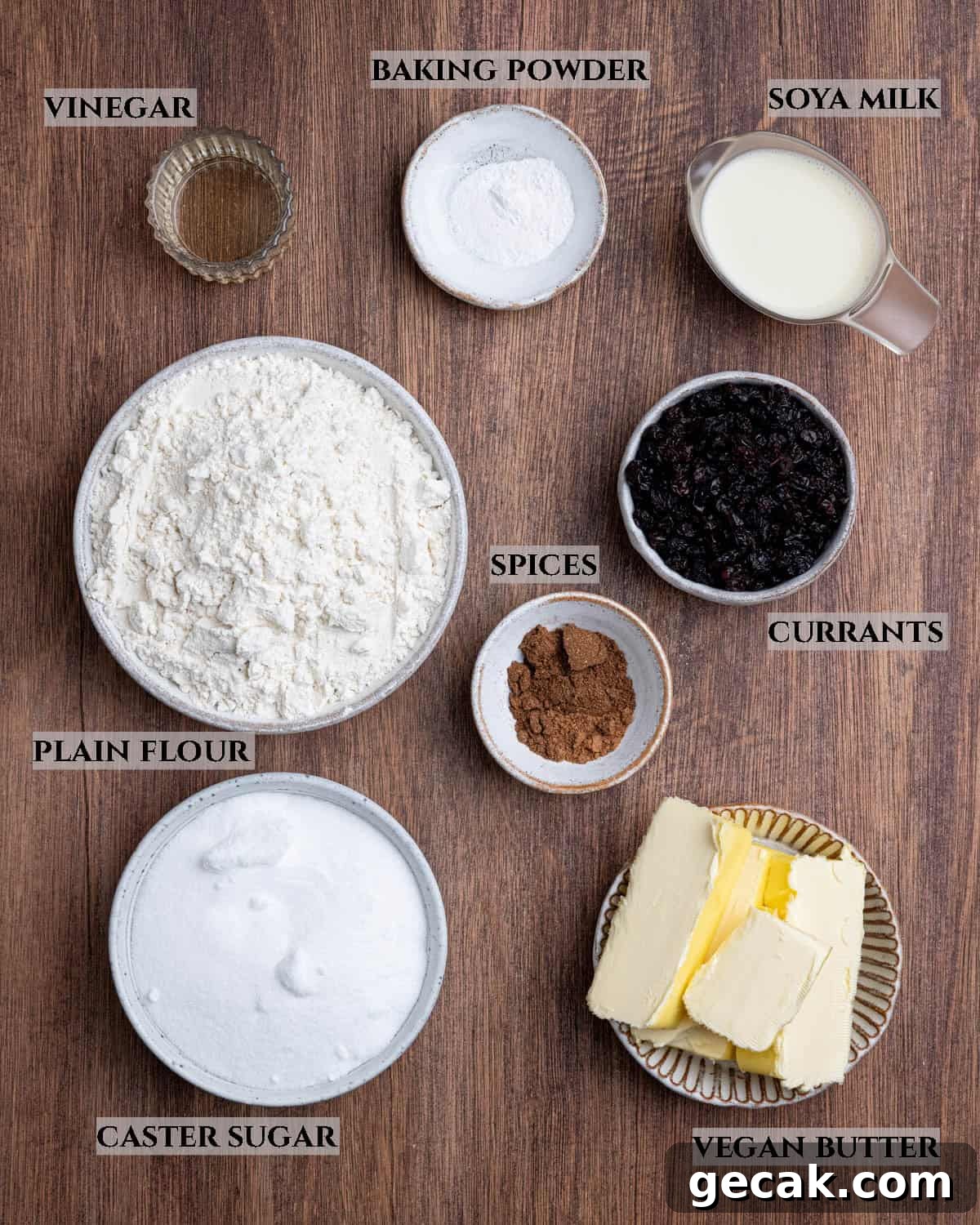
Currants: Smaller than raisins, currants distribute more evenly through the dough, giving a better bite in each cake. Raisins may be used as a substitute.
Vegan block butter: Use firm block margarine or butter, not a tub-style spread. The solid fat creates the right crumbly texture.
Plain (all-purpose) flour: Regular plain flour works best. This recipe has not been tested gluten-free.
Caster sugar: Caster dissolves quickly for a smooth dough. Golden caster adds a hint of caramel; granulated sugar is an acceptable alternative.
Spices: Mixed spice and nutmeg give the classic flavour. Pumpkin spice can be substituted if you prefer.
Non-dairy milk: Any unsweetened plant milk will do; soy milk is recommended for its higher protein, which helps the texture.
Vinegar: A splash of cider or white wine vinegar improves the cake’s tenderness but can be omitted if desired.
Baking powder: Since this is an egg-free version, baking powder provides lift and replaces historical leavening agents like ale.
How To Make Vegan Soul Cakes
(Full measurements and step-by-step instructions are included in the recipe card below)
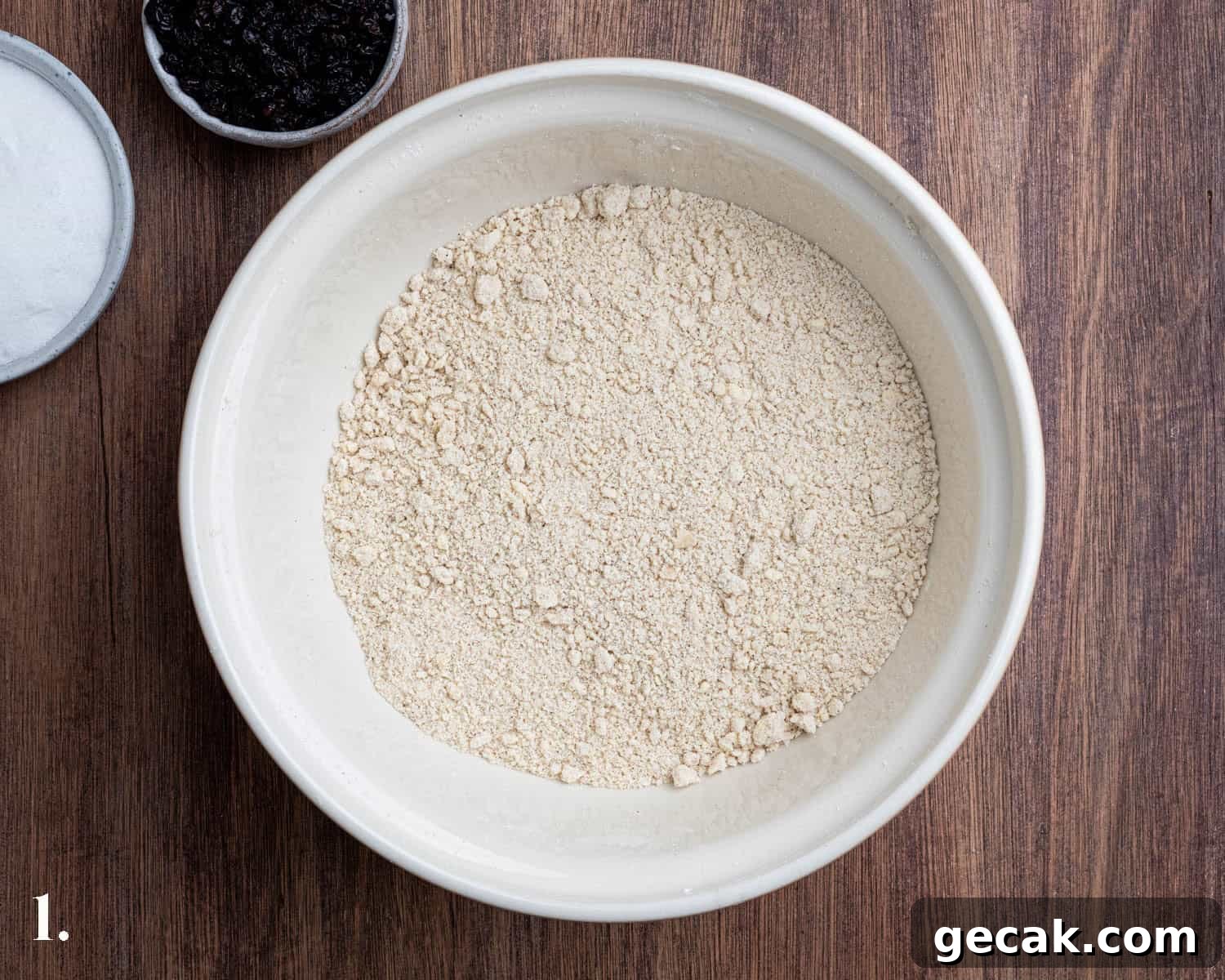
Step 1: Combine the plain flour, baking powder and spices in a large bowl. Rub in the cold, diced vegan block butter with your fingertips until the mix resembles fine breadcrumbs.
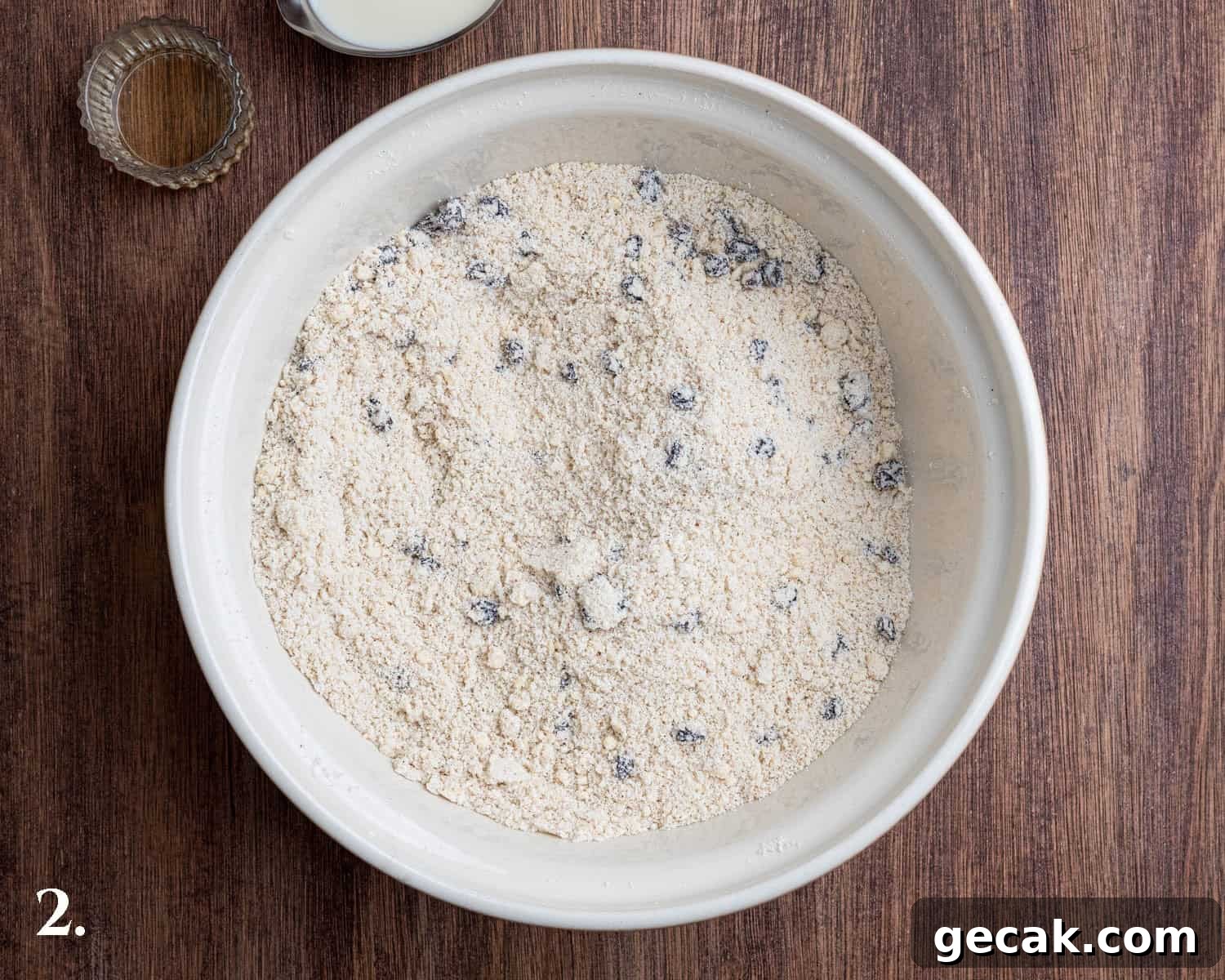
Step 2: Stir in the sugar and currants so they are evenly distributed through the crumbly mixture.
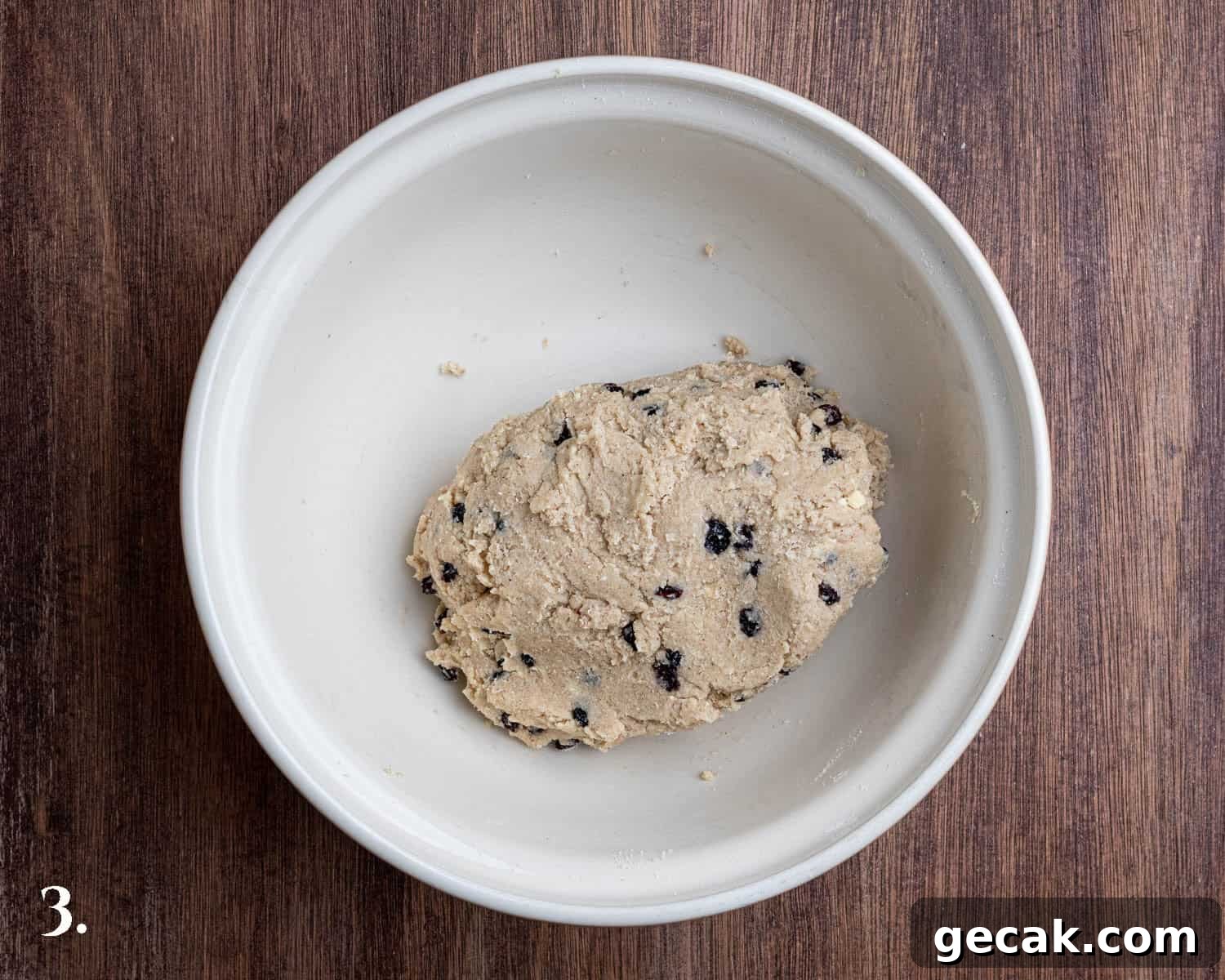
Step 3: Mix the non-dairy milk with the vinegar, then add to the dry ingredients and bring together into a soft dough. Using your hands is often easiest at this stage.
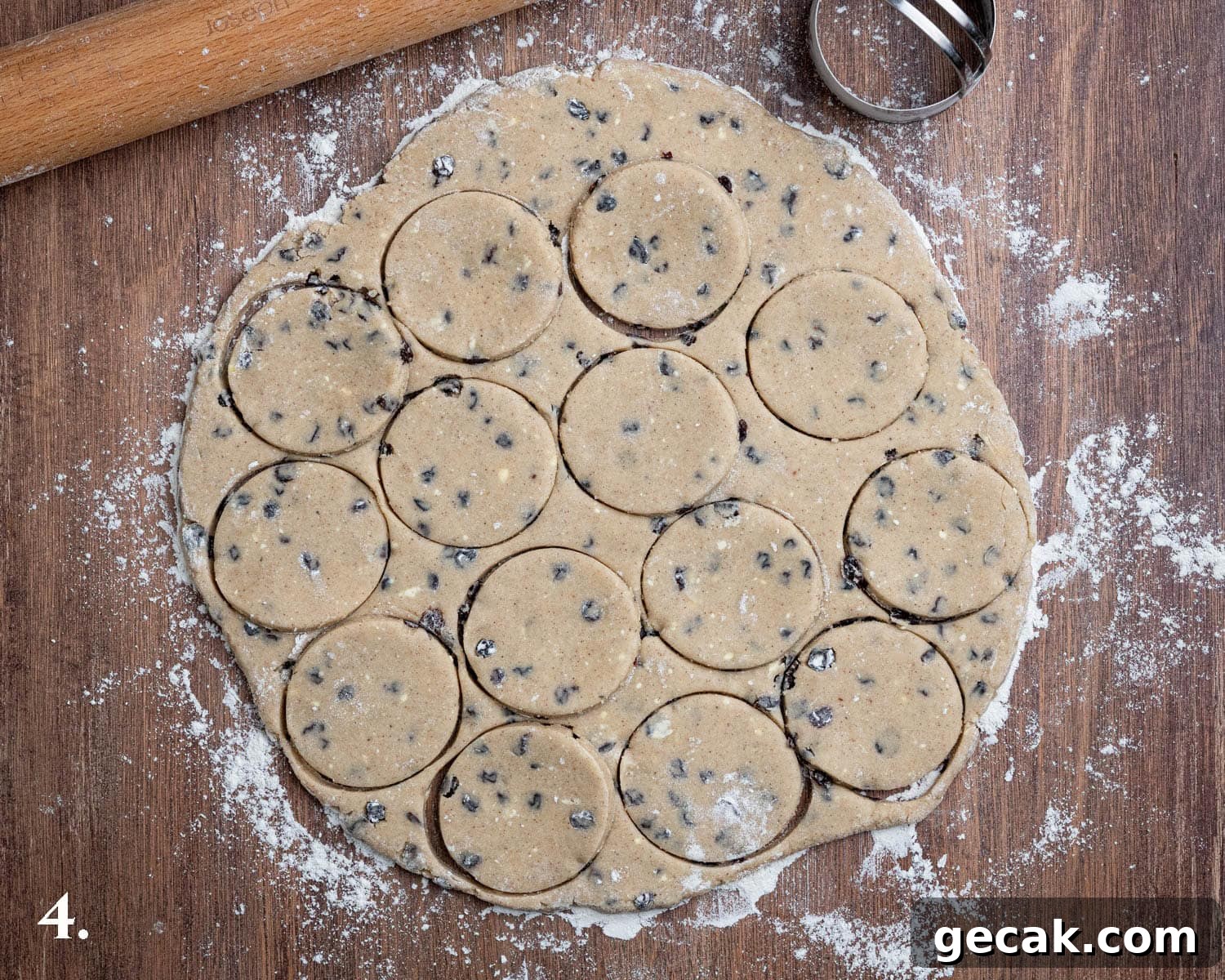
Step 4: On a lightly floured surface, roll the dough to about 6–8 mm (¼ in) thickness. Use a 6–7 cm (2½ in) round cutter to cut out as many rounds as possible. Re-roll scraps to make more.
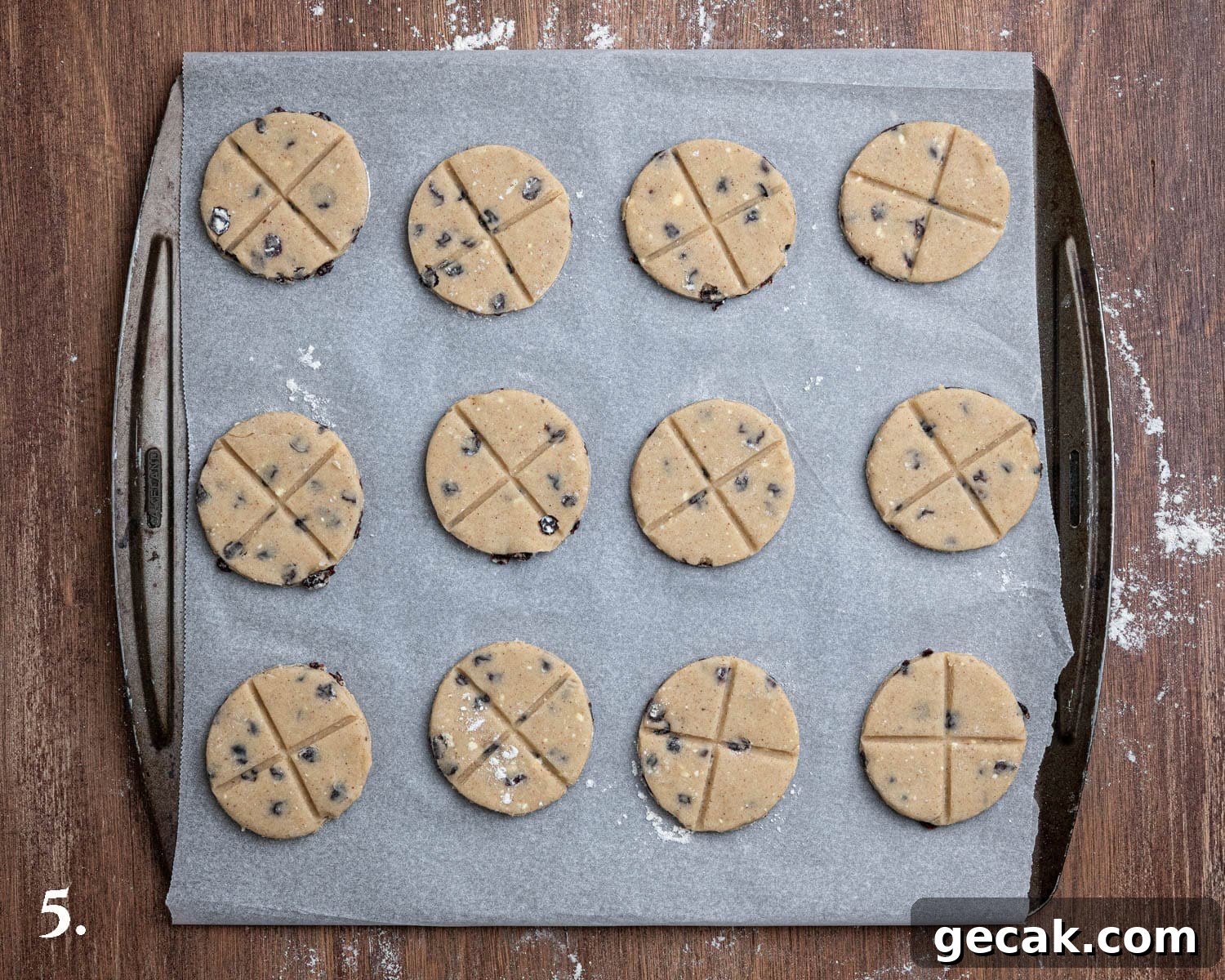
Step 5: Arrange the rounds on lined baking sheets with space between them. Use a toothpick or the back of a knife to press a deep cross into the top of each cake—deep enough to be visible but not cut all the way through.
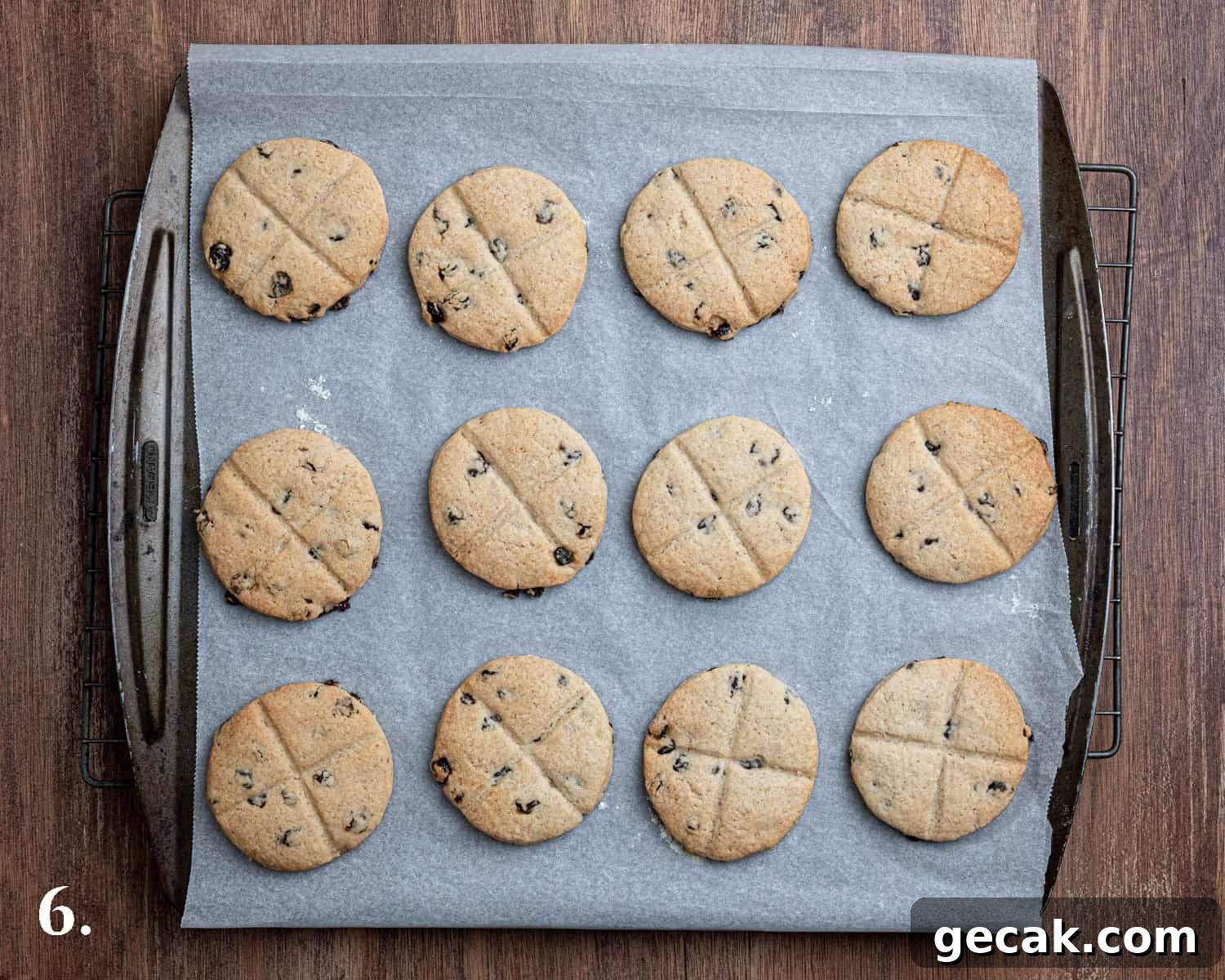
Step 6: Bake at 180℃/160℃ fan (350℉/gas mark 4) for 20–25 minutes until golden. Shorter baking yields a softer cake; longer baking gives a crisper texture.
Top Tips
For consistent baking results, use metric measurements and a digital scale—the precision yields better and more repeatable texture than cup measurements. Avoid overworking the dough to prevent gluten development and chewiness; mix only until combined.
If the dough is too soft to roll, wrap it and chill for an hour to firm up. Move cut rounds to the tray before marking crosses to avoid damaging delicate shapes. Press the cross deeply but carefully; a toothpick wiggled slightly from side to side widens the mark without cutting through.
FAQs
Cool completely, then keep in an airtight container at room temperature for up to one week.
Yes. Freeze cooled soul cakes in a freezer bag or airtight container for up to three months. Thaw at room temperature before serving.
If you make this recipe, please rate it, leave a comment or share a photo on social media with the appropriate tag.
All images and content are copyright protected. Please share this recipe using the site’s share buttons rather than reposting the full content.
Vegan Soul Cakes
Ingredients
- 300 g plain (all-purpose) flour
- ½ tsp baking powder
- 2 tsp mixed spice (or pumpkin spice)
- ¼ tsp ground nutmeg
- 150 g vegan block butter, cold and diced
- 150 g caster or granulated sugar
- 75 g dried currants
- 4 Tbsp unsweetened non-dairy milk (I use soy)
- ½ Tbsp cider or white wine vinegar
Instructions
- Preheat the oven to 180℃/160℃ fan/350℉/gas mark 4. Line two baking sheets with parchment.
- Mix the flour, baking powder and spices, then rub in the cold, diced butter until the mixture resembles fine breadcrumbs.
- Stir in the sugar and currants.
- Combine the non-dairy milk with the vinegar, add to the dry ingredients and mix to form a soft dough. Use your hands if needed.
- Roll the dough to 6–8 mm (¼ in) thick and cut with a 6–7 cm round cutter. Re-roll scraps to make more rounds.
- Place rounds on the baking sheets and press a deep cross into the top of each with a toothpick or the back of a knife, being careful not to cut through.
- Bake for 20–25 minutes until golden brown. Adjust baking time for a softer or crisper finish.
- Cool on a wire rack, then store in an airtight container.
Notes
- See the post above for photo guides and extra tips.
- Recipes are developed using grams. For consistent results use a digital scale rather than cups.